April 18, 2026
Your fingers stopped cooperating twenty minutes ago.
Not from pain — the cold at 4,200 metres in a Ladakhi winter moves past pain into something quieter, a kind of persistent numbness that you manage rather than fight. Your camera feels different in gloved hands. The viewfinder fogs slightly with each breath. And somewhere on the scree slope across the valley, through a spotting scope that your guide has been working since before sunrise, a grey shape is moving between boulders in a way that grey shapes in this landscape are not supposed to move.
You raise the camera. Your finger finds the shutter release by memory rather than sensation. And in that moment — cold, still, completely focused — you understand something about photographing snow leopard in Ladakh that no gear guide or packing list ever quite prepares you for.
The cold is not the obstacle. The cold is the teacher.
There are wildlife photography challenges across India — tiger sightings in dense jungle, elephant encounters in monsoon forest, the split-second action of a blackbuck sprint across open savannah. Each demands its own skill, its own patience, its own form of preparation. But photographing the snow leopard in Hemis National Park, Ladakh, occupies a different category entirely — one that serious wildlife photographers from Australia consistently describe as the image they spent a career working toward.
The reasons are both practical and profound. Hemis National Park covers 4,400 square kilometres of Trans-Himalayan terrain and holds the highest density of wild snow leopards of any protected area on Earth — approximately 200 individuals within the park alone. The landscape is open, the terrain is dramatic, and the winter season concentrates bharal herds at lower valley elevations, drawing snow leopards into ranges where patient, skilled observers can locate and photograph them at distances that produce extraordinary images.
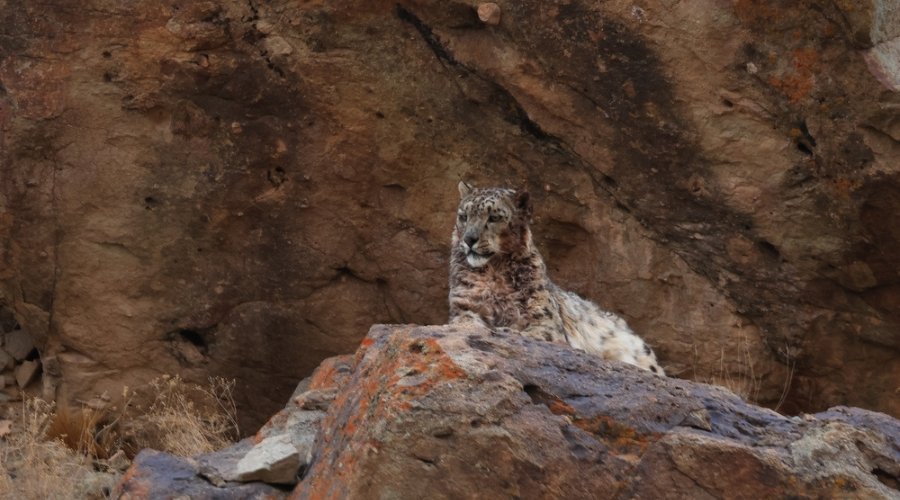
But the deeper reason is the animal itself. The snow leopard has been called the ghost of the mountains not as metaphor but as literal description. Its coat dissolves into rock. Its movement across scree is silent and unhurried. It watches you from distances you cannot perceive and has already made its assessment of your presence long before your guide raises a finger in its direction. Photographing it is not simply a matter of being in the right place. It is a matter of earning the right place — through altitude, through cold, through days of accumulated patience — and then being technically ready when the landscape decides the time has come.
Every experienced wildlife photographer who has been to Ladakh in winter will tell you the same thing: the cold changes the game in ways you cannot fully anticipate from a sea-level perspective in Australia.
Battery performance drops dramatically below minus ten degrees. A fully charged battery that would last an entire safari drive at sea level may give thirty minutes of shooting at altitude. The solution — keeping spare batteries against your body, rotating them into the camera throughout the day — becomes second nature by day three, but costs critical seconds on day one when the leopard is moving.
Autofocus hesitates on backgrounds as complex as Himalayan scree. The snow leopard’s coat, designed by millions of years of evolution to defeat exactly this kind of visual system, presents a focusing challenge that requires manual override, pre-focus technique, and the kind of settled, unrushed approach that is very difficult to maintain when your hands are at minus fifteen and the animal has just started moving.
The quality of light at high altitude is extraordinary — crystalline, hard-edged, carrying a colour temperature that renders the snow leopard’s smoke-grey coat with a clarity unavailable anywhere lower. But the snow-dominated landscape creates white balance challenges that automated systems misread without manual correction. Understanding how to preserve the warmth of the leopard’s rosette detail against an environment that photographs blue without intervention — that is a skill that separates technically prepared photographers from everyone else.
None of this is insurmountable. All of it rewards preparation. And all of it is exactly what an expedition designed around photography mastery — rather than simply wildlife observation — is built to address.
According to Rakesh Arora, our field expert and RAP Safaris founder, the single most common mistake photographers make at Hemis is treating the expedition as a series of waiting periods between sightings. The waiting, in Rakesh’s methodology, is not the gap between photographs. It is where the photographs are made.
Rakesh’s approach draws on his background as both a geologist and a wildlife photographer — two disciplines that share a fundamental orientation toward reading landscape before anything else. At Hemis, this means understanding that the bharal herds are the snow leopard’s timetable. Where the bharal are moving and why determines where the leopard will be positioned. Tracking prey behaviour is how an expert locates the predator — and that skill, applied each morning before the light is fully established, is what transforms a 70 to 80 percent sighting success rate from a statistic into a daily expectation.
On each expedition day, Rakesh structures the photography around three light windows — the thirty minutes before and after sunrise, the mid-morning period when the leopard is most likely to be active near a kill, and the late afternoon when the angle of winter sun across the valley creates the kind of directional, golden-toned illumination that gives the animal’s fur its full visual depth. Between these windows, the technical review happens — images assessed, settings refined, composition decisions made before the next encounter rather than during it.
Solo travellers and female-friendly small groups who travel with Rakesh across seven to ten days consistently report that the photography they produce on day seven bears no resemblance to what they produced on day one. The cold becomes familiar. The mountain becomes readable. The camera becomes an extension of a seeing that the landscape has been teaching all week.
This is what mastery looks like in practice — not the dramatic moment but the accumulation of discipline that makes the dramatic moment possible.
Hemis National Park takes its name from the Hemis Monastery — a 400-year-old Tibetan Buddhist gompa that sits within the park boundary, its whitewashed walls and gilded roof visible from the valley floor against a backdrop of rust-red cliff and perpetual snow. The monastery is one of the largest and wealthiest in Ladakh, and its annual festival — the Hemis Festival, held in June or July — is one of India’s most spectacular cultural events, drawing thousands of worshippers in traditional costume for three days of masked Cham dance performance.
In winter, the monastery is quiet. Monks in maroon robes move between the buildings in the early morning, prayer wheels turning, juniper incense threading upward into air too cold to carry it far. For photographers, the monastery provides both practical shelter during midday hours and an extraordinary subject in its own right — ancient stone architecture in a landscape that has barely changed in four centuries, prayer flags catching the Himalayan wind against a sky of absolute blue.
The Ladakhi homestay experience adds a human warmth to the cold expedition that changes its entire texture. Evenings around a bukhari stove — a small iron heating unit burning yak dung fuel that manages to make a stone room genuinely warm — with thukpa broth, butter tea, and the unhurried conversation of a family that has lived in coexistence with the snow leopard for generations, provide the cultural grounding that makes the wildlife quest feel situated in something larger than photography.
RAP Safaris expeditions ensure these cultural layers are woven naturally into each day — the monastery visit, the homestay evening, the conversation with a herder who lost sheep to a leopard last week and speaks of it without bitterness — ensuring that the snow leopard exists for every traveller within its full human and spiritual context.
Flying from Australia to Ladakh involves one domestic connection after landing in India. Sydney and Melbourne both connect through major Asian hubs to Delhi, with onward domestic flights to Leh taking approximately one hour and fifteen minutes. Two full acclimatisation days in Leh — ideally three for photographers over fifty, or those with any cardiac history — are non-negotiable before entering the park and beginning full trekking days.
January through March is the prime window for snow leopard photography. The bharal herds are at their lowest valley elevations, snow leopard territories compress to accessible ranges, and the winter light — low-angled, crystal-clear, almost shadowless in the middle of the day — creates photographic conditions that no other season replicates. February is widely considered the peak month, coinciding with the snow leopard’s breeding season when animals are most active and most visible.
Leh’s small but well-stocked photography equipment market provides emergency battery and memory card supplies — but serious photographers bring everything they need from Australia, as specialised lens filters and cold-weather battery solutions are not reliably available. Inner Line Permits for the Hemis area are obtainable in Leh in under an hour with the right operator handling the paperwork.
Ladakh combines naturally with India’s high-altitude wildlife circuit — Spiti Valley’s snow leopard population in Himachal Pradesh, the Tibetan wolf and Kiang landscapes of Changthang, and the extraordinary birdlife of Tso Moriri — creating a northern India photography itinerary that goes deeper into the Himalayan wild than any other journey this subcontinent offers.
The cold is waiting. The leopard is already on the ridge. The only question is whether your camera is ready — and whether you have arrived with someone who already knows how to read the mountain.
Best time for snow leopard photography in Ladakh?
January to March — bharal descend, leopards follow, winter light peaks.
What camera gear is essential for Ladakh snow leopard photography?
400mm+ telephoto, spare batteries kept body-warm, sturdy tripod essential.
How do batteries perform at minus 20 degrees in Ladakh?
Performance drops sharply — rotate three or more spares kept against your body.
Is snow leopard photography suitable for solo female travellers?
Yes — RAP Safaris small group expeditions are designed safe and enriching for all.
How do Australians reach Hemis National Park for photography?
Fly Delhi to Leh, acclimatise two to three days, then one hour drive to Hemis.