April 30, 2026
Two thousand years ago, someone sat in a sandstone cave in a forest in the heart of India and carved the stripe patterns of a big cat into the rock wall.
Not the whole animal. Just the stripes. And a pugmark. Pressed carefully into ancient stone, as if to say: this place belongs to the tiger, and always will.
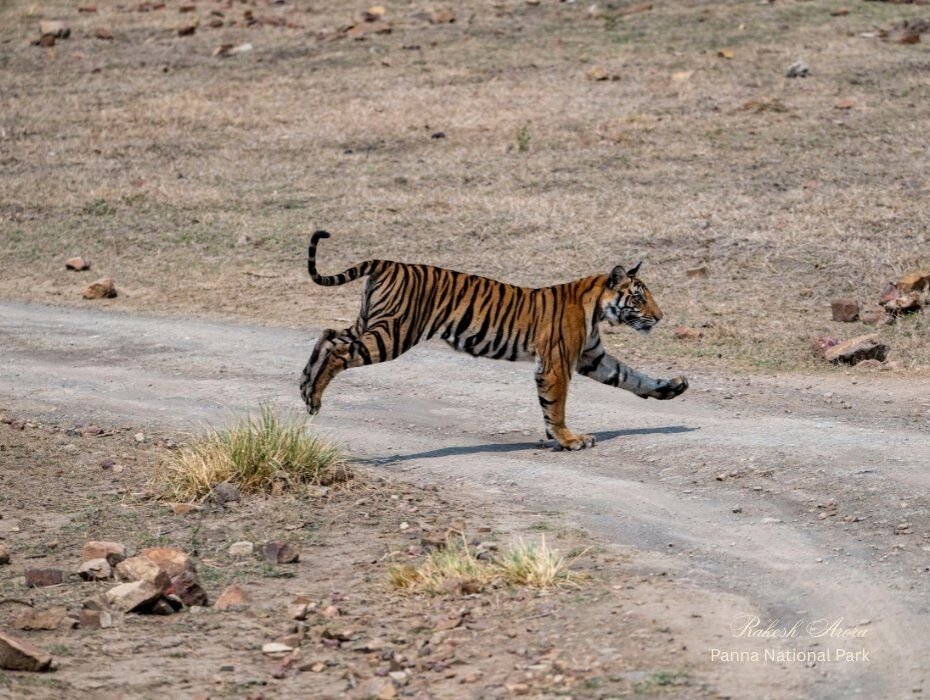
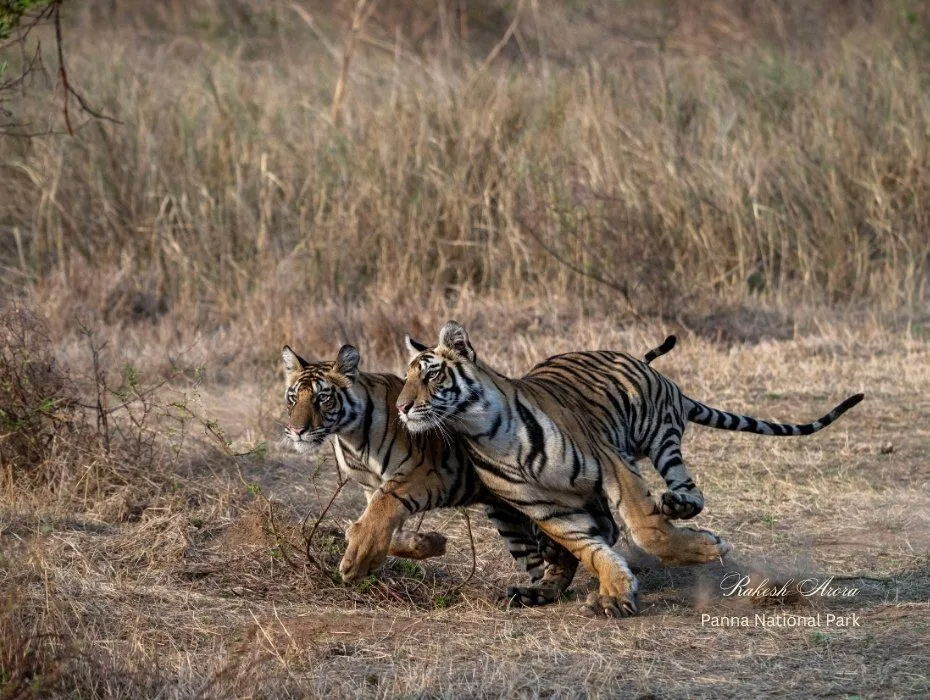
That cave — Bagdhalak, still accessible today inside Bandhavgarh National Park — is the oldest evidence of a relationship between this specific forest and the Bengal tiger that has been operating without interruption ever since. Empires rose and fell around these Vindhya hills. Maharajas hunted here. BBC film crews came and made documentaries that Australian wildlife lovers watched on their couches in Sydney and Brisbane and could not forget. And through all of it, the tiger persisted — concentrating in this landscape in numbers that have made Bandhavgarh National Park Bengal tiger density the highest of any protected area in India.
The question is WHY. And the answer is more layered than any statistic can carry.
The ecological reasons for Bandhavgarh’s extraordinary tiger density begin with geography — specifically with the intersection of terrain types that the Vindhya hills create within a relatively compact reserve.
Bandhavgarh covers approximately 1,536 square kilometres of core and buffer forest in Madhya Pradesh’s Umaria district. But it is not the size that produces the density — it is what those kilometres contain. Steep rocky ridges alternate with open sal forest valleys. Grassy meadows open between the hills. Seasonal streams feed permanent waterholes. The Charanganga River — which, according to Hindu mythology, flows from the feet of the great stone Vishnu reclining at Shesh Shaiya within the park — threads through the valley floor and sustains a prey base of extraordinary richness.
Sambar deer, chital, wild boar, gaur, and nilgai populate the park in densities that reflect decades of sustained protection. The tiger’s fundamental ecological requirement — sufficient prey to support a breeding territory — is met with abundance that few Indian reserves match per square kilometre. High prey density supports more breeding females per unit of habitat. More breeding females produce more cubs. More cubs survive to establish new territories. And over decades of consistent protection, that cycle compounds into the density figure — approximately one tiger per 2.5 to 4 square kilometres — that makes Bandhavgarh unlike anywhere else in India.
Here is the detail that most wildlife guides mention and none of them properly explain.
Bandhavgarh was the private hunting reserve of the Maharaja of Rewa from the Baghel dynasty — a royal family that maintained it as their personal shikar ground through the British colonial period and into the early years of independent India. The Maharaja had roads cut through the forest specifically to follow tigers during hunts — wide, sandy-floored tracks engineered for vehicles to move quietly through terrain that would otherwise be impassable, with the sandy substrate designed to hold animal prints clearly.
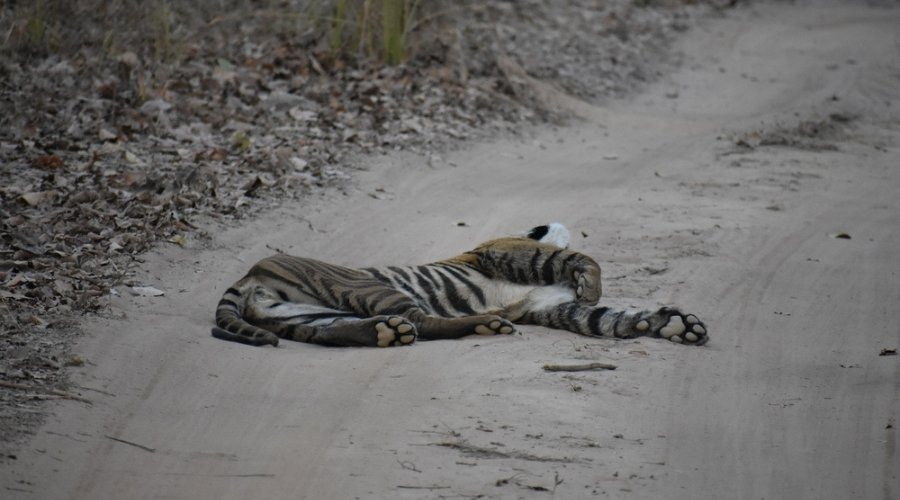
When the park was declared a national park in 1968 and closed to hunting, those same roads became the safari infrastructure. And they work, in ways that the road networks of parks built for conservation from scratch simply do not replicate, for two specific reasons. First, the sandy substrate that held the Maharaja’s tiger prints now holds every fresh pugmark in the early morning dew — readable, directional, informative in the hands of an experienced naturalist. Second, the roads were designed to penetrate the forest in directions that tracked animal movement rather than human convenience — following the natural corridors that tigers use, crossing the water points where prey congregates, opening the meadows from angles that provide maximum sightline.
The Maharaja built his road system to find tigers. His roads are still finding them, every morning, for the benefit of Australian wildlife photographers who would find the coincidence deeply satisfying if they knew it.
The density figure — one tiger per 2.5 to 4 square kilometres — is a scientific measure. What it means in practice for a visitor is something different, and something that separates Bandhavgarh from every other tiger reserve in India.
In a dense forest park with lower tiger density, a sighting means that the single tiger covering your safari zone happened to move across a track during your two-hour window. At Bandhavgarh, multiple tigers may be active in the same zone on the same morning — and understanding their territorial relationships, their individual personalities, and their typical morning movements is a form of knowledge that a skilled naturalist carries into every drive.
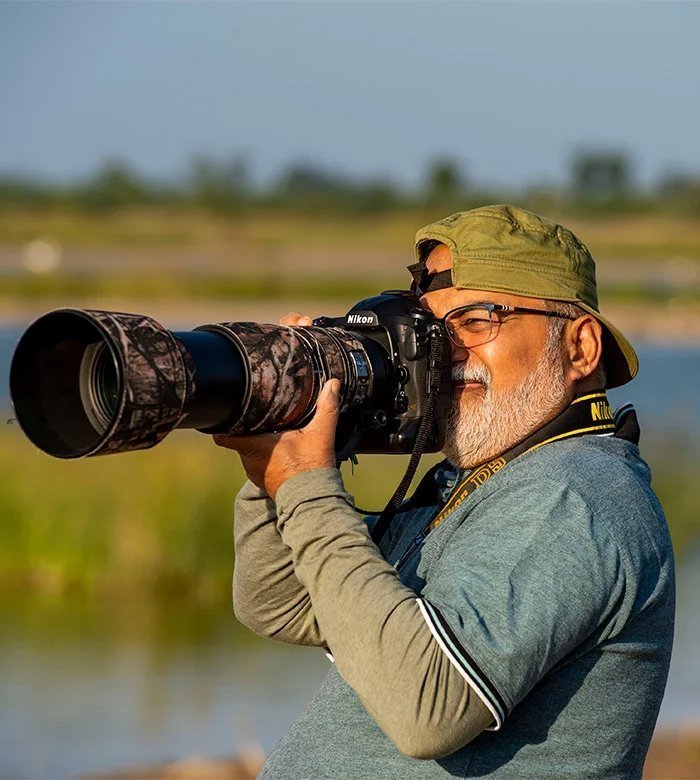
According to Rakesh Arora, our field expert and RAP Safaris founder, the experience of a Bandhavgarh safari is fundamentally different from every other tiger park he operates in because the tigers here are individuals that regular visitors and experienced guides come to know as personalities. Raj Bhera — the tigress whose family was filmed by the BBC Dynasties series, narrated by David Attenborough — is known to every serious Bandhavgarh naturalist not as a camera trap number but as a specific animal with a specific territory, specific habits, and specific cubs whose development has been tracked season by season.
For Australians who watched Dynasties and felt the pull of this specific forest, Bandhavgarh is genuinely the park they saw on screen. The landscape. The tigers. The meadows and ridgelines. Coming here is, as the RAP Safaris website describes it, a pilgrimage — and the density means the pilgrimage is almost certain to deliver.
The density story does not stop at the park boundary.
Conservation scientists describe central India’s tiger landscape as a metapopulation — a network of connected reserves where surplus animals from high-density “source” populations disperse to seed and sustain lower-density areas. Bandhavgarh is one of India’s most productive source populations. When a young tigress reaches independence at Bandhavgarh and finds every territory in the reserve already claimed by established adults, she disperses. In 2018, one such tigress disappeared from Bandhavgarh’s camera traps. In 2021, she reappeared — in Achanakmar Tiger Reserve, 400 kilometres away. Forest officials named her Jhumri. She had walked 400 kilometres of corridor forest to find a new home.
Every tiger that Bandhavgarh sends outward carries the genetic heritage of India’s most productive tiger population into reserves that might otherwise collapse without immigration. The density that makes Bandhavgarh extraordinary for wildlife travellers is simultaneously what makes it essential for the entire Central Indian tiger landscape.
Most wildlife reserves are simply forests. Bandhavgarh is a 2,000-year-old living museum that happens to have the highest tiger density in India at the same time.
Twenty-six Buddhist caves have been identified within the reserve, carrying Brahmi inscriptions from the 2nd century BC — the same script used to write the Ashoka Pillars, pressed into sandstone at a time when this forest was a thriving trade and pilgrimage hub. The Bandhavgarh Fort — whose name translates as “Brother’s Fort” and whose origin the RAP Safaris website describes as nobody really knowing — sits on a hilltop plateau within the core zone, accessible from the safari circuit, its sandstone ramparts overlooking a landscape that Chandela, Kalchuri, and Baghel dynasties successively claimed across fifteen centuries.
And at Shesh Shaiya, a 10th-century carved stone Vishnu lies reclining on a serpent — the entire figure measuring several metres in length — while the sacred Charanganga River literally originates at the deity’s feet and flows through tiger territory below. To stand at this carving at dawn, with the valley forest catching the first light below and the distant alarm call of a langur signalling that a tiger is moving somewhere in the sal trees, is to experience a layering of time and place that no other wildlife destination on Earth offers.
Inside a cave called Bagdhalak, someone who lived in or passed through this forest approximately 2,000 years ago took the time to carve something specific into the sandstone wall. Not a deity. Not an inscription. The stripe patterns of a big cat. A pugmark.
They were thinking about tigers. In 100 BC, in a sandstone cave in a forest in the heart of India, someone could not stop thinking about tigers. The RAP Safaris website’s observation about this carving carries the weight of everything the park represents: some things never change. This land has drawn people to its tigers for two millennia. Bandhavgarh’s extraordinary density is the modern expression of an ancient relationship — one that Australian wildlife travellers, arriving in 2026 having watched David Attenborough’s documentary about Raj Bhera’s cubs, are simply the latest chapter of.
Bandhavgarh sits in the cultural heartland of Madhya Pradesh — a state that carries extraordinary layering of tribal heritage, temple architecture, and culinary tradition that rewards every moment spent beyond the safari gates.
The Baghel culture of the Umaria district — descended from the same royal lineage that maintained Bandhavgarh as their hunting ground — maintains a relationship with the forest that is expressed in local festivals, crafts, and food traditions that tourist itineraries rarely access. Gond and Baiga tribal communities in the buffer zone villages maintain knowledge of forest ecology accumulated across generations — a perspective that complements formal naturalist training with a different quality of attentiveness.
The Madhya Pradesh kitchen in this region is deeply satisfying for anyone who has spent a morning in the field. Dal bafla and bhutte ka kees — a preparation of grated corn simmered with spices that is specific to this region — eaten at a lodge dining room with the morning safari images still downloading from the camera are the kind of meals that taste of a specific day in a specific place. Female-friendly small group tours with RAP Safaris weave these cultural textures into each day — ensuring the forest and the food and the archaeology all carry equal weight in the total experience.
Flying from Australia to Bandhavgarh is well-connected through India’s domestic aviation network. Sydney and Melbourne connect through major Asian hubs to Jabalpur — the most convenient gateway airport — from where Bandhavgarh’s Tala gate is approximately a four-hour drive through the Vindhya hill landscape of rural Madhya Pradesh.
October through April is the prime window. November through February offers cool mornings, clear light, and consistent tiger activity across all three core zones — Tala, Magadhi, and Khitauli. March through May thins the vegetation dramatically, concentrates prey at waterholes, and produces the park’s most extended and natural tiger encounters. April and May are the months when Bandhavgarh’s exceptional density translates most directly into encounter frequency and duration.
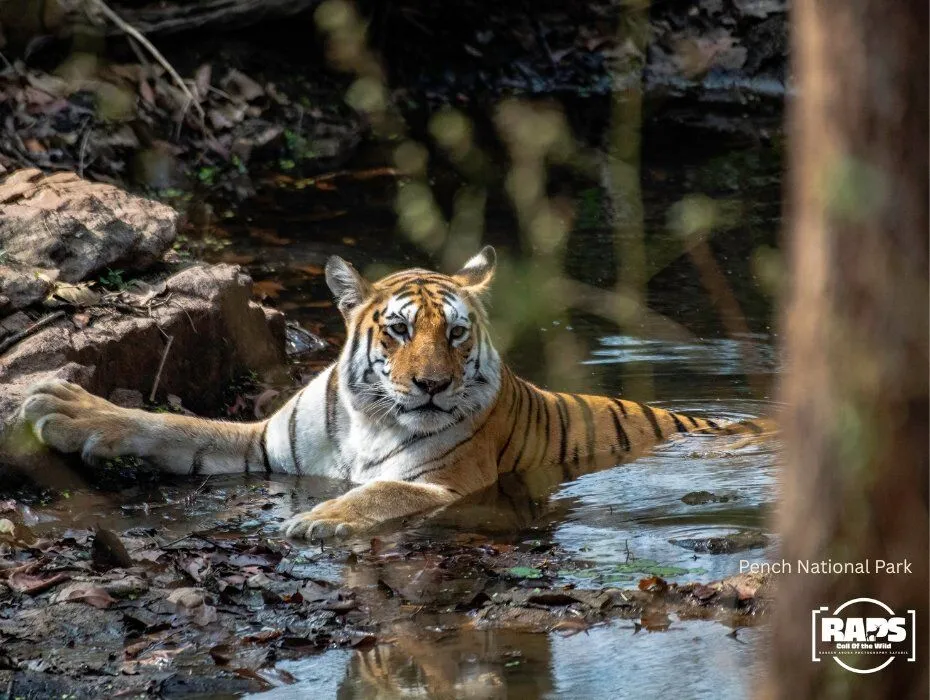
Bandhavgarh sits at the heart of RAP Safaris’s Central India Tiger Circuit — connecting naturally with Kanha Tiger Reserve to the west and Pench to the south, creating a Madhya Pradesh itinerary that moves through three of India’s greatest tiger parks within a single deeply rewarding expedition.
The forest has been welcoming people to its tigers for 2,000 years. The stripes are still being carved — now into memory rather than stone, by every visitor who comes here and cannot bring themselves to leave.
What is the tiger density in Bandhavgarh National Park?
Approximately one tiger per 2.5 to 4 sq km — highest density in India.
How many tigers live in Bandhavgarh Tiger Reserve?
Around 135 tigers recorded in the 2022 national census.
Why does Bandhavgarh have the highest tiger density in India?
Exceptional prey base, rocky terrain, and 50 years of strict conservation.
Best time to visit Bandhavgarh for tiger sightings?
March to May — vegetation thins, waterholes concentrate prey, peak encounters.
How do Australians reach Bandhavgarh National Park?
Fly to Jabalpur via Asian hubs, then drive approximately four hours to the park.