April 21, 2026
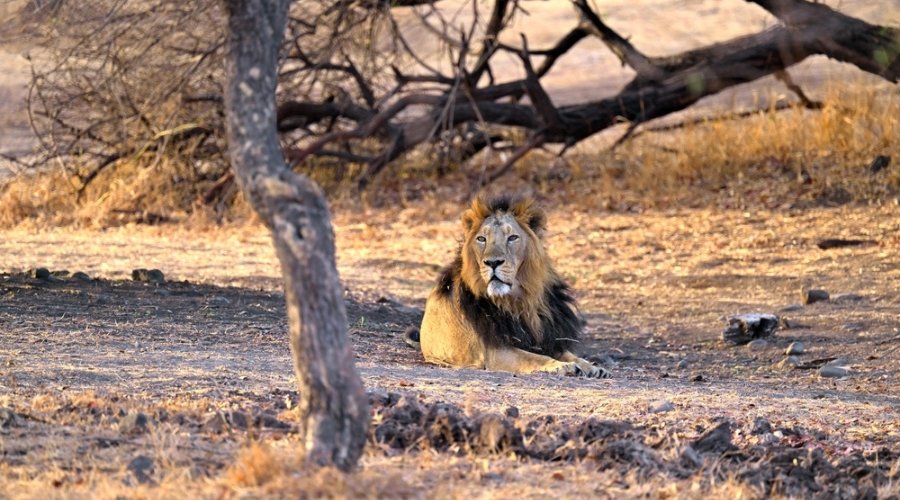
The lioness emerges from weathered sandstone outcrop into Rajbagh Lake’s midday brilliance—that harsh Gujarati sun transforming dry grassland into near-white canvas where exposure meters scream overload yet experienced photographers recognize opportunity rather than obstacle. This is high-key photography terrain: bright backgrounds approaching blown highlights, subjects requiring careful metering maintaining detail against luminous environments, and that peculiar aesthetic where golden majesty manifests not through saturated colors but through luminous minimalism reducing scenes to essential elements—lion, light, landscape. Our RAP Safaris naturalist Kiran positions the jeep deliberately: “Side angle. Manual mode. Spot meter her face. Underexpose one-third stop. Let the background glow.” Australian photographers from Australia to India seeking mastering high-key photography discover that sometimes the most striking wildlife images emerge not from perfect exposure balancing all elements equally but from embracing extremes where brightness becomes compositional choice, where among the last Asiatic lions inhabiting Gir’s 1,412-square-kilometre sanctuary those willing accepting technical challenges capturing subjects against near-white backgrounds create portfolio images impossible achieving anywhere else globally.
Welcome to Gir National Park—where golden light, bright landscapes, and India’s only wild Asiatic lion population create perfect conditions for photographers mastering specialized technique transforming potential technical failures into artistic triumphs.
Understanding what makes Gir genuinely unique begins with recognizing conservation miracle these 891 Asiatic lions (2025 census) represent. These magnificent cats—slightly smaller than African counterparts, distinctive belly folds, sparser manes leaving ears visible—exist nowhere else wild globally. Their historic range once stretched from eastern Turkey through Middle East into India. By early 1900s, hunting reduced populations catastrophically low—perhaps twelve individuals surviving entirely within Gir Forest, then Nawab of Junagadh’s private hunting grounds.
The Nawab’s protection decision, followed by sanctuary establishment 1965 and subsequent national park designation, enabled recovery: 177 lions in 1968, 523 by 2015, approaching 900 today. This population growth validates dedicated conservation proving extinction proves reversible when commitment endures across generations prioritizing species survival over exploitation.
Gir’s landscape—dry deciduous teak forest, acacia groves, grassland maidans, seven perennial rivers including Hiran creating waterholes—provides habitat supporting not merely lions but 300 leopards, diverse ungulates, 425 bird species creating biodiversity hotspot justifying UNESCO recognition. The Maldhari pastoral communities living within park in 54 traditional nesses demonstrate human-wildlife coexistence possible through generations adapting livelihoods around conservation priorities.
For RAP Safaris photographers, Gir represents more than lion destination—it’s living conservation testament where every safari directly supports protection through permit fees funding anti-poaching patrols, habitat management, and community programs ensuring local populations benefiting economically from wildlife survival rather than extraction.
High-key photography represents technical approach embracing brightness rather than fighting it. Unlike traditional wildlife photography seeking balanced exposures where subjects and backgrounds receive equal detail, high-key deliberately overexposes backgrounds creating luminous, near-white environments where subjects stand isolated against minimalist canvases. This technique reduces visual complexity, emphasizes subject form, and creates ethereal quality distinguishing images from typical wildlife portraits.
The challenge: maintaining subject detail while backgrounds approach pure white requires precise metering. Camera evaluative meters, programmed expecting average scenes, underexpose subjects drastically when pointed toward bright Gir grasslands. The solution demands manual override: spot-metering lion’s illuminated portions specifically, then slight underexposure preventing subject detail loss while allowing backgrounds glowing near-white.
Gir’s geography creates natural high-key conditions photographers elsewhere must simulate artificially. The dry grasslands—golden-brown during December-March optimal season, pale straw-colored April-June summer heat—reflect intense sunlight creating backgrounds naturally bright. When lions position themselves against these grasslands, the brightness differential between relatively dark feline coat and luminous background creates perfect high-key scenario.
The composition benefits prove substantial. Bright backgrounds eliminate visual clutter—no distracting vegetation, competing elements, or busy patterns. The lion becomes sole focus: form silhouetted clearly, mane detail emphasized, eyes drawing attention through contrast against brightness. This minimalism creates powerful images communicating majesty through simplicity rather than environmental complexity.
Traditional photography education teaches avoiding blown highlights—those pure white areas lacking recoverable detail. High-key photography inverts this rule deliberately. The bright backgrounds contain minimal detail intentionally. What matters: subject remains properly exposed showing fur texture, facial features, behavioral nuances while surrounding brightness creates isolation effect impossible achieving through conventional balanced exposure.
The artistic decision involves accepting certain technical compromises. Highlight clipping warnings flash urgently. Histograms bunch rightward dramatically. Yet final images possess aesthetic quality validating choices: lions floating against luminous canvases, minimalist compositions emphasizing form over environment, and that ethereal quality distinguishing high-key work from standard wildlife photography.
Gir’s multiple zones offer varied high-key opportunities, but specific locations deliver optimal conditions combining bright backgrounds with reliable lion presence. Understanding where requires territorial knowledge RAP Safaris naturalists possess through years tracking specific prides.
Gir operates thirteen safari routes distributed across zones accessible through Sasan Gir, Devaliya, and peripheral gates. The Tala, Gir, and Raidi zones particularly reward high-key photographers. These areas feature extensive grassland maidans where lions appear predictably—territorial males patrolling boundaries, females with cubs utilizing open areas, and those photogenic moments when prides settle onto exposed rocks creating perfect subject-background separation.
The Kamleshwar Dam area provides alternative high-key scenarios. When lions drink at water’s edge during harsh midday light, bright sky reflecting in water creates luminous backgrounds vertically and horizontally surrounding subjects. This complete brightness envelopment produces images where lions appear suspended in pure light—technically challenging yet aesthetically extraordinary when executed properly.
Rajbagh Lake represents Gir’s most iconic high-key location. The open water, pale mudbanks, and surrounding grasslands create brightness triangulating subjects positioned lakeside. Morning light backlighting lions drinking creates rim-lighting separating subjects from backgrounds. Afternoon harsh light—typically avoided wildlife photographers—becomes asset when lions settle exposed locations where brightness overwhelms yet RAP Safaris-trained photographers recognize opportunity rather than obstacle.
The ancient hunting lodge ruins near Rajbagh add compositional elements: weathered sandstone naturally pale creates architectural backgrounds enhancing rather than competing with high-key aesthetic. Lions lounging against stone pavilions photograph beautifully—subject detail maintained while bright stone and sky create that signature luminous quality defining successful high-key work.
What distinguishes RAP Safaris instruction from generic safari guiding: our naturalists understand photographic imperatives matching ecological knowledge. When positioning cameras for high-key scenarios, guides like Kiran provide specific technical direction transforming abstract concepts into concrete camera settings producing successful images.
The foundational approach requires manual exposure mode. Aperture priority or shutter priority modes, while convenient typical situations, fail high-key scenarios where camera meters misinterpret bright backgrounds underexposing subjects catastrophically. Manual mode grants absolute control: aperture set for desired depth-of-field (typically f/5.6-f/8 maintaining sharpness across lion while backgrounds soften pleasantly), shutter speed fast enough freezing movement (1/1000th minimum for active lions), and ISO adjusted achieving proper exposure combination.
The metering pattern proves crucial. Evaluative/matrix metering averaging entire scene produces disasters in high-key situations. Spot metering—measuring tiny area precisely where aimed—allows targeting lion’s face specifically. This measurement, combined with slight underexposure compensation (-1/3 to -2/3 stop), maintains facial detail showing eyes, whiskers, expressions while bright backgrounds glow near-white creating desired high-key effect.
Manual mode eliminates camera’s attempts correcting what it perceives as overexposure. In automatic modes, cameras seeing bright backgrounds increase shutter speed or close aperture darkening entire scene—rendering already-dark lions into silhouettes losing all detail. Manual mode ignores brightness averaging, exposing precisely as photographer determines appropriate regardless of how extreme brightness differential appears.
The histogram becomes essential tool. Rather than centering histogram traditionally taught, high-key photography pushes histogram dramatically rightward—perhaps 70-80 percent pixels registering bright tones. This appears wrong initially yet produces desired aesthetic. The critical element: small cluster representing lion subject maintains position showing detail retention despite surrounding brightness clustering extreme right.
Gir operates October through mid-June with seasonal variations dramatically affecting high-key possibilities. Understanding timing allows photographers planning visits maximizing desired aesthetic.
December through March delivers optimal high-key conditions. Winter grasslands cure golden-brown creating naturally bright yet textured backgrounds. Comfortable temperatures (10-25°C) keep lions active throughout days rather than retreating shade. Clear skies provide consistent bright light without cloud interference complicating exposure calculations. This season represents prime high-key photography period where technical challenges remain manageable while aesthetic opportunities peak.
April through June intensifies conditions. Summer heat (approaching 45°C) browns grasslands completely into near-white pale straw. This extreme brightness creates most dramatic high-key scenarios—almost abstract minimalism where lions appear floating in brightness. However, heat stress limits safari timing to early morning and late afternoon when temperatures moderate slightly. Lions concentrate near water sources predictably, but midday photography becomes physically challenging despite technically optimal lighting.
For Australian photographers reaching Gir from Australia, mastering high-key photography requires more than understanding theory—it demands field instruction from guides recognizing when conditions align perfectly, positioning cameras optimally, and providing real-time technical coaching transforming challenging scenarios into portfolio successes.
RAP Safaris expertise manifests through comprehensive approach: coordinating logistics from Ahmedabad (140 kilometres, three hours’ drive) or Rajkot (160 kilometres) where international arrivals connect via Delhi or Mumbai; securing optimal safari permits through Gujarat Forest Department systems requiring advance booking; arranging accommodations near Sasan Gir balancing comfort against proximity; and providing naturalists whose photographic knowledge matches ecological expertise.
The RAP Safaris difference proves tangible: guides anticipating high-key opportunities before they materialize, naturalists explaining why specific locations specific times create optimal conditions, and that patient instruction helping photographers initially overwhelmed by technical complexity gradually achieving mastery producing images impossible creating independently during brief Gir visits.
Many properties accommodate solo travelers and women-only groups, recognizing specialized photography attracts independent practitioners regardless of demographics—the golden majesty available to all possessing commitment mastering technique rather than merely hoping luck delivers occasionally successful images.
What makes high-key photography different from normal wildlife photography?
High-key deliberately overexposes backgrounds creating bright, minimalist aesthetic emphasizing subjects.
When is the best season for high-key lion photography in Gir?
December to March offers golden grasslands with manageable temperatures and consistent bright light.
What camera settings work best for high-key Asiatic lion portraits?
Manual mode, spot metering on lion’s face, underexpose 1/3 stop, let backgrounds glow bright.
Which Gir zones offer the best high-key photography opportunities?
Rajbagh Lake area, Tala zone grasslands, and Kamleshwar Dam provide optimal bright backgrounds.
Can beginners master high-key photography or does it require experience?
RAP Safaris guides provide field instruction making technique accessible to photographers at all skill levels.