March 3, 2026
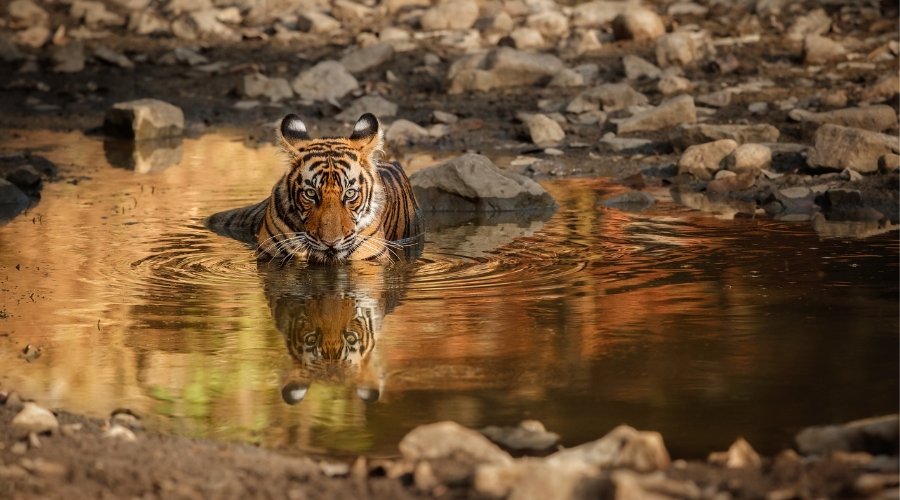
There is a specific photograph that haunts every serious wildlife shooter who has ever dragged a Pelican case into India. I’m not talking about the classic, golden-hour tiger-on-a-rock shot from Ranthambore. I’m not talking about the dusty action frames from Bandhavgarh’s grasslands. If you have the cash and a decent guide, you can bag those from the back of a Gypsy jeep with relative ease. No, the image that keeps us awake at night, the one that almost nobody gets, is a Bengal tiger swimming through dark, saltwater channels. Just an amber head and flattened ears cutting through a tidal maze built by the Bay of Bengal, not by humans.
Welcome to the Sundarbans. It is, without a shadow of a doubt, the most punishing, frustrating, and ultimately rewarding wildlife photography destination on this planet.
If you are an Aussie photographer, you probably think you know what hard work is. We’ve all spent days tracking cassowaries through the sweltering, leech-infested rainforests of Far North Queensland, or waited a week in the Kimberley dirt for the light to hit a gorge just right. But I am telling you, the Sundarbans demands a completely different level of stubbornness. It strips wildlife photography back to its absolute, agonizingly primal core.
Forget everything you know about Indian tiger safaris. There are no jeeps here. There are no dusty tracks. You experience this entire ecosystem from the deck of a boat, drifting through a labyrinth of tidal creeks where the forest floor literally disappears under the ocean twice a day. And the cats you are looking for? They aren’t just elusive; they have physiologically mutated to survive a landscape that should, by all rights, kill them.
What makes the Sundarbans tiger so extraordinary isn’t just the novelty that they swim. It’s how completely they’ve had to reimagine what it means to be a tiger. A standard mainland Bengal tiger weighs in around 180 kilos. Out here in the mud? The males average between 97 and 115 kilograms. It’s a massive size reduction, an evolutionary necessity for hauling themselves through thigh-deep coastal mud and navigating dense stilt-root mangrove forests.
They’ve developed partially webbed paws. Their tails are noticeably thicker and far more muscular than their mainland cousins, acting essentially as a rudder during massive swims. Researchers have GPS-tracked these cats crossing tidal channels five kilometres wide, swimming continuously for three hours against currents that would drown a human in minutes. They drink saline water. Their territories are completely fluid because the tidal surges wash away their scent markers every twelve hours. They literally cross from Indian to Bangladeshi forests because they don’t care about borders drawn by men in suits.
And here is the fact that stops photographers cold when they finally get out here: these tigers hunt just as lethally in the water as they do on dry land. Spotted deer grazing near the mangrove edges, wild boar, fish, massive mud crabs—absolutely nothing is safe from an apex predator that can launch an ambush from beneath the surface of the river.
But let’s talk about the actual reality of trying to photograph them. If you’ve shot the open savannahs of Africa or the dry deciduous scrub of central India, the Sundarbans will break your spirit. The forest is impenetrably thick. The mangrove roots jut out of the water like a barricade of spears, and the vegetation is so dense that on a good day, your visibility is maybe twenty metres. The light filtering through the canopy creates a dappled, high-contrast nightmare that will make your camera’s metering system absolutely lose its mind.
The physical toll of simply existing in this environment is immense. The humidity wraps around you like a wet wool blanket the second the sun comes up. The air smells heavily of salt, sulfur, and rotting mangrove leaves—a primordial scent that reminds you exactly how wild this place still is. You are constantly fighting the elements. The saltwater spray is highly corrosive, meaning if your gear isn’t top-tier weather-sealed, the Sundarbans will eat your camera bodies alive. I spend half my evenings in the cabin just wiping down my lenses and praying the moisture hasn’t crept into the sensor.
From a purely technical standpoint, getting the shot here requires a terrifying leap of faith with your settings. Because you are shooting into the dark understory of the mangroves from a moving platform, you are constantly battling for shutter speed. You are shooting wide open at f/4 or f/2.8 if you can afford the glass, pushing your ISO up to 3200, 6400, or even higher, just hoping modern noise-reduction software can save your bacon later. And you have to do this while bracing your core against the rhythmic slap of the tide against the hull while a diesel engine vibrates beneath your boots. It is an exercise in pure madness.
The tigers only appear when they want to. You might spend ten hours drifting past the exact same mudbanks, staring into the dark green shadows until your eyes play tricks on you, swearing every reddish-brown dead leaf is a cat. A good local guide might spot a fresh pugmark in the tidal mud and position the boat. And then you wait. Sometimes you sit there for hours. Sometimes you sit there for five straight days, staring at an empty riverbank, questioning every life choice that led you to spend thousands of dollars to bake in the Indian humidity.
When you book a trip here, you aim for November through March. The weather is cooler, the lower winter tides expose more mudbanks where the tigers occasionally rest, and you get migratory birds adding a bit of foreground interest to keep you sane. You have to get on a specialized photography boat—ones with camouflaged hulls, quiet engines, reversible gears so the skipper can instantly backpedal without throwing a wake, and a flat deck space configured for heavy tripods.
While you are losing your mind waiting for a tiger, the Sundarbans does throw you a few bones. You’ll be shooting massive saltwater crocodiles basking on the mudflats—salties that would give our Top End monsters a run for their money. You’ll see Gangetic dolphins breaking the murky surface, over 260 species of birds, and if you are incredibly lucky, a fishing cat, which is one of the world’s only felines entirely specialized for aquatic hunting.
But we all know why we are really out there. It’s for that one, singular image. That split-second moment when the labyrinth finally gives up its ghost.
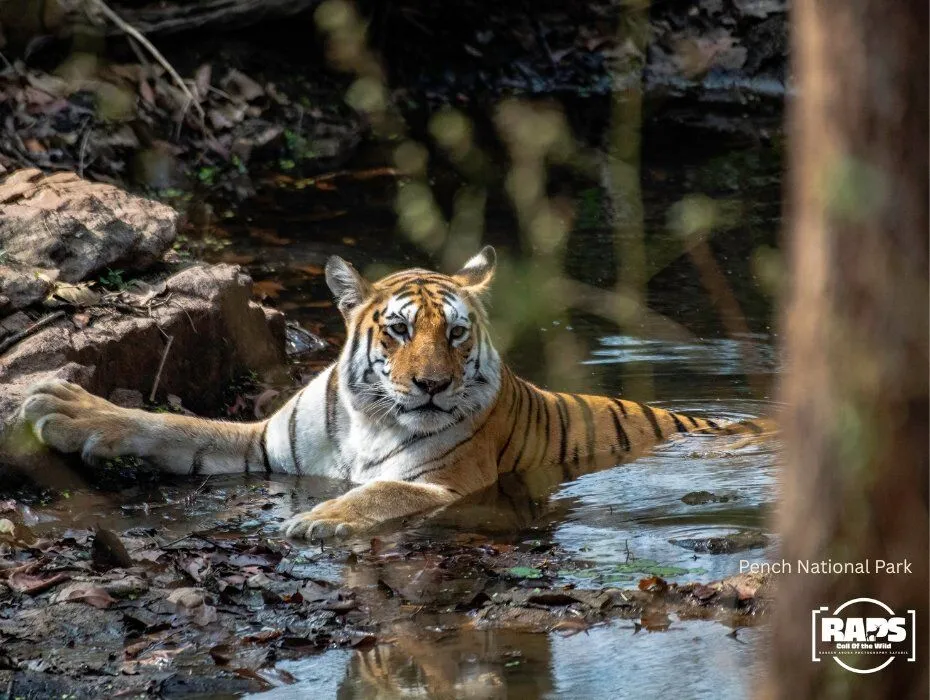
I’ve been out there for days with nothing to show for it but mosquito bites and empty memory cards. But when it happens… mate, it changes you. When you are positioned perfectly, the engine is cut, the boat is drifting silently on the tide, and suddenly, a tiger steps out of the impenetrable green wall and slips silently into the water. The late afternoon light catches the wet fur on its face. Your lens finally locks focus on those amber eyes that have probably been watching you for the last three hours.
That is the photograph. It’s the ultimate proof that an apex predator isn’t limited by its habitat—it simply forces evolution to make it a better, more lethal version of itself. The Sundarbans demands absolute, unwavering patience. It demands that you accept nature operates on a schedule that doesn’t care about your return flight. But when you finally nail that shot of the swimming tiger, you understand exactly why this muddy, punishing maze is the absolute pinnacle of wildlife photography.