April 28, 2026
Let’s answer the question directly, because it deserves a direct answer.
During peak season at Tadoba-Andhari Tiger Reserve, between four and five safaris, your probability of seeing a wild Bengal tiger is approximately 85 to 90 percent. That figure is not a marketing claim. It comes from documented sighting records across multiple seasons, cross-referenced by naturalists and researchers who track encounter rates across India’s tiger reserves with consistency.
To put that in perspective: most tiger parks in India operate on sighting rates of 40 to 60 percent for visitors doing three safaris. Some of the most famous — dense forest parks where tigers are abundant but largely invisible — run lower. Tadoba, for an Australian wildlife traveller who has spent years wondering whether their first wild tiger sighting will actually happen, is as close to a guarantee as the wild ethically offers.
But the HOW EASY question deserves more than a percentage. It deserves an understanding of why the number is that high — and what it actually feels like on the ground when a Bengal tiger safari Tadoba encounter happens at close range, in morning light, with the animal completely unhurried and completely indifferent to the jeep it is walking past.
The answer begins with the park’s tiger density — approximately 115 animals across 1,727 square kilometres, with the core zones concentrating significantly higher numbers per square kilometre — but density alone does not explain Tadoba’s extraordinary sighting record.
The critical variable is habitat structure. Tadoba’s landscape is dry deciduous teak and bamboo forest, broken by grassland meadows, hillside ravines, and three permanent water bodies — Tadoba Lake, Kolsa Lake, and the Andhari River. Unlike the dense sal forests of central India or the bamboo-heavy jungle of Kanha, Tadoba’s vegetation thins predictably through the dry season, opening sightlines to distances of fifty, eighty, sometimes two hundred metres through the forest. Tigers that might be completely invisible fifteen metres from a track in a denser park are visible and watchable in Tadoba across distances that allow genuine photographic engagement.
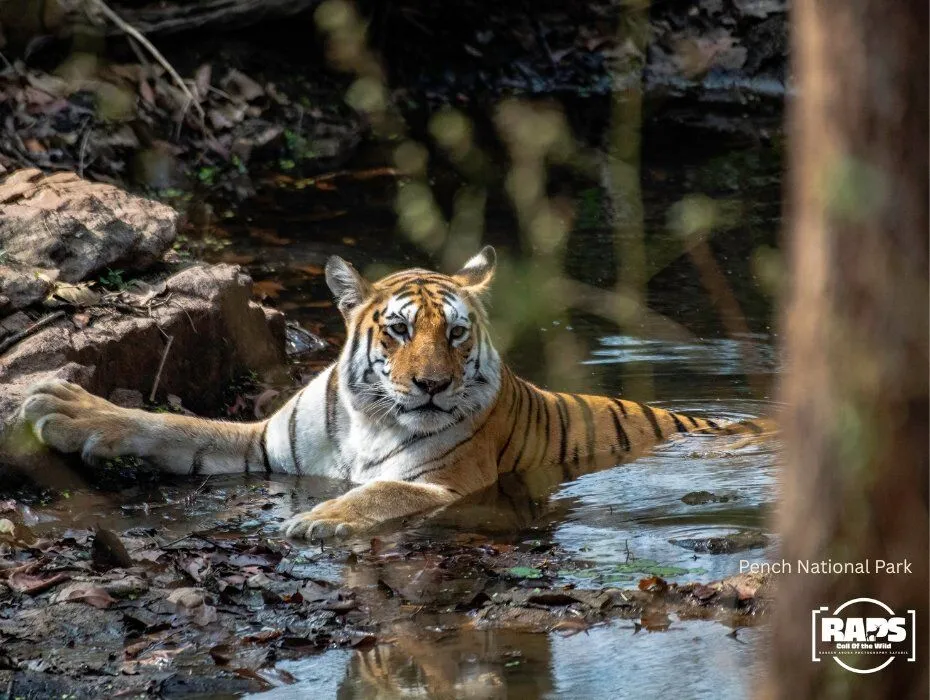
The water bodies function as ecological anchors. During dry season — November through June — Tadoba Lake, Kolsa Lake, and the Andhari River pools are the only reliable water sources across the reserve. Every prey animal visits daily. Every tiger in the relevant territory follows. This concentration dynamic, operating with extraordinary predictability, is what generates sighting percentages that no other park in northern or central India consistently matches.
The teak canopy at Tadoba is high, clean, and seasonally deciduous — meaning that by March, when the dry season peaks, the forest floor receives direct sunlight through a canopy that has shed most of its leaves. The result is a quality of light that is entirely different from the filtered, shadowy conditions of denser forest parks.
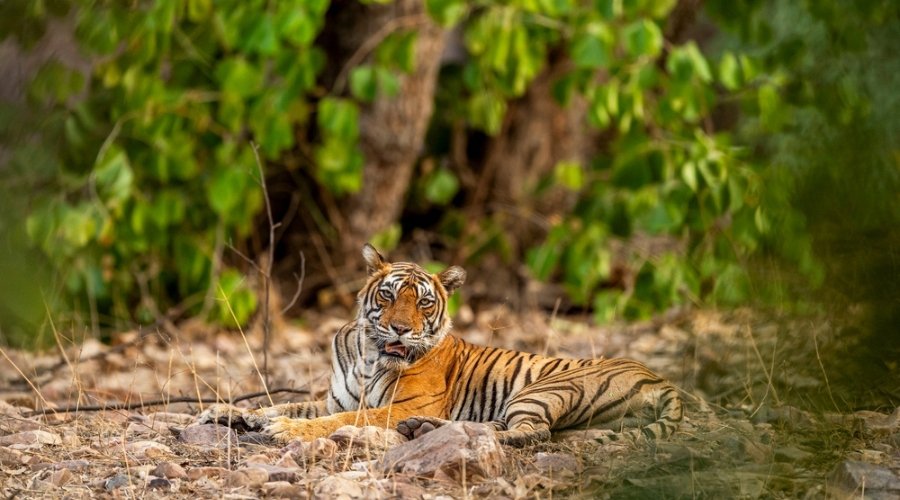
Morning light at Tadoba in March falls in long, warm columns through the open teak canopy — the kind of directional, golden light that portrait photographers specifically work toward. A tiger resting at a waterhole edge in this light is not a dark shape in deep shadow. It is a fully illuminated, fully dimensional subject in the warm, saturated light that wildlife photography is built around. The visibility and the light quality at Tadoba’s peak season work together to produce a photographically extraordinary environment — not just encounters, but encounters in conditions that produce images worth keeping.
Here is the detail that the sighting percentage alone does not capture — and it is the detail that Australian wildlife travellers consistently describe as the most surprising thing about Tadoba.
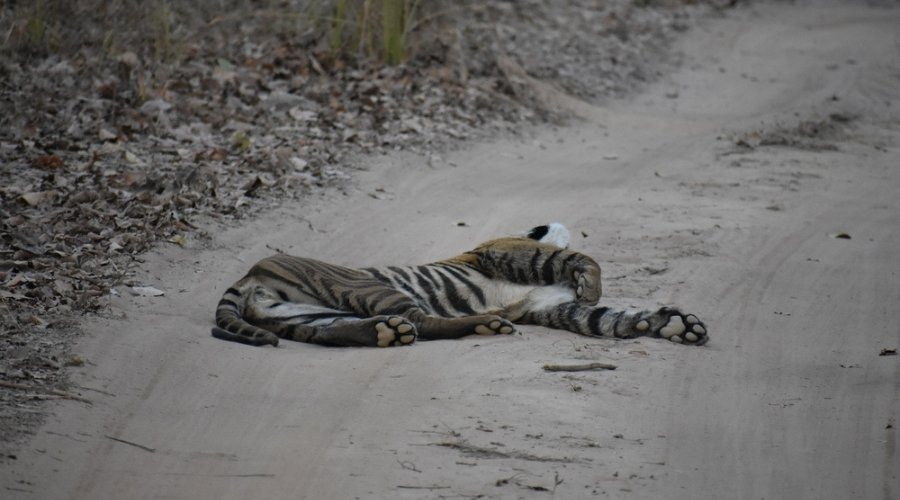
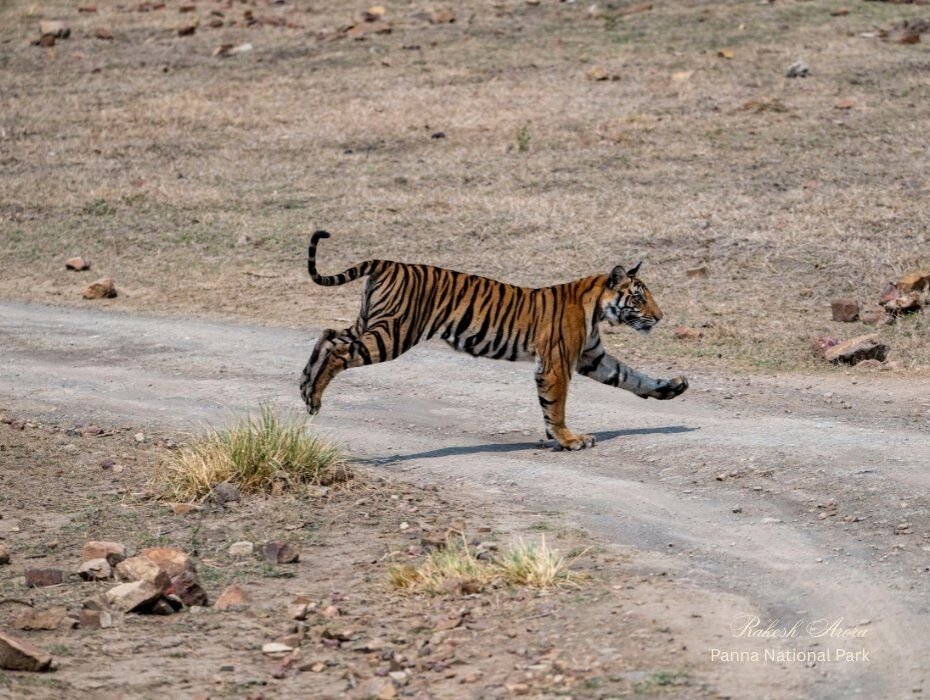
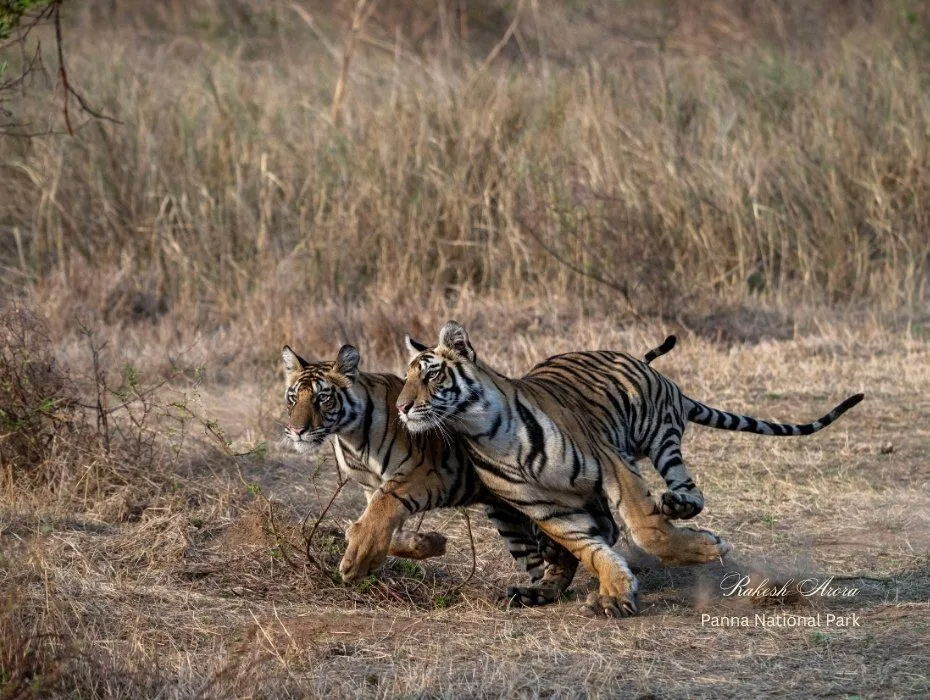
The tigers here are bold. Not aggressive — bold. Habituation to vehicles across decades of managed safari operations has produced a tiger population that does not treat jeeps as threats, does not retreat from the track when vehicles approach, and does not hide its behaviour behind a convenient bamboo thicket when photographers are present. A Tadoba tiger walks down the middle of the forest road with the authority of an animal that knows the road is in its territory rather than the reverse. It rests at waterhole edges for extended periods in full view. It raises its head, assesses the situation, returns to drinking.
According to Rakesh Arora, our field expert and RAP Safaris founder, the quality of encounter at Tadoba is defined not by the frequency of sightings but by their duration and naturalness. A thirty-minute encounter with a tiger behaving completely naturally — walking, drinking, scent-marking, lying in the shade of a teak tree — produces more photographic value than ten brief crossings in a denser park. Tadoba’s tigers give time. That is what separates the park from its peers.
Between March and April each year, the mahua trees of Tadoba enter their flowering season — and the forest undergoes a transformation that no wildlife guide adequately explains.
Mahua flowers are rich in sugar and ferment quickly on the forest floor after falling. Sloth bears enter a period of intense foraging activity during this window, moving through the forest in broad daylight to consume the flowers before they over-ferment — making March and April the most reliable months for sloth bear sightings anywhere in India’s central forests. Tigers, opportunistic as ever, adjust their own movement patterns to follow the sloth bears’ predictable foraging routes. The result is a specific, brief window each year when the probability of a single safari producing tiger, sloth bear, and leopard sightings simultaneously is higher than at any other time — and it is a window that experienced naturalists specifically plan around.
Tadoba has 24 entry gates — seven core zone gates and seventeen buffer zone gates — and the difference between an ordinary Tadoba safari and an extraordinary one is almost entirely a function of which gates are used on which morning, based on what the forest’s real-time intelligence is saying.
The core zone at Moharli is where most first-time visitors book, and it delivers — high tiger density, excellent infrastructure, experienced guides. But the permit demand at Moharli during peak season means that vehicle numbers at popular sighting spots can build quickly. An expert who knows which buffer gate is currently producing the most natural, unhurried encounters — and secures permits there instead — often delivers a qualitatively better experience with the same or higher sighting probability.
Solo travellers and female-friendly small group expeditions with RAP Safaris are structured around this zone intelligence — with permit selection calibrated to recent sighting patterns rather than popularity, ensuring every drive is positioned where the forest is actually performing.
The counterintuitive truth about Tadoba that experienced naturalists know — and that almost no competitor blog explains adequately — is that the buffer zones frequently produce better encounters than the core, for reasons that are ecological rather than logistical.
As Tadoba’s tiger population has grown beyond the core zone’s carrying capacity, young male tigers have dispersed into the buffer forest and established territories in areas that see a fraction of the vehicle traffic of the core. These buffer tigers encounter vehicles far less frequently — they are not conditioned to the same degree of vehicle presence — which paradoxically produces more natural, more dramatic encounters. An animal that is slightly less habituated behaves with more intensity. It moves with more purpose. It is more likely to be actively hunting or territorial-displaying rather than simply resting in a well-photographed spot.
The buffer zones at Navegaon, Agarzari, and Junona have been producing exceptional encounters for several consecutive seasons — a fact known to every serious Tadoba naturalist but almost invisible in the travel content that continues to direct every visitor to Moharli core.
Tadoba sits in Vidarbha — the eastern heartland of Maharashtra — a region whose cultural identity is distinct from the more internationally familiar Maharashtra of Mumbai and Pune, and whose depth rewards travellers who look beyond the safari gates.
The park takes its name from the God Taru — a Gondi village chief who, according to local legend, was killed in a mythological encounter with a tiger at the banks of what is now Tadoba Lake. A shrine dedicated to him stands beneath a massive tree on the lake’s edge today, visited by Gond tribal communities during the annual Pusha fair held between December and January. The Gond people — the original inhabitants of these forests — maintain a relationship with the landscape that predates every conservation designation by centuries, and their oral traditions about tiger behaviour and forest seasons carry an ecological intelligence that formal naturalist training often complements rather than replaces.
The Saoji cuisine of the Chandrapur region is one of Maharashtra’s most distinctive and least-exported culinary traditions. Saoji curries — fiercely spiced, oil-rich, built around a complex masala that includes khus-khus and dried coconut — are the flavours of Vidarbha in a way that no tourist menu has managed to sanitise. Eaten at a dhaba in Chandrapur after an afternoon safari where a tigress walked the road for twenty uninterrupted minutes, the meal carries a specific satisfaction that belongs entirely to that day and that place.
Flying from Australia to Tadoba National Park is well-connected through India’s domestic aviation network. Sydney and Melbourne both connect through major Asian hubs to Nagpur — the entry point for the Vidarbha wildlife region — with Tadoba’s main Moharli gate approximately 140 kilometres south of the airport, a comfortable three-hour drive through the Chandrapur district.
November through February offers cool conditions, consistent sightings, and excellent birdlife — over 200 species have been recorded in the reserve, including the crested serpent eagle, changeable hawk-eagle, and the extraordinarily rare Malabar pied hornbill. March through May is the peak tiger window — vegetation thin, waterholes active, sloth bear mahua season in full swing. The core zone closes during monsoon from July through September, but buffer zones remain open year-round.
Permits for peak season Moharli core must be booked 120 days in advance — they disappear quickly. Buffer zone permits are somewhat more accessible, but serious naturalists book those months ahead as well. RAP Safaris expeditions manage this permit infrastructure as a foundational service — ensuring that zone selection, timing, and permit availability are all optimised before any traveller boards a flight from Australia.
Tadoba sits naturally within a central India itinerary that connects with Pench Tiger Reserve — just four hours north on the Nagpur highway — and Kanha Tiger Reserve, creating a Maharashtra-Madhya Pradesh wildlife circuit that delivers three of India’s finest tiger parks within a single deeply rewarding journey.
The forest is already warm. The teak canopy is already open and golden. And somewhere on the road between Moharli gate and Tadoba Lake, a tiger is about to decide that the jeep approaching slowly and quietly is absolutely not worth interrupting its morning for.
What is the tiger sighting success rate at Tadoba National Park?
85–90% during March to May when tigers concentrate at waterholes.
Which zone is best for tiger sightings in Tadoba?
Moharli core is most reliable; buffer zones often deliver equally impressive encounters.
Why are Tadoba’s tigers considered bolder than other Indian tiger populations?
Decades of low-pressure safari operations have produced naturally relaxed animals.
Is Tadoba National Park suitable for solo and female travellers?
Yes — RAP Safaris small group expeditions are designed safe and enriching for all.
How do Australians reach Tadoba National Park?
Fly to Nagpur via Asian hubs, then drive approximately three hours south.