April 4, 2026
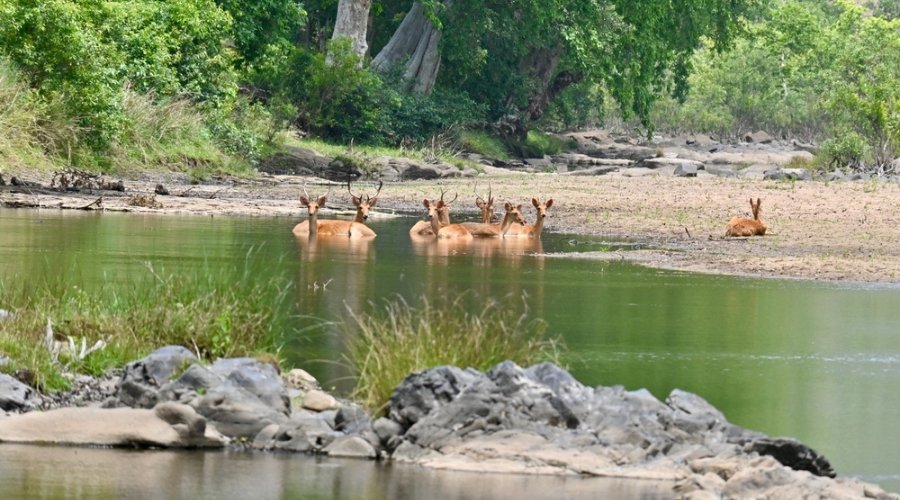
The meadow breathes. That’s how Baiga trackers describe Sonf at dawn—Kanha’s signature grassland where morning mist rises from earth, where barasingha emerge from sal forest edges like spirits materializing from collective memory, and where saving the barasingha ceases being abstract conservation rhetoric and becomes tangible reality photographed across fifteen years documenting recovery from sixty-six individuals (1970’s catastrophic low) toward 1,100+ today. Our Rakesh Arora Photo Safaris naturalist Dinesh kneels, touching soil: “This meadow was Sounf village. Eighty families lived here before 1970 relocation. Now? Largest barasingha congregation anywhere globally.” That transformation—human communities accepting displacement enabling species survival, sacrifices rewarded through spiritual and economic restoration as tourism creates livelihoods exceeding subsistence agriculture—explains why Australian photographers from Australia to India choosing RAP Safaris participate in conservation rather than merely documenting it: sometimes wildlife photography transcends portfolio building into genuine advocacy where every safari dollar funds protection, where responsible operators like RAP Safaris transform casual tourism into conservation mechanism, and where witnesses become ambassadors carrying stories home proving that saving species from extinction’s edge proves possible when commitment endures across generations valuing wilderness survival over short-term exploitation.
Welcome to Kanha National Park—where the spirit of the meadow isn’t poetic metaphor but measurable reality written across population graphs climbing from catastrophic toward triumphant, where Rakesh Arora Photo Safaris dedicates fifteen years proving responsible tourism powers conservation as effectively as government mandates.
Understanding why saving the barasingha represents India’s greatest cervid conservation triumph requires recognizing how perilously close extinction loomed. The hard-ground barasingha (Rucervus duvaucelii branderi)—subspecies endemic exclusively to Kanha’s sal forests and firm meadows—numbered 551 individuals in 1953. Complacency assumed populations this robust remained secure. Then hunting, habitat degradation, disease transmission from livestock, and competition from domestic cattle decimated herds catastrophically.
By 1967, surveys documented merely sixty-six barasingha surviving across Kanha. Sixty-six. Global population. No backup populations existed elsewhere. Extinction loomed not theoretically but imminently—one disease outbreak, one harsh winter, one poaching surge could eliminate the subspecies entirely.
But Kanha’s management responded with measures proving revolutionary for 1960s conservation: village relocations expanding protected habitat (Sounf village relocation created today’s prime barasingha meadows), protective enclosures preventing jackal predation on newborn fawns during August-September fawning season, grassland management maintaining open meadow character preventing woody encroachment, livestock exclusion reducing disease transmission and forage competition, and perhaps most crucially—daily monitoring maintaining intimate population awareness preventing unobserved decline.
The recovery proved gradual but inexorable. Two hundred individuals by 1980s. Four hundred-to-five hundred by early 2000s. Eight hundred-plus by 2015. Current estimates approach or exceed 1,100 barasingha inhabiting Kanha—eighteen-fold increase across five decades representing conservation success rivaling giant panda recovery globally.
But what elevates this beyond statistics into spiritual triumph: recognition that saving barasingha required human sacrifice. The Sounf families relocating 1970 surrendered ancestral lands, traditional livelihoods, and community cohesion enabling deer survival. That sacrifice deserves honoring through conservation tourism creating livelihoods justifying displacement economically while validating it ecologically through species recovering spectacularly when provided space thriving.
Rakesh Arora Photo Safaris’ commitment to barasingha conservation extends beyond merely photographing recovered populations into actively supporting protection mechanisms ensuring continued survival. The RAP Safaris conservation philosophy recognizes responsible tourism funds wildlife protection tangibly through multiple channels:
Direct Revenue to Forest Department: Every safari permit purchased generates funds Madhya Pradesh Forest Department allocates toward anti-poaching patrols, habitat management, community conflict mitigation, and research initiatives. The Kanha entry fees—modest individually but substantial cumulatively across hundreds of thousands annual visitors—provide liquid funding conservation programs require beyond government budget allocations often delayed bureaucratically.
Employment Creating Stakeholders: RAP Safaris employs predominantly local naturalists, drivers, and support staff from communities surrounding Kanha—many Baiga tribal members whose forest knowledge proves invaluable guiding photographers. These employment opportunities transform former resource-extractors into conservation stakeholders earning superior livelihoods through wildlife thriving rather than wildlife declining. Dinesh, our lead Kanha naturalist, represents this transformation perfectly: Baiga tracker whose grandfather hunted barasingha now dedicates career ensuring photographers documenting recovery his employment depends upon protecting.
Community Development Support: RAP Safaris partners with lodges supporting local schools, healthcare initiatives, and infrastructure development. The Bhoor Singh Public School—named honoring barasingha, funded entirely through tourism revenue, providing metro-quality education to forest-edge communities—exemplifies how conservation tourism delivers benefits justifying wildlife protection to populations bearing proximity costs like crop raiding and occasional livestock predation.
Conservation Awareness Ambassadors: Perhaps RAP Safaris’ most significant contribution: transforming Australian photographers into conservation advocates. Clients returning home share barasingha recovery stories, encouraging others visiting high-conservation-value destinations like Kanha. This multiplier effect—each satisfied photographer recruiting additional visitors whose spending funds continued protection—creates virtuous cycle where conservation success attracts tourism funding ensuring success continues.
When Rakesh Arora Photo Safaris positions cameras capturing barasingha, we’re not merely documenting cervids but witnessing spirit manifesting through recovery proving extinction proves reversible. The photography carries emotional weight beyond aesthetics: these aren’t anonymous deer but survivors representing what becomes possible when protection commitment endures.
The meadows where barasingha graze—Sonf, Kanha, Bishanpura—carry histories Baiga trackers share between sightings: which areas housed villages before relocation, which grasslands required active management preventing forest encroachment, which sections serve as fawning grounds requiring protection during birthing seasons. This historical awareness transforms photography from casual wildlife snapshots into documentary testimony honoring both barasingha survival and human communities whose sacrifices enabled recovery.
The stags particularly—those magnificent bulls carrying impossible antler racks branching like tree crowns—photograph as living monuments to conservation triumph. When 500mm lenses capture fourteen-tined crowns against morning meadow mist, frames document more than impressive anatomy—they testify that dedicated protection delivers measurable results reversing population collapses once deemed irreversible.
Kanha’s barasingha success created opportunity addressing conservation’s fundamental vulnerability: single-population species risk catastrophic loss from disease, disaster, or poaching. The solution: translocation establishing insurance populations elsewhere.
Since 2018, Kanha exported ninety-eight barasingha to Satpura Tiger Reserve and thirty-seven to Bandhavgarh establishing satellite populations ensuring subspecies survival even if Kanha population experiences setback. These translocations, funded partly through tourism revenue, represent proactive conservation preventing future crises rather than merely responding reactive once emergencies manifest.
For RAP Safaris photographers, translocations create expanded opportunities documenting barasingha beyond Kanha. Satpura safaris now deliver barasingha encounters alongside tiger photography, creating portfolio diversification while supporting expanded conservation footprint ensuring species security through geographic distribution rather than concentration.
For Australian photographers reaching Kanha from Australia, logistics flow through Jabalpur (165 kilometres) or Nagpur (260 kilometres). International arrivals typically connect through Delhi or Mumbai before domestic flights delivering travelers to gateway cities.
Kanha operates mid-November through June. November-February delivers optimal conditions: comfortable temperatures, active barasingha behavior including rutting displays, and meadow grasslands providing photogenic backgrounds. RAP Safaris coordinates comprehensive experiences: securing permits, booking optimal zones where barasingha concentrate, arranging conservation-focused lodges supporting community initiatives, and providing naturalists whose knowledge transforms visits into conservation education rather than mere sightseeing.
Many properties accommodate solo travelers and women-only groups, recognizing conservation photography attracts independent practitioners regardless of demographics—the barasingha recovery itself demonstrating that dedicated commitment transcends individual capabilities into collective achievement.
Ultimately, the spirit of the meadow saving barasingha with Rakesh Arora Photo Safaris represents recognition that wildlife photography carries responsibility matching privilege. When visiting Kanha, documenting barasingha, and supporting conservation through responsible tourism choices, photographers participate in ongoing recovery story requiring continued vigilance, funding, and advocacy ensuring sixty-six never becomes final count.
The meadows await—Sonf stretching golden beneath morning light, barasingha emerging from sal edges in herds numbering dozens where once barely sixty survived globally. The spirit endures—both deer embodying recovery and communities protecting them discovering livelihoods through tourism validating sacrifices displacement demanded. And RAP Safaris continues guiding—expedition after expedition—those recognizing that sometimes wildlife photography’s greatest privilege involves not merely capturing beauty but saving it, not merely witnessing spirit but nurturing it, and not merely documenting triumph but funding continuation ensuring that fifty years hence, photographers still witness herds grazing Kanha’s meadows where barasingha persist not through luck but through sustained commitment proving that saving species from extinction proves possible when conservation meets commerce, when photography funds protection, and when the spirit of the meadow remains strong enough carrying both deer and hope across generations yet unborn.