April 3, 2026
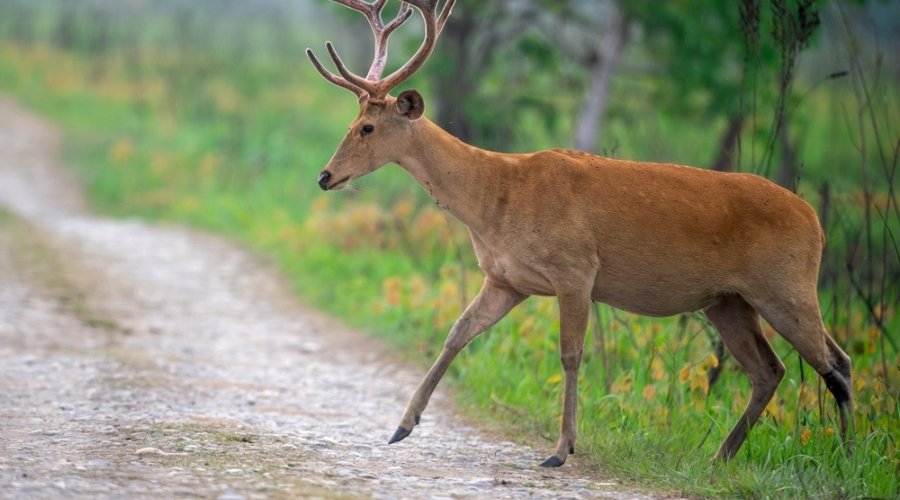
The meadow stretches golden-brown beneath December morning light—that distinctive Sonf grassland where rare swamp deer appear predictably if you know seasonal patterns, understand Kanha’s microhabitats, and possess patience capturing barasingha demands. Our RAP Safaris naturalist Dinesh whispers: “Bull approaching. Three hundred metres. Notice antlers—fourteen tines, remarkable specimen.” Through 500mm lens, the magnificent male emerges from sal forest edge, that impossible rack of antlers—branching like tree crown against azure sky—justifying Hindi name “barasingha” meaning “twelve-horned” though exceptional individuals carry twenty-plus tines creating crowns matching any cervid globally. This bull, territorial male Dinesh tracked across four seasons within Kanha’s meadows, represents living testimony to conservation triumph Australian photographers from Australia to India increasingly seek documenting: species rescued from sixty-six individuals brink-extinction 1970 to over 1,100 today through dedicated protection validating that sometimes, when commitment meets expertise, extinction proves reversible rather than inevitable. This is the RAP Safaris Barasingha Project—fifteen years systematically photographing Madhya Pradesh’s state animal whose recovery represents India’s greatest cervid conservation success story unfolding across sal forests and grassland ecosystems where only expert guidance transforms complex ecology into portfolio-worthy encounters.
Welcome to Kanha National Park—where barasingha photography means documenting not merely rare species but conservation legacy defining what becomes possible when protection prioritizes survival over convenience.
Understanding why capturing barasingha carries weight beyond typical wildlife photography requires recognizing conservation narrative these swamp deer embody. The hard-ground barasingha (Rucervus duvaucelii branderi)—subspecies adapted to sal forest and firm meadow rather than wetland swamps—exists exclusively Kanha. Nowhere else globally. This endemism makes Kanha’s population irreplaceable: extinction here equals global extinction.
The 1970 crisis nearly achieved that permanence. Rampant hunting, habitat degradation, disease transmission from livestock, and competition from domestic cattle reduced Kanha’s barasingha from 551 individuals (1953 count) to catastrophic sixty-six in 1967/1970. This represented perhaps world’s most endangered deer population—lower than mountain gorillas, lower than Javan rhinos, genuinely teetering at extinction’s precipice.
But Kanha’s management responded with conservation measures proving revolutionary: predator-free boma enclosures allowing populations recovering without tiger predation stress, active grassland restoration creating optimal meadow habitat, village relocations expanding core protected areas, disease management reducing livestock contact, and perhaps most crucially—daily monitoring maintaining population awareness preventing unobserved decline.
The recovery proved gradual but inexorable: 200-plus individuals by 1980s, 450 by 2015, over 800 by 2020, and current estimates approaching or exceeding 1,100 barasingha inhabiting Kanha across multiple meadow complexes. This eighteen-fold increase across five decades represents conservation success rivaling giant panda recovery, validating that dedicated protection delivers measurable results.
For RAP Safaris photographers, barasingha encounters carry emotional resonance beyond aesthetics. These aren’t merely beautiful cervids—they’re survivors representing what becomes possible when conservation commitment endures across generations rather than abandoning efforts when outcomes remain uncertain.
Barasingha photography in Kanha centers on distinctive grassland ecosystems called chaurs or meadows—those open expanses breaking sal forest monotony creating habitat mosaics supporting diverse ungulate populations. The primary barasingha concentration areas include Sonf Meadows and Kanha Meadows—extensive grasslands where herds graze openly creating compositions showing deer within landscape rather than isolated against forests.
The sal (Shorea robusta) forests framing these meadows create architectural backdrop: vertical trunks providing compositional rhythm, canopy creating filtered light, and that distinctive amber quality when morning sun angles through branches. But what makes Kanha’s landscape photographically exceptional: the meadows themselves—flat enough allowing sightlines extending hundreds of metres, diverse enough supporting varied grass species barasingha prefer, and managed carefully preventing woody encroachment maintaining open character.
RAP Safaris expertise manifests through seasonal knowledge determining when/where barasingha appear. Post-monsoon (October-November), herds utilize specific meadow sections where fresh grass growth attracts congregations. Winter months (December-February), barasingha concentrate zones where frost-protected grasses remain palatable. Pre-summer (March-May), they gather near water sources as grasslands brown creating clean backgrounds photographers prize.
Our naturalist Dinesh recognizes individual bulls—that fourteen-tined male utilizing Sonf northern section, the exceptionally dark-coated female leading family group near Bishanpura, the adolescent males forming bachelor herds practicing sparring rituals establishing dominance hierarchies. This intimate knowledge allows strategic positioning: we don’t randomly drive Kanha hoping barasingha appear; we position where specific individuals utilize territories predictably creating targeted encounters rather than hoping chance suffices.
Barasingha antlers represent cervid evolution’s most spectacular expressions—those complex multi-tined racks creating crown-like structures distinguishing mature bulls. Capturing these magnificent appendages demands technical approaches emphasizing detail, light, and compositional isolation.
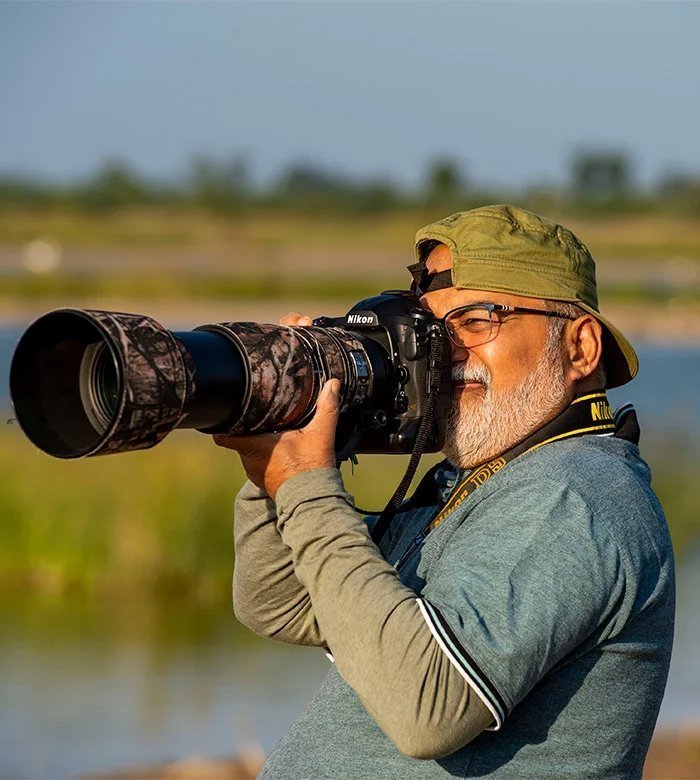
The focal length considerations favor longer reach. While meadow openness might suggest moderate lenses suffice, barasingha’s wariness maintains minimum approach distances thirty-to-forty metres. The 500-600mm lenses become essential: filling frames with antler detail showing individual tine separation, capturing that peculiar palmation some exceptional specimens display, isolating heads against sky emphasizing crown architecture against clean backgrounds.
The exposure challenges center on contrast. Mature bulls display dark chocolate-brown coats (darker than chital’s fawn tones) photographing significantly darker than dry-season grassland backgrounds. Camera meters fooled by bright meadows underexpose barasingha into silhouettes unless manual exposure compensates: spot-meter on deer’s illuminated portions, add 1/3 to 2/3 stop maintaining coat detail, accept some background brightness as inevitable compromise creating high-key aesthetic characteristic best Kanha barasingha imagery.
The behavioral sequences these deer display create narrative opportunities: rutting males clashing antlers during September-October breeding season, females nursing fawns revealing family bonds, herds alarm-calling when predators approach creating tension-filled moments, and that peculiar “pronking” gait—stiff-legged bouncing—barasingha employ fleeing threats creating action sequences freezing mid-leap.
RAP Safaris training emphasizes patience over pursuit. Barasingha, though numerous, remain genuinely wild—no habituation comparable Kanha’s tigers exists. Maintaining respectful distance, avoiding blocking escape routes, and reading body language—ears pivoting, heads raising, alarm snorts—prevents disturbance while allowing meaningful documentation spanning hours rather than minutes as herds graze, interact, and gradually tolerate respectful observation.
Between dawn and afternoon safaris capturing Kanha’s barasingha, the park’s position within Baiga tribal heartland introduces cultural restoration matching conservation narrative. The Baiga people—forest dwellers whose name derives from “vaidya” (healer) reflecting botanical medicine expertise—maintain traditions connecting communities to wilderness barasingha inhabit.
Baiga cuisine centers on coarse millets—kodo (Paspalum scorbiculatum) and kutki (Panicum sumatrense)—grains thriving harsh conditions where conventional crops fail. These millets, ground into flour or cooked as porridge, provide sustenance adapted to forest-dwelling lifestyles. Pej, traditional beverage prepared from ground grains or rice water, delivers hydration and nutrition valued during agricultural labor seasons.
Tikkad roti represents distinctive preparation: dough pressed within kachnar (camel foot) leaves, roasted over embers creating smoky flatbread impossible replicating conventional ovens. Forest mushrooms—varieties like putpuda gathered monsoon seasons—supplement diet providing protein and earthy flavors. Mahua tree products pervade Baiga cuisine: oil extracted from seeds used cooking, sun-dried flowers brewed into tea or fermented into traditional beverage, creating multi-purpose resource forest provides communities inhabiting its edges.
These meals, experienced through cultural programs lodges near Kanha offer or through Baiga thalis some properties serve, become education matching wildlife documentation. The food carries stories—communities adapting through millennia forest-dwelling, crops suited marginal conditions, and cooking techniques predating modern infrastructure maintaining relevance through nutritional superiority and cultural continuity.
The Baiga relationship with barasingha proves complex: reverence for species sharing forest, economic tension when protected areas restrict traditional practices, and gradual shift toward conservation employment as tourism provides livelihoods replacing subsistence extraction. Many Kanha naturalists and trackers come from Baiga communities—their forest knowledge, tracking skills, and ecological understanding flowing from generational experience rather than formal education, creating guidance quality impossible achieving through textbook learning alone.
For Australian photographers reaching Kanha from Australia, logistics flow through Jabalpur (165 kilometres north) or Nagpur (260 kilometres east). Jabalpur’s airport receives domestic flights from Delhi, Mumbai, and other hubs, with three-to-four hour drives reaching Kanha gates. Alternatively, overnight trains from major cities deliver travelers directly to Jabalpur Junction allowing scenic overland approaches through central India’s agricultural landscapes.
Kanha operates mid-November through June with Wednesday closures for most zones. November through February delivers optimal barasingha photography: comfortable temperatures (8-25°C), active wildlife behavior, rutting season creating antler-clashing drama, and grassland golden-brown providing clean backgrounds. March through May sees temperatures climbing toward 40°C but offers advantages: thinning grass improving visibility, barasingha concentrating at water sources, and that harsh light creating dramatic contrast when utilized deliberately.
The zones differ barasingha concentration significantly. Kanha zone—particularly Sonf Meadows—delivers highest encounter probability with herds appearing predictably. Mukki zone provides alternative access points where barasingha populations utilize different meadow complexes. RAP Safaris coordinates zone allocation strategically, securing permits maximizing encounter probability while targeting optimal meadows specific seasons favor.
Accommodation clusters around Khatia, Mukki, and Kanha gates offering options spanning budget guesthouses to premium eco-lodges. Properties like Kanha Earth Lodge and Banjaar Tola combine luxury with proximity, offering naturalist-guided safaris, evening programs exploring tribal heritage, and cuisine celebrating regional traditions. Many lodges accommodate solo travelers and women-only groups, recognizing serious wildlife photography attracts independent practitioners regardless of demographics.
The RAP Safaris Barasingha Project difference manifests through commitment extending beyond casual guiding into systematic documentation: tracking specific individuals across seasons, understanding population dynamics through daily observations, and positioning photographers capturing not anonymous deer but known animals whose stories we’ve followed intimately creating depth impossible achieving through brief visits hoping random encounters deliver portfolio images.
Ultimately, the RAP Safaris Barasingha Project capturing rare swamp deer in Kanha’s sal meadows represents more than wildlife photography—it’s visual testimony to conservation triumph proving extinction proves reversible when commitment endures, when protection prioritizes species survival, and when communities surrounding parks become stakeholders rather than adversaries.
When that magnificent bull finally retreats into sal forest, when your memory cards document not merely rare cervids but conservation survivors representing eighteen-fold population increase across five decades, when those impossible antler crowns captured through frames become evidence validating protection efforts—you understand why barasingha photography carries weight beyond beauty into genuine significance.
After fifteen years RAP Safaris tracking Kanha’s barasingha, the privilege never diminishes. The swamp deer graze meadows their ancestors occupied when extinction loomed imminent. The sal forests shelter populations recovered from catastrophic lows. And photographers arrive—from Australia, from across continents—discovering that sometimes wildlife photography’s greatest honor involves documenting not merely what exists but what nearly vanished yet persists through human commitment proving that conservation, when practiced with dedication matching the RAP Safaris Barasingha Project’s systematic approach, delivers miracles measurable not through rhetoric but through populations rising from sixty-six toward 1,100-plus across decades where every captured image testifies: sometimes, genuinely, we save species from extinction’s edge and witness their triumphant return across India’s meadows where rare becomes common, endangered becomes recovered, and barasingha continue grazing Kanha’s sal forests proving conservation works when we refuse accepting defeat.