March 15, 2026
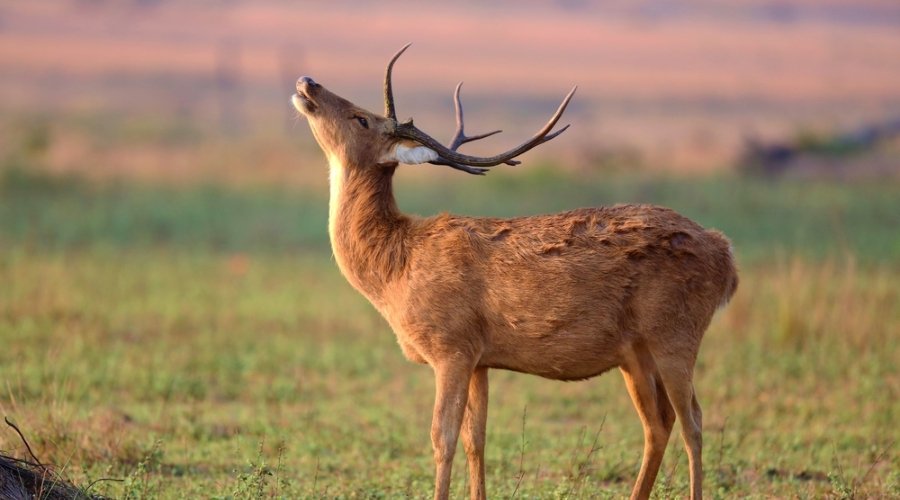
Dawn arrives softly at Kanha. Not with dramatic fanfare but through gradual revelation—mist lifting from Sondar meadow like a curtain rising on nature’s oldest theatre. Through the dissolving fog, shapes emerge: twenty barasingha moving in single file across grassland gilded by first light, their twelve-tined antlers catching sun that transforms ordinary morning into something approaching reverence. The stags pause, necks extended, testing air for danger their ancestors knew intimately when extinction stalked closer than any tiger ever could.
This is Kanha National Park at its most profound—where soft light filters through sal forest canopies, where swamp deer graze meadows reclaimed from the brink of biological extinction, and where conservation photography becomes meditation on survival, dedication, and the stubborn refusal to let beauty vanish quietly into history’s footnotes.
For Australian photographers seeking narratives beyond typical tiger encounters, Kanha’s barasingha story offers something genuinely transformational: witnessing conservation that succeeded when failure seemed inevitable, documenting species recovery measured not in decades but across lifetimes of committed work, and capturing light so extraordinary it requires no filters.
Understanding Kanha’s swamp deer resurgence requires confronting how close we came to losing them entirely. In 1938, approximately 3,000 hard-ground barasingha roamed Central India’s sal forests and grasslands. By 1967, a single population of 66 individuals survived—exclusively within Kanha’s boundaries. That represented the entire global population of this subspecies. Complete extinction hovered mere years away.
What reversed this trajectory wasn’t accidental but painstaking: 35 forest villages relocated to expand core protected areas. Evacuated lands transformed into managed grasslands where barasingha’s favorite grasses—Saccharum, Imperata, Narenga—thrived under careful cultivation. Predator-proof boma enclosures allowed safe breeding. Fawning seasons saw mothers protected from jackals and pythons during those critical 48 hours when newborns couldn’t flee threats. Daily monitoring documented individual animals. Forest guards like Ram Bharose Masram at Sondar camp patrol 10 kilometres daily, watching, recording, protecting.
The mathematics tell remarkable stories: 450 barasingha by 2015. Over 800 by 2020. Current estimates exceed 1,100 individuals. From near-extinction to thriving population in five decades represents conservation achievement rivaling anything India has accomplished. The swamp deer, Madhya Pradesh’s state animal, carries its own mascot now—Bhoorsingh the Barasingha, meaning “golden antlers.” That nickname captures exactly what photographers chase: those magnificent twelve-tined racks catching soft morning light across Kanha’s famous meadows.
What makes Kanha photography exceptional isn’t merely wildlife subjects but how ecosystems create visual magic through natural architecture. The sal forests—Shorea robusta dominating 940 square kilometres—filter light with particular softness. Unlike harsh midday clarity or dramatic golden hours photographers chase elsewhere, Kanha delivers what might be called “perpetual dawn quality”—diffused, gentle, forgiving illumination that flatters subjects while revealing detail.
The meadows amplify this effect. Kankati, Sondar, and Bishanpura maidans spread like natural studios where barasingha herds graze against backgrounds simplified to grass, forest edge, and sky. During October through March when mist clings to valleys, photographers capture ethereal compositions: deer emerging from fog, antlers materializing before bodies fully resolve, that liminal quality where reality blurs toward dreamscape.
Soft light photography at Kanha operates on different rhythms than typical wildlife work. The harshness demanding split-second decisions softens into considered observation. Barasingha tolerate safari vehicles remarkably well, often grazing within photographic range for extended periods. This allows experimentation: working angles, adjusting compositions, capturing behavioural sequences rather than just isolated moments. A stag bellowing during rut, females nursing fawns, mixed herds moving through meadows with synchronized grace—these narratives unfold across minutes, not seconds.
The sal forests themselves photograph beautifully. Tall straight trunks create natural leading lines. Canopy gaps allow shafts of light penetrating to forest floors carpeted in fallen leaves. Langur monkeys inhabit upper branches. Spotted deer graze beneath. Tigers utilize the cover. But it’s barasingha that truly belong here—their coat’s golden-brown hue matching sal bark, their twelve-tined antlers echoing branch complexity, their presence completing compositions in ways tigers never could despite their celebrity.
To photograph Kanha properly requires understanding Baiga culture—the tribal community whose largest concentrations inhabit Mandla and Balaghat districts bordering the reserve. The Baiga name translates “sorcerer-medicine man,” reflecting deep knowledge of forest flora’s medicinal properties accumulated across generations. Their relationship with land borders on sacred: traditional Baiga beliefs prohibit plowing because it “scratches Mother Earth’s breast.” This reverence for wilderness aligns perfectly with conservation philosophy Kanha exemplifies.
Between safaris, Baiga cultural immersion enriches experiences in ways pure wildlife photography cannot. Traditional Baiga Thalis served at premium lodges showcase cuisine evolved from forest living: kodo and kutki millets—coarse grains unsuited for bread-making but nutritious when ground into porridge or brewed as cooling pej drink. Mahua flowers, dried and used in countless preparations from sweet dishes to traditional beverages. Forest mushrooms like putpuda gathered during monsoon sprouting. Wild vegetables—chirota bhaji, gular leaves—collected with intimate knowledge of seasonal availability.
This isn’t fusion cuisine invented for tourists but authentic tribal food reflecting centuries of forest dependency. The flavours carry earthiness, simplicity, and that particular satisfaction of eating what landscapes naturally provide rather than what agriculture forces. Premium lodges now employ Baiga cooks maintaining traditional preparation methods while meeting contemporary hospitality standards.
The Karma and Saila dances performed during festivals aren’t staged entertainment but living traditions. Dadaria dance at Dussehra involves love poems recited through movement. The intricate tattoo traditions Baiga women maintain—long parallel lines on foreheads, dots and crosses marking life passages—represent cultural continuity despite modernisation pressures. These aren’t museum pieces but evolving traditions adapting while honouring ancestry.
For Australian travellers reaching Kanha from Australia, logistics flow through accessible routes. International flights arrive Delhi or Mumbai. From there, domestic connections serve Jabalpur (165 kilometres from Kanha) or Nagpur (260 kilometres). Road transfers take 3-5 hours through Central India’s countryside where tribal villages and forest patches preview the wilderness ahead.
The reserve operates October through June with Wednesday closures. November through March delivers comfortable temperatures and that signature soft light as morning mists persist through sunrise. February through June provides highest barasingha visibility as vegetation thins and meadows open further. The Kanha zone particularly—with Sondar and other famous meadows—requires advance permits but rewards with unmatched swamp deer encounters.
Safari timings align with optimal light: morning slots begin 6:00am catching dawn across grasslands, afternoon sessions run 3:00pm-6:00pm for evening golden hours. Expert naturalist guides familiar with barasingha movement patterns, meadow locations, and seasonal variations elevate experiences significantly. Many properties now cater specifically to solo travellers and women-only groups, recognising that wildlife enthusiasm transcends demographics and that India’s tourism infrastructure increasingly supports independent exploration.
Accommodation near Kanha ranges from government forest rest houses to luxury eco-lodges designed around photography requirements. Properties like Banjaar Tola and Kanha Earth Lodge balance authentic wilderness proximity with premium amenities—flexible meal timing for early safaris, naturalists understanding composition needs, that crucial combination of comfort and conservation commitment.
Ultimately, Kanha’s swamp deer story transcends wildlife photography. It’s proof that dedicated conservation can pull species from extinction’s brink, that communities and wilderness can coexist when economic models align protection with prosperity, and that meadows once facing silence can again echo with the bellows of twelve-tined stags defending territories their great-grandfathers never inhabited.
When those barasingha finally move from Sondar meadow toward sal forest cover, when your composition captures them framed by morning mist with soft light transforming their golden coats to luminous poetry—you’ve documented more than deer. You’ve captured testament to human dedication measured across decades, to Baiga wisdom maintaining forests their ancestors revered, and to that extraordinary convergence where conservation, culture, and natural beauty create something approaching grace.
The meadows remember the silence. The swamp deer reclaim their anthem. The soft light through sal forests illuminates not just present but future—where species once written off as doomed now thrive in numbers approaching historical abundance.
The poetry persists. The cameras capture. The barasingha endure.