India Travel Tours From Australia - Adventure | Oceania


India Travel Tours From Australia - Adventure | Oceania
January 12, 2026
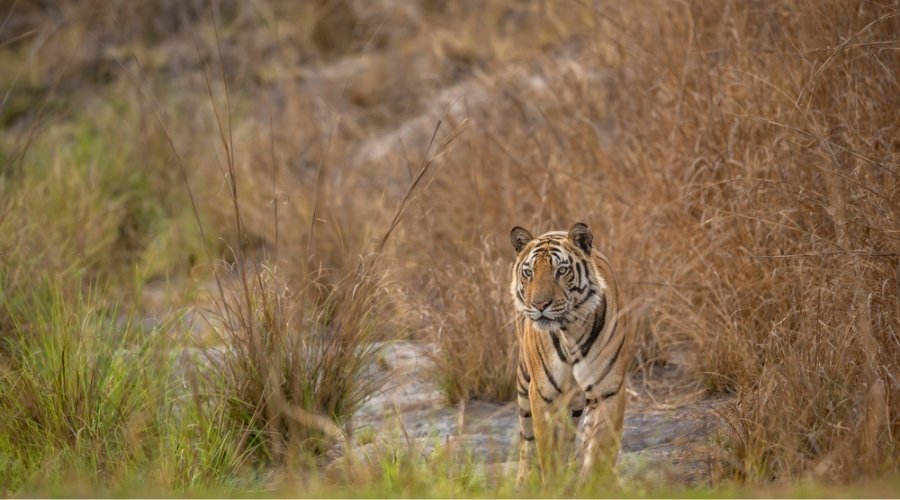
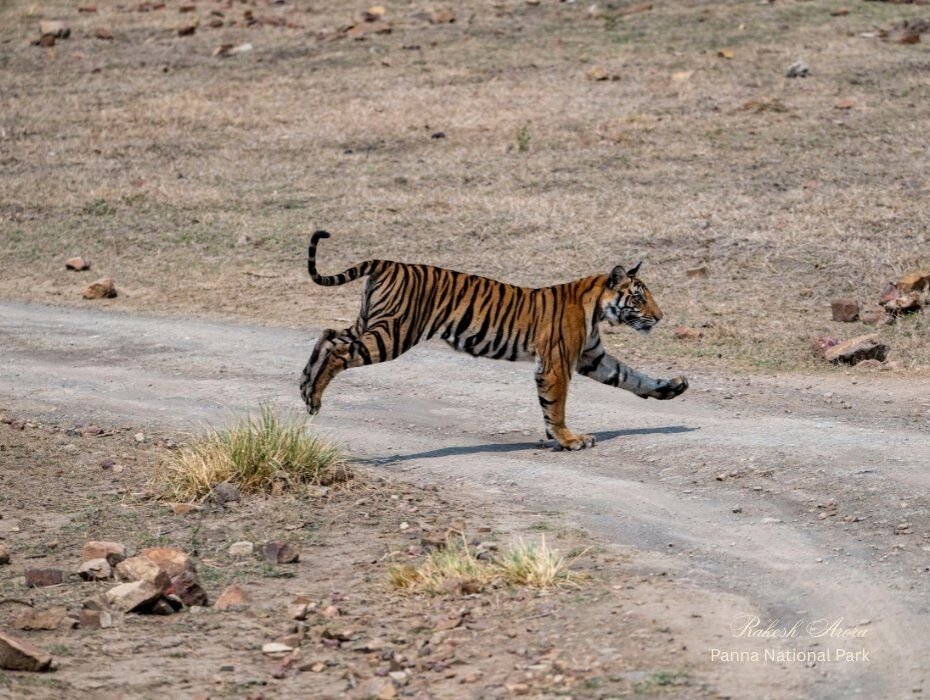
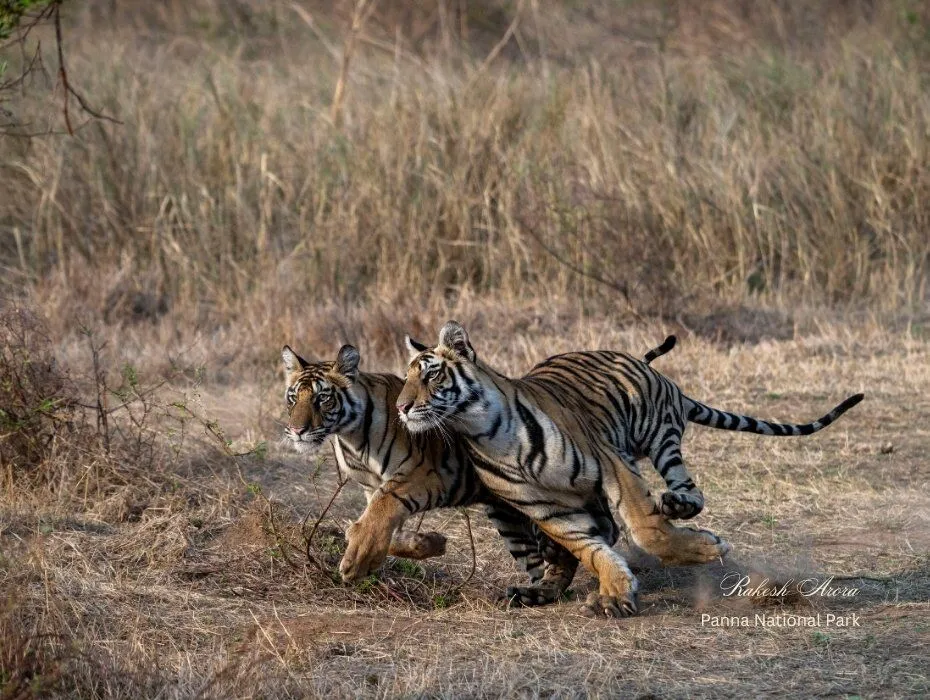
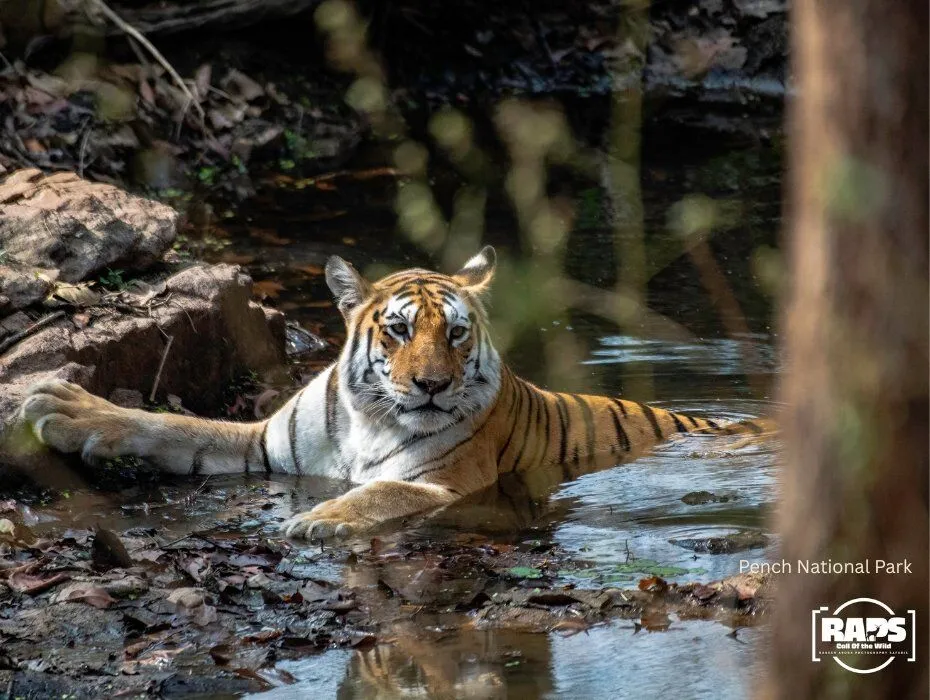
The Indian forests have many wonders, but few capture mankind’s imagination like the majestic tiger – the protector of the jungle. For many generations, this powerful predator has represented strength, fortitude, and balance of nature. Yet behind every tiger you see in a national park or jungle today in India, you will find a Conservation Story built on decades of protection, the restoration of ecosystems and community-driven efforts.
Today, travellers worldwide -including a growing number of Australians are not looking to just go on a safari. They are, in fact, seeking a deeper purpose, impact and connection to be part of a Wildlife Conservation Story that leaves the world a better place than before.
RAP Safaris has created an incredible, transformative experience in India’s tiger reserves for Australian travellers who value meaningful travel and wild, immersive journeys. They bring together the concepts of adventure and photography while also offering a rare chance to witness a Wildlife Conservation Story in action.
The Tiger’s Journey: Rising from the Fall
Once common throughout the subcontinent, poaching and habitat loss drove India’s tigers to the verge of extinction by the 1970s. Concern was raised worldwide when their numbers fell to frightening proportions.
The Indian government responded by initiating Project Tiger, a daring and innovative conservation program. One of the greatest recovery stories in history is what came next. India has gradually brought the tiger back from the brink through habitat preservation, anti-poaching enforcement, scientific monitoring, and local community involvement.
There are currently more wild tigers in India than in any other nation—more than 3,000.
This recovery is not just a statistic – it is a triumph of hope over loss. It is a reminder that nature can heal when people choose to protect it.
The Role of Tigers in the Indian Eco-system
Tigers represent more than just icons of beauty. They are key figures for maintaining ecosystem health. When a tiger population thrives, forests thrive, and thus, wildlife, rivers and local communities thrive too.
Tigers help to control herbivore populations, protect plant life (via overgrazing), and maintain ecosystem balance. The preservation of tigers automatically guarantees:
Every sighting of a tiger in a jungle safari is a direct sign of a thriving ecosystem. This is what makes the majestic animal the beating heart of India’s conservation story.
People Behind the Protection: The Unsung Heroes
Every tiger sighting is made possible by those individuals working tirelessly on the ground:
These are the real guardians of India’s wild regions. Their dedication forms the core of India’s Wildlife Conservation Story. This invisible network of people is what keeps the tiger alive. And your travel continues to sustain this network.
Where the Predator Still Roams: India’s Top Tiger Reserves
India has several of the World’s most exciting, beautiful and diverse environments for experience with wildlife in protected forests, and while there are many protected forests, some of the best include:
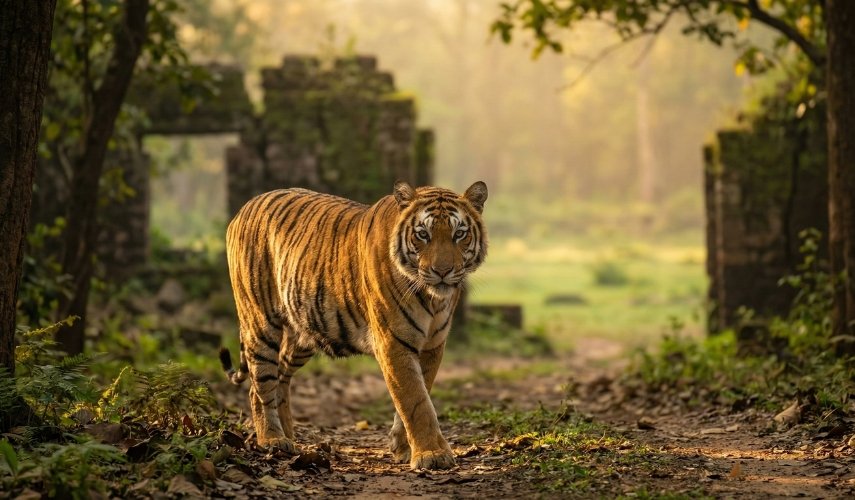
With stunning ruins of forts, Ranthambore is a paradise for photographers seeking stunning scenery and up-close tiger encounters.
With a dense population of Tigers, Tadoba – Andhari Tiger Reserve is an amazing opportunity to experience a true wilderness and an intimate look into the jungle.
Kanha inspired Rudyard Kipling’s Jungle Book and is home to some of the most beautiful scenery in India. Kanha has beautiful meadows, forests full of Sal trees, and calm tigers roaming this idyllic location.
The small, striking Bandhavgarh National Park is an excellent destination for first time visitors looking for guaranteed tiger sightings. Each reserve is an essential part of India’s ongoing Wildlife Conservation Story and each offers a unique experience to the world of Tigers.
RAP Safaris: Travel That Supports Conservation
The foundation of RAP Safaris is a straightforward philosophy: Travel should protect the wilderness, not infringe upon it.
Each Safari itinerary is carefully designed to:
RAP Safaris is committed to helping each guest become a responsible participant in India’s wildlife conservation efforts. The result is that every safari experience transforms into an active conservation effort by minimising your environmental impact.
Australians who have participated in a RAP Safari will often say they returned home with increased awareness, connection, and a desire to protect the wild places they visited.
Come, Be Part of the Story. Help Save the Stripe. Your journey can be the next chapter in this remarkable Wildlife Conservation Story. And somewhere in the jungles of India, a tiger lives another day because people like you choose to explore, learn and give back.