March 26, 2026
The langur’s alarm call shatters dawn silence—that distinctive sawing bark echoing through teak canopy signaling danger approaching. Our jeep stops immediately. Guide Ram Singh raises his hand: “Big cat. Maybe 100 metres. Could be either.” This ambiguity defines Pench—Mowgli’s forest where documenting big cats means embracing dual possibilities rather than single certainties, where each alarm could announce tiger or leopard, where Shere Khan’s descendants share territories with Bagheera’s kin, and where Australian photographers from Australia to India discover that Pench’s greatest gift isn’t merely accessing India’s most literary wildlife landscape but experiencing ecosystem where two apex predators coexist creating photographic opportunities impossible reserves dominated by single cat species.
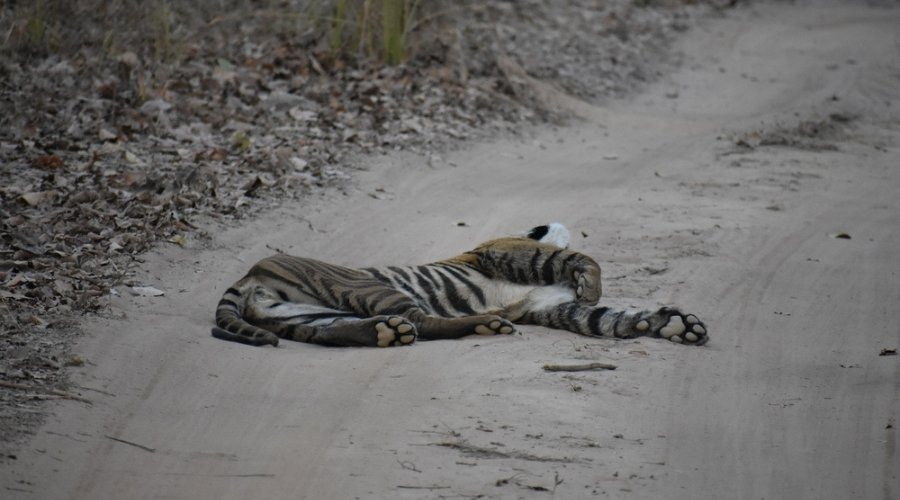
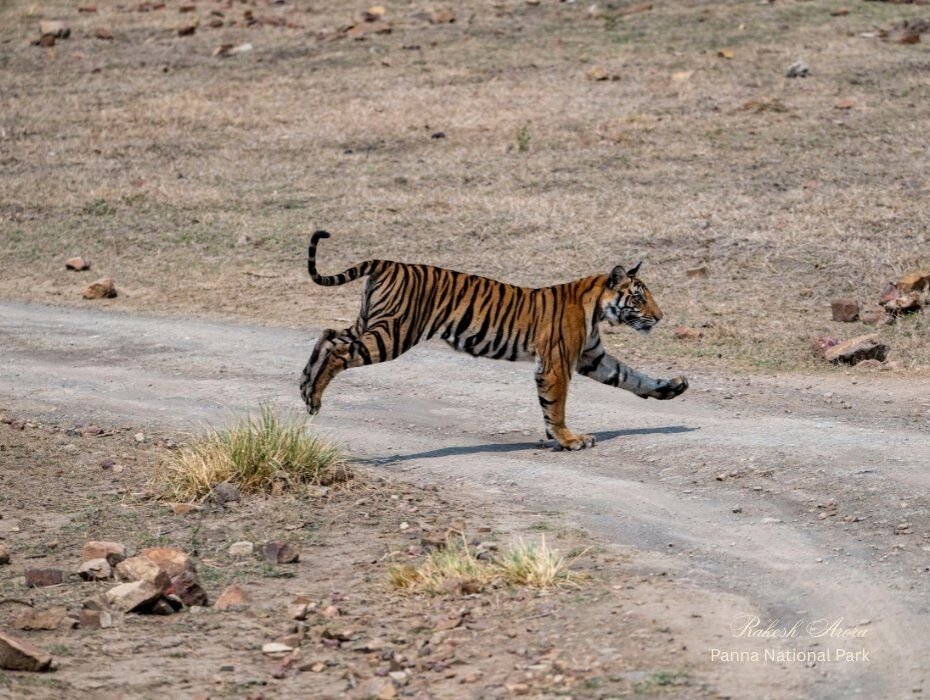
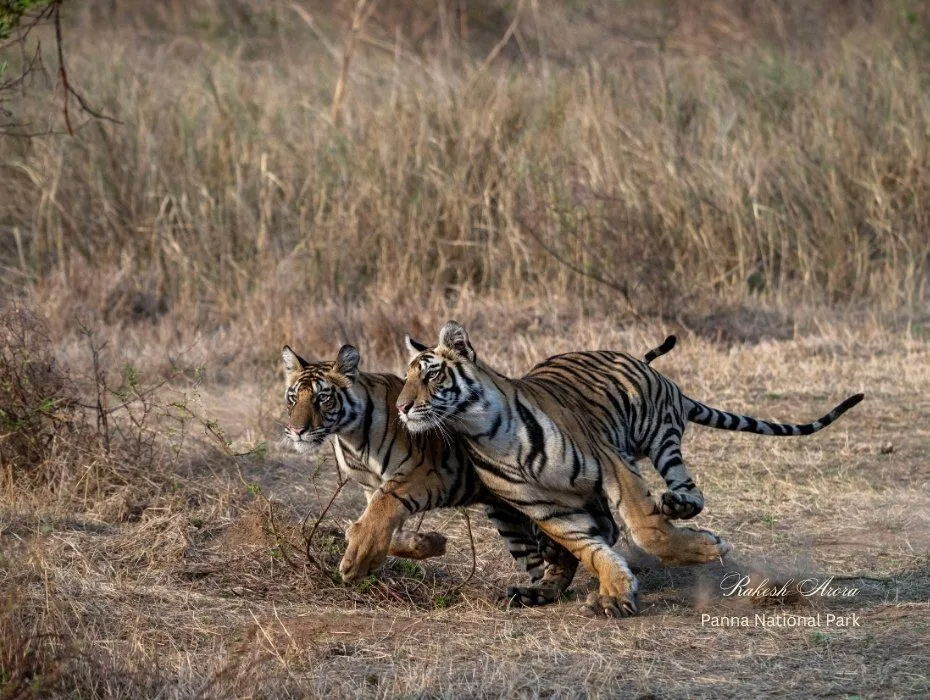
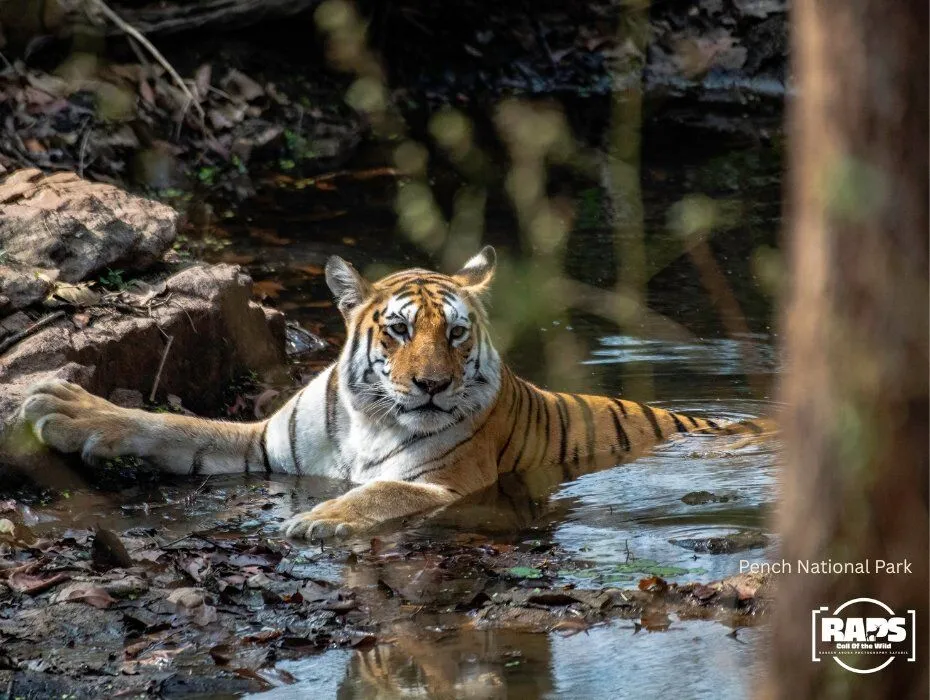
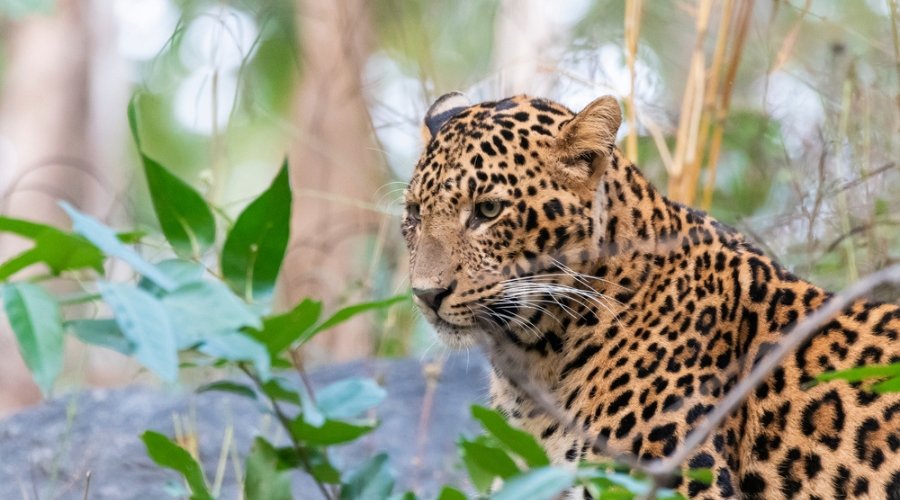
The orange form emerges from bamboo thicket—tiger, sub-adult male, maybe 24 months old—crossing forest road exactly where Wainganga River gorge creates that famous ravine Kipling described as Shere Khan’s demise location. Twenty minutes later, different alarm erupts. This time: rosette-patterned leopard descending sal tree, melting into understory with that liquid grace leopards possess exclusively. Two big cats. Single morning. Mowgli’s Pench delivering precisely what makes this reserve extraordinary beyond Jungle Book mythology.
Documenting both leopards and tigers in Pench requires understanding ecological dynamics creating coexistence rather than competition. The reserve currently supports approximately 50-60 tigers across 758 square kilometres (core and buffer combined), representing healthy density without overcrowding. The leopard population—though uncensused officially—exists in substantial numbers utilizing spatial and temporal partitioning that allows both species thriving without direct conflict.
The habitat mosaic enables this coexistence beautifully. Pench’s landscape comprises southern tropical dry deciduous forest dominated by teak, along bamboo undergrowth, interspersed with grassland maidans where Wainganga River creates permanent water source. Tigers prefer open forest and grassland edges where they hunt primary prey: chital, sambar, wild boar. Leopards utilize denser canopy, rocky outcrops, and those peculiar sal forests rising on hillsides where visibility remains limited but arboreal opportunities abound.
The temporal separation proves equally important. Tigers, being larger and more powerful, claim prime hunting hours—dawn and dusk when ungulates feed actively in open areas. Leopards, more adaptable, shift activity patterns: hunting earlier pre-dawn, later post-dusk, or during midday hours when tigers rest. This temporal partitioning appears throughout India’s forests wherever both cats occur, but Pench’s relatively balanced populations make patterns observable rather than merely theoretical.
Recent black leopard sightings add extraordinary dimension. In 2020 and again 2022, melanistic leopards—the famous “Bagheera” variant—appeared in Telia zone creating international photography buzz. These individuals, perhaps 40 percent melanistic showing faint rosettes rather than Kabini’s 100 percent black specimens, represent genetic variation occurring rarely but magnificently. For photographers, black leopard encounters become holy grail events—patience rewarded through persistence, luck meeting preparation.
For Australian photographers accustomed to India’s single-species-focused reserves—Gir for lions, Bandhavgarh for tigers—Pench delivers refreshing complexity. You’re not merely tracking one apex predator but navigating ecosystem where alarm calls require interpretation, where pug marks demand species identification, and where portfolio diversification happens organically through encounters rather than sequential park-hopping.
The literary connection transforms Pench photography from wildlife documentation into cultural storytelling. Walking Mowgli’s forest—or more accurately, driving through in canvas-topped gypsies—creates frisson impossible experiencing elsewhere. That Waingunga River gorge where Mowgli buffalo-stampeded Shere Khan into defeat? You photograph tigers crossing exactly there. The Seeonee hills mentioned throughout Jungle Book? They rise visibly from certain vantage points creating backdrop compositions. Kanhiwara village referenced in Kipling’s text? It exists still, approximately ten kilometres from Turia gate.
Documenting big cats here carries weight beyond biological recording. When your frame holds leopard lounging in sal branches, you’re capturing Bagheera’s descendant in Bagheer’s forest. When that tiger emerges from bamboo thicket, Shere Khan’s genetic lineage continues through this individual stalking territories ancestors hunted when Kipling’s father collected stories inspiring son’s imagination.
The technical photography approaches adapt to each species’ behavior. Tigers in Pench utilize relatively open forest structure—less dense than Bandhavgarh’s sal forests, more accessible than Sundarbans’ mangroves. Sightings often happen forest roads, riverine crossings, grassland edges. The 400-500mm focal lengths prove optimal: long enough filling frames at typical 30-50 metre encounter distances, short enough allowing environmental context. Many photographers discover 300mm zooms surprisingly useful capturing tigers within Pench’s distinctive teak architecture rather than isolating subjects against out-of-focus backgrounds.
Leopard photography demands different mindset entirely. These cats utilize vertical space extensively—ascending trees to rest, to cache kills, to survey territories from elevation. The arboreal behavior creates compositional opportunities tiger photography rarely provides: subjects silhouetted against sky, bodies draped along horizontal branches, that peculiar tail-dangling posture leopards adopt while resting elevated. The challenge: leopards appear briefly, vanish completely, reward patient observation over aggressive pursuit. Hours might pass scanning canopy, checking rocky outcrops, monitoring known territory markers before brief sighting materializes.
The black leopard photography, when fortune aligns, requires specialized technical approach. Melanistic individuals photograph poorly in harsh light—black coat absorbing illumination creating exposure nightmares. The optimal conditions: overcast skies providing diffused light, forest shade creating even illumination, or that magical pre-dawn / post-dusk period when ambient light levels match subject’s dark tonality. Exposing correctly demands spot-metering on leopard’s face or highlighted portions, then slight overexposure (+1/3 to +2/3 stop) preventing complete silhouetting while accepting blown highlights as inevitable compromise.
Between dawn and afternoon safaris, Pench’s position within Gond tribal heartland introduces cultural dimensions enriching wildlife experiences. The Gond people—India’s largest surviving tribal community—maintain deep forest connections predating British colonial penetration, predating Mughal expansion, extending back perhaps millennia across central India’s densely forested plateaus.
Their artistic heritage particularly fascinates visitors. Gond paintings—distinctive style using patterns, dots, and lines creating intricate nature-inspired artwork—adorn lodge walls, appear in local markets, and represent UNESCO-recognized cultural practice. The paintings depict forest animals, mythological beings, and daily life creating visual narratives connecting human communities with wilderness surrounding them.
The culinary traditions reflect forest-dwelling lifestyles through ingredients and preparations alien to mainstream Indian cuisine. Tikkad roti, bread incorporating kachnar (Bauhinia variegata) leaves gathered from forest, represents direct forest-to-table tradition where tribal families utilize what wilderness provides rather than depending entirely on agriculture. The preparation—leaves pounded, mixed with wheat flour, rolled into rotis, cooked over wood fires—creates earthy flavors connecting eaters to landscape.
Kunde ke pede, sweet preparation famous in Seoni district, provides dessert contrast. Bafla—wheat dough balls baked then simmered in dal—represents hearty sustenance adapted to forest labor demands. These meals, consumed at properties near Pench between photography sessions, become cultural education as important as wildlife documentation.
The Gond relationship with tigers and leopards proves complex: reverence mixed with fear, economic conflict balanced against cultural significance, and that pragmatic acceptance that coexistence requires tolerance even when livestock occasionally falls prey. Many safari drivers and naturalists working Pench come from Gond communities—their forest knowledge, tracking skills, and ecological understanding flowing from generational experience rather than formal education.
For Australian photographers reaching Pench from Australia, logistics flow through Nagpur—Maharashtra’s winter capital—sitting just 90 kilometres south, approximately two hours’ drive. Nagpur’s Dr. Babasaheb Ambedkar International Airport receives domestic flights from Delhi, Mumbai, Bangalore, and other major hubs. International travelers typically connect through these cities.
Pench operates October through June with Tuesday closures. November through February delivers optimal conditions: comfortable temperatures (12-28°C), active wildlife behavior, and that crisp winter light central India produces magnificently. March through May sees temperatures climbing toward 40°C but offers advantages: thinning vegetation improving visibility, wildlife concentrating at water sources, and opportunity observing tiger breeding behavior.
The dual-state structure—Madhya Pradesh and Maharashtra sectors sharing ecosystem—creates booking considerations. Most photographers target MP side accessing through Turia, Karmajhiri, or Jamtara gates where infrastructure development exceeds Maharashtra sector. However, the Maharashtra portion (Pandit Jawaharlal Nehru National Park—Blog #26!) offers uncrowded alternative for photographers willing accepting simpler logistics.
Accommodation clusters near sanctuary gates ranging from budget guesthouses to premium eco-lodges. Properties like Pench Tree Lodge, Baghvan, and Taj’s Baghvan combine luxury with proximity, offering naturalist-guided safaris, gourmet meals incorporating regional flavors, and evening programs exploring Jungle Book heritage. Many lodges now accommodate solo travelers and women-only groups, recognizing serious wildlife photography attracts independent practitioners regardless of demographics.
The safari duration matters critically. Three days minimum (six safaris) provides adequate encounter probability for tigers while allowing leopard possibilities. Five days optimal permits multiple zones experiencing different forest character, tracking specific individuals guides recognize, and developing portfolio depth rather than merely capturing presence shots.
Ultimately, documenting leopards and tigers in Mowgli’s Pench transcends technical proficiency or species checklists. It’s photographing where literature met wilderness creating cultural phenomenon introducing generations worldwide to India’s jungles. When that tiger crosses Wainganga gorge where Shere Khan fell, when leopard drapes across sal branch where Bagheera might have lounged, when your lens captures not merely subjects but story, setting, and that ineffable magic where imagination becomes reality—you understand why Pench represents something beyond typical tiger reserve.
The Jungle Book wasn’t fantasy. It was Kipling channeling Strendale’s observations, processing father’s stories, and translating Seoni’s wilderness into narrative resonating across cultures and centuries. The tigers and leopards prowl territories ancestors occupied when wolf-boy captured 1831 inspired Mowgli character. The forest architecture—teak, bamboo, sal, Waingunga flowing south—remains fundamentally unchanged despite two centuries human pressure.
Pench waits. Both big cats continue their eternal routines: hunting, breeding, defending territories against rivals. And photographers arrive—from Australia, from across continents—discovering that sometimes the most powerful wildlife images emerge not from famous crowded reserves but from literary landscapes where documenting apex predators means simultaneously capturing cultural heritage, ecological complexity, and that rare alignment where nature and narrative become inseparable, where Mowgli’s forest lives not merely in imagination but through lens capturing descendants of Bagheera and Shere Khan continuing stories begun generations before cameras existed to witness them.
Nine days on the Chobe River aboard custom photographic boats — elephant herds by the hundred — finishing at Victoria Falls.
Explore the Chobe Safari