March 20, 2026
The boat engine cuts to silence. Forty metres across Periyar Lake, a herd of gaur—twelve, maybe fifteen individuals—emerges from rainforest density into shoreline clearing. The largest bull, perhaps 900 kilograms of muscle draped in glossy brown-black coat, lowers massive head to drink. Your 500mm lens tracks movement while the boat drifts imperceptibly on current, this platform so stable, so perfectly positioned, that the shutter’s whisper seems too loud. This moment—wildlife appearing at water’s edge unaware of observation, photographed from floating vantage impossible achieving on land—defines why boat-based safaris transform rainforest photography from frustrating glimpses through vertical forest into contemplative documentation from horizontal waterways cutting through Western Ghats wilderness.
Welcome to Periyar Tiger Reserve—where Kerala’s evergreen rainforests meet artificial lake creating photography paradigm unlike anywhere else in India, where Australian photographers travelling from Australia to India discover that sometimes the best rainforest access happens not by jeep but by boat drifting silently across water mirroring canopy overhead.
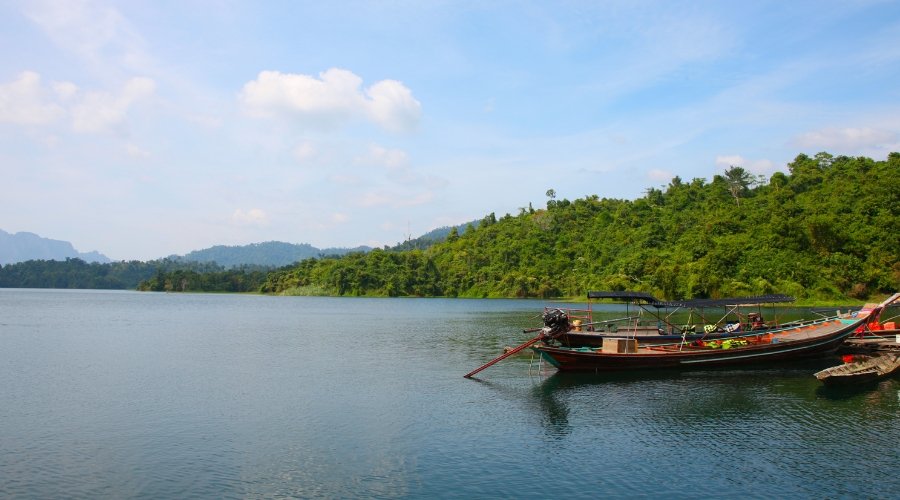
Understanding why Periyar delivers exceptional rainforest photography requires appreciating historical accident transformed into ecological opportunity. In 1895, British engineers dammed the Periyar River creating Mullaperiyar reservoir—a 26-square-kilometre artificial lake flooding valley forests. Those drowned trees, standing as silvered snags a century later, create iconic landscape element: dead trunks rising from water offering perches for cormorants, darters, and kingfishers while framing living forest beyond.
But the lake’s photographic value extends far beyond aesthetics. It functions as clearing—a horizontal opening through otherwise impenetrable Western Ghats evergreen forest where canopy closes overhead at 30-40 metres and understory vegetation blocks sight lines beyond ten metres. Wildlife gravitating to water sources must emerge from forest density into shoreline visibility, creating encounter opportunities land-based safaris in dense rainforest rarely achieve.
The boat safari structure capitalizes perfectly on this dynamic. Forest department vessels—sturdy craft carrying 50-60 tourists during peak season, smaller boats accommodating 15-20 during quieter periods—depart jetty at Thekkady five times daily. The ninety-minute circuit follows lakeshore where rainforest descends directly to water’s edge, creating frontage where elephants, gaur, sambar deer, wild boar, and occasionally tigers appear predictably at dawn and dusk drinking intervals.
For photographers from Australia accustomed to open eucalypt forests where wildlife viewing operates through binoculars across cleared understory, Periyar’s rainforest presents opposite challenge: incredible biodiversity existing invisibly behind vegetation walls. The lake solves this problem elegantly—it’s viewing platform offering perspective unattainable through forest walking, where every bend potentially reveals wildlife concentrated at essential water source.
Rainforest photography from boats demands technical approaches differing from typical safari work. The primary advantage: stability. Unlike jeeps bouncing over trails or elephant-back platforms swaying with animal movement, boats sitting motionless on calm water provide remarkably solid shooting platforms. When your boat drifts into position opposite gaur herd or elephant family, the captain kills engine completely—no vibration, no movement—allowing telephoto work at surprisingly slow shutter speeds.
The challenge becomes compositional. You’re shooting from fixed height—water level—creating uniform perspective across all sightings. Variation arrives through subject positioning: animals standing elevated on banks create slightly upward angles; subjects drinking at water’s edge allow eye-level perspectives. Smart photographers work these angles deliberately, waiting for animals to lift heads creating alert postures rather than firing continuously while subjects graze with heads down.
Light in rainforest environments operates differently than open grassland or deciduous forest. The Western Ghats canopy filters sunlight creating diffused illumination—beautiful for soft wildlife portraits but demanding higher ISO values than savannah photography. Morning boat safaris departing 7:30 AM catch optimal light as low sun penetrates forest gaps, creating shafts illuminating mist rising from water. Afternoon sessions at 3:30 PM work against harsh overhead light, but by 5:00 PM golden hour begins transforming the lake into liquid copper.
Focal length choices differ from land safaris. While 500-600mm lenses dominate tiger photography, Periyar’s boat safaris reward 300-400mm ranges allowing tighter framing without excessive magnification. The boats approach within 30-50 metres of shoreline wildlife—close enough that excessive reach creates cropped compositions losing environmental context. Many photographers discover 70-200mm zooms prove surprisingly useful capturing elephants partially submerged in water or bird flocks lifting from snags.
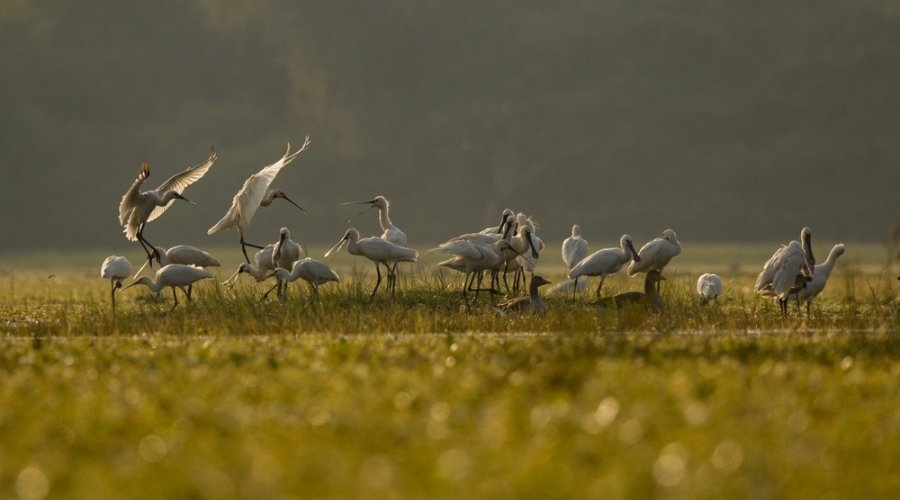
The rainforest birds particularly reward patience. Malabar grey hornbills, white-bellied treepies, Nilgiri wood pigeons, and over 250 documented species utilize lakeside territories. The dead tree snags rising from water function as natural perches where great cormorants, darters, and little cormorants sun themselves after fishing. These birds tolerate boat approaches closer than forest encounters allow, delivering frame-filling portraits impossible achieving through hide-based photography.
While elephants remain Periyar’s flagship species—the reserve supporting approximately 1,000 Asian elephants ranging across 925 square kilometres—the rainforest harbours biodiversity extending far beyond charismatic megafauna. The boat safaris provide sampling across this diversity as shoreline habitat attracts species from forest interior.
Gaur sightings occur regularly—these magnificent bovines, world’s largest cattle species, descending in herds to drink. Their glossy coats, white stockinged legs, and that peculiar dorsal ridge create instantly recognizable silhouettes even at distance. Sambar deer, India’s largest deer species, favour lakeside grasslands for grazing. Wild boar families root through shoreline vegetation. Otters occasionally appear—smooth-coated otters fishing cooperatively in family groups, creating action sequences as they dive and surface rhythmically.
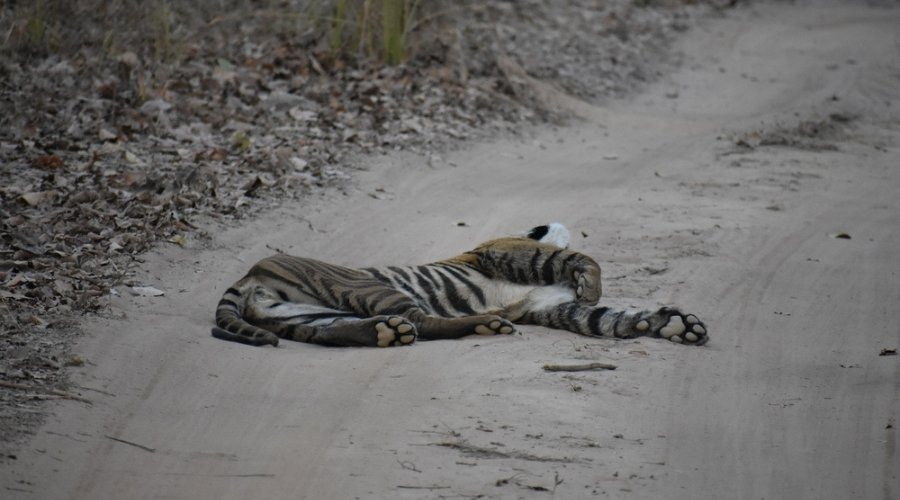
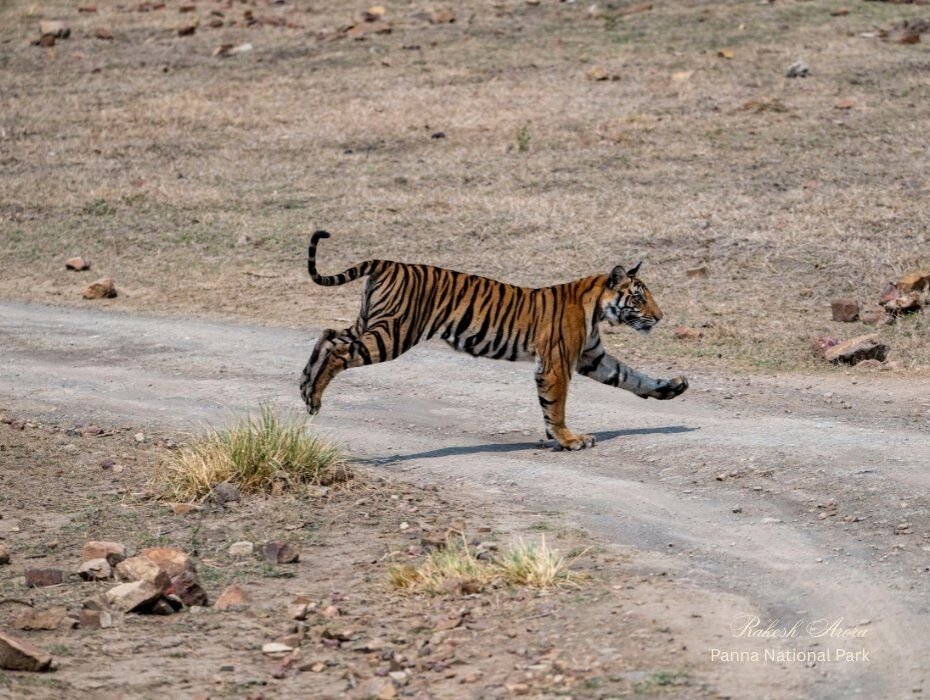
The big cats remain elusive. Tigers utilize Periyar’s forests regularly—population estimates suggest 30-35 individuals—but sightings from boats happen rarely, perhaps once weekly during optimal seasons. Leopards prove equally cryptic despite healthy populations. The realistic expectation: herbivore photography with occasional carnivore bonuses rather than guaranteed big cat encounters.
What the rainforest delivers reliably: primate diversity. Lion-tailed macaques—endemic to Western Ghats, threatened globally—inhabit forest canopy occasionally descending to lakeside fruiting trees. Nilgiri langurs, distinctive with yellow-brown coats and black faces, leap through canopy creating movement photography opportunities. Common langurs and bonnet macaques add behavioural complexity as multi-species associations interact at water sources.
Between dawn and afternoon boat safaris, Thekkady’s position within Kerala’s spice country introduces cultural dimensions enriching wildlife experiences. The town sits surrounded by cardamom, pepper, coffee, and tea plantations cascading across Western Ghats slopes—agricultural landscapes creating mosaic habitats connecting forest patches.
Kerala cuisine, particularly Syrian Christian and Malabar Muslim traditions concentrated in this region, reflects rainforest geography through ingredients and preparations. Appam and stew—the iconic breakfast pairing—combines fermented rice pancakes (crispy-edged, soft-centred) with coconut milk-based vegetable or chicken curry spiced subtly with cinnamon and cloves. The appam’s bowl shape perfectly holds creamy stew creating each mouthful’s ideal ratio.
Fish moilee represents Portuguese-influenced delicacy: pomfret or pearl spot fish simmered in coconut milk with green chillies, curry leaves, and tomatoes creating mildly spiced curry tourists particularly appreciate after masala-heavy North Indian exposure. Puttu and kadala curry—steamed rice flour cylinders layered with coconut served alongside spicy black chickpea gravy—provides hearty breakfast fuel for dawn safari departures.
The local toddy shops—traditional establishments serving fermented coconut palm sap alongside rustic preparations—offer authentic culinary experiences between photography sessions. Karimeen pollichathu (pearl spot fish marinated in spices, wrapped in banana leaf, grilled) delivers smoky complexity. Kerala beef fry, slow-cooked with coconut slivers and curry leaves, represents culinary tradition specific to Kerala where cattle slaughter remains legal unlike most Indian states.
These meals, consumed at Thekkady lodges or town restaurants, become cultural education as important as wildlife documentation. They’re moments processing morning’s images, planning afternoon strategies, and absorbing regional identity where spice trade history, Syrian Christianity, and tribal traditions blend into distinctive Kerala character.
For Australian photographers reaching Periyar from Australia, logistics flow through either Kochi (Cochin) or Madurai. Kochi’s international airport sits 200 kilometres northwest—approximately five hours’ drive through spice plantations and rubber estates. Madurai airport in Tamil Nadu lies 140 kilometres southeast—three hours through similar terrain. Both routes offer scenic overland travel; Kochi proves more convenient for international arrivals.
The nearest railway station, Kottayam (114 kilometres), connects to major Indian cities via rail network. From Kottayam, taxis or buses reach Thekkady in approximately three hours. The town itself sits at sanctuary gates, eliminating transfer logistics plaguing more remote reserves.
Boat safari bookings operate through Forest Department official website or Kerala Tourism Development Corporation (KTDC). Advance reservation proves essential during peak season (October-March) when daily sailings fill quickly. Walk-in availability exists during shoulder periods but carries risk for photographers with fixed itineraries. Ticket prices remain modest—approximately 450 rupees per person for ninety-minute safari.
The reserve operates year-round though monsoon months (June-September) bring heavy rainfall—2,000-3,000mm annually—creating conditions beautiful for atmosphere but challenging for photography. Post-monsoon (October-November) delivers lush green landscapes. Winter (December-February) offers comfortable temperatures (15-25°C) and highest wildlife visibility. Summer (March-May) sees temperatures climbing toward 30°C but thinning vegetation improving sightings.
Accommodation surrounds Thekkady in abundance: budget guesthouses, mid-range eco-lodges, and premium properties like Spice Village offering luxury within wilderness context. Many lodges now cater specifically to solo travellers and women-only groups, recognising serious wildlife photography attracts independent practitioners seeking depth over group tour structures. Properties incorporating spice plantation tours, cooking classes, and martial art demonstrations (Kalaripayattu originated in Kerala) extend experiences beyond wildlife viewing.
Ultimately, boat-based safaris through Western Ghats rainforest teach lessons extending beyond wildlife photography. They demonstrate that effective wilderness access sometimes requires accepting constraints—boats following predetermined routes, scheduled departure times, shared platforms with other tourists—in exchange for encounters impossible achieving through unrestricted exploration. The lake’s artificiality, far from diminishing authenticity, created viewing infrastructure allowing tourism supporting conservation rather than threatening it.
When that gaur herd finally melts back into forest density, when the boat motor restarts carrying you toward jetty through water reflecting canopy overhead, when your memory cards hold elephant families bathing, hornbills displaying, and that peculiar magic where rainforest reveals itself through water’s horizontal opening—you understand why Periyar represents unique paradigm. The evergreen echoes reverberate not through towering trees but across lake surface where ripples carry bird calls, where reflections double forest complexity, and where photographers discover that sometimes wilderness access requires floating rather than driving, drifting rather than pursuing, accepting forest rhythms rather than imposing human schedules.
The rainforest waits. The lake mirrors its canopy. The boats depart on schedule carrying those willing to witness wildlife through patient observation rather than guaranteed encounters, through water perspectives offering what land safari cannot, through that rare alignment where conservation, tourism, and photography converge into experiences enriching all participants—animal and human alike.
Nine days on the Chobe River aboard custom photographic boats — elephant herds by the hundred — finishing at Victoria Falls.
Explore the Chobe Safari