India Travel Tours From Australia - Adventure | Oceania

India Travel Tours From Australia - Adventure | Oceania
April 6, 2026
Picture this. It is 6 in the morning somewhere deep in Madhya Pradesh. The air smells of dew and ancient sal trees. Your jeep idles at the edge of a meadow so wide and golden it looks like something a cinematographer designed. And then your naturalist — the one who has spent two decades learning this forest’s language — raises a single finger toward the grass.
Nobody speaks. Nobody moves.
Something is coming.
That moment — the one you have imagined from your lounge in Melbourne or your backyard in Brisbane — does not happen by accident. It happens because the right person put you in the right place at the right time. It happens because someone chose the right zone that morning, read the forest’s signals correctly, and understood exactly where Bandhavgarh’s tigers would be moving before the sun cleared the treetops.
That someone is Rakesh Arora. And understanding how RAPS engineers these moments is the real story behind Bandhavgarh’s best tiger sightings.
India holds roughly 75 percent of the world’s remaining wild tigers. Within India, Bandhavgarh Tiger Reserve in the Vindhyachal ranges of Madhya Pradesh carries one of the highest tiger densities of any protected area on the planet — between 60 and 70 tigers living within a compact, watchable landscape. For any Australian wildlife traveller, this changes the mathematics of the entire trip. You are not chasing a phantom. You are entering a living tiger stronghold.
But density is only part of the story. What makes Bandhavgarh genuinely extraordinary is how many layers the place carries. Ancient fort ruins crown a plateau above the forest canopy. A reclining stone Vishnu, carved in the 10th century, watches over the origin of a river that threads through tiger territory. Meadows named after legendary individual tigers — Charger, Sita, their descendants — carry decades of wildlife history in their grass. Bandhavgarh is not just a national park. It is a place where wild India and ancient India occupy the same breath.
Here is the gap between a good Bandhavgarh safari and an extraordinary one — and it is a gap that no generic travel article properly explains.
The park’s tourism area is divided into three core zones: Tala, Magadhi, and Khitauli. Most advice treats them as interchangeable options you simply pick from a list. They are not interchangeable. Each zone has its own character, its own tiger territories, its own seasonal rhythms — and knowing which one is performing on any given morning requires real, current, ground-level intelligence.
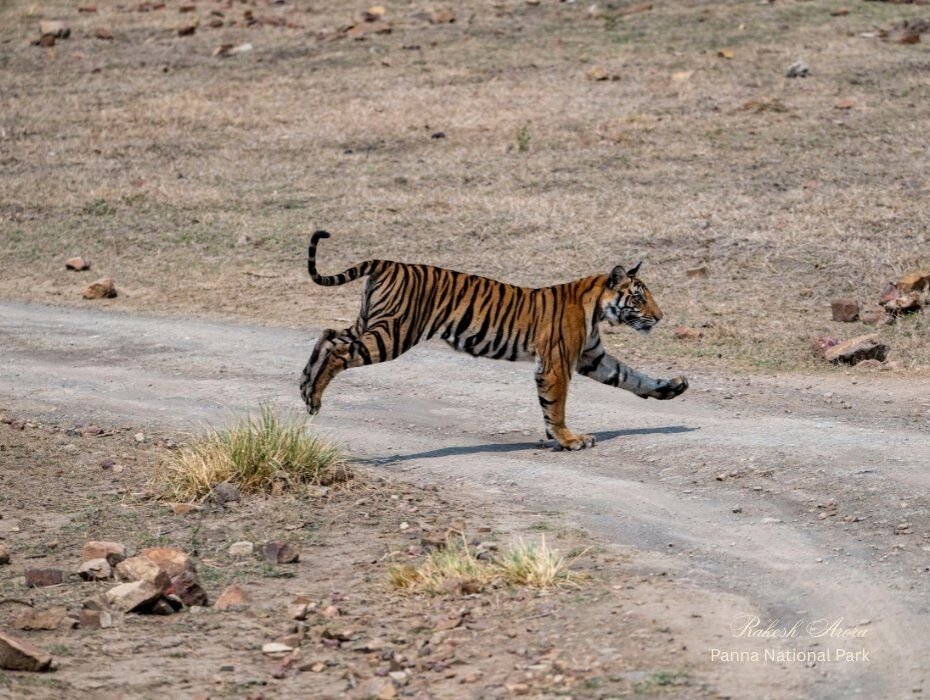
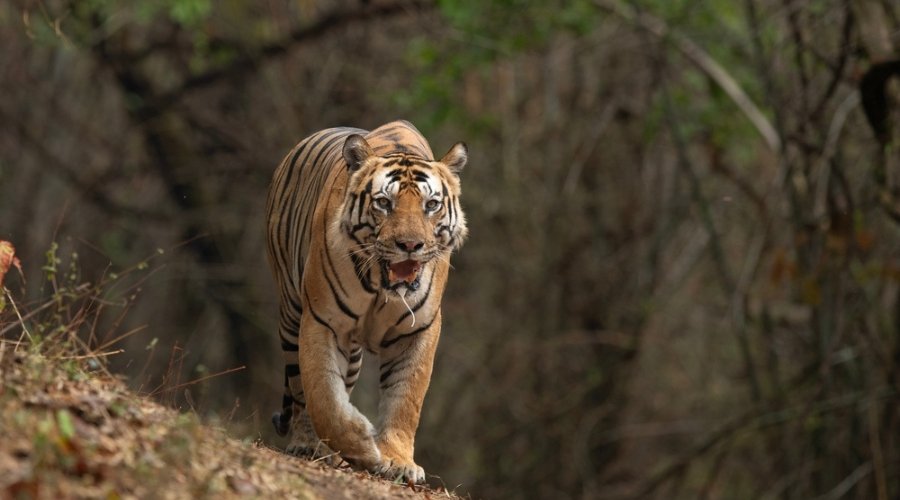
Tala is Bandhavgarh’s most storied zone. Chakradhara and Rajbhera meadows sit within it — wide, open grasslands where BBC’s landmark Dynasties documentary was filmed and where the morning light, when it falls on a tiger moving across open ground, produces images that stay with photographers forever. The ancient Bandhavgarh Fort looms over the canopy. Tiger sighting frequency in Tala is outstanding, but so is demand — permits disappear months before peak season.
Magadhi operates on a quieter confidence. A rich patchwork of grassland and dense mixed forest, threaded with natural and constructed waterholes, it shares tiger territories with Tala across a fluid border that the tigers themselves have never respected. What this means in practice is that on any given morning, the most productive encounters may be happening in Magadhi while every other vehicle has queued for Tala. An expert who knows the difference — and has the permits secured — can position you where the forest is actually alive.
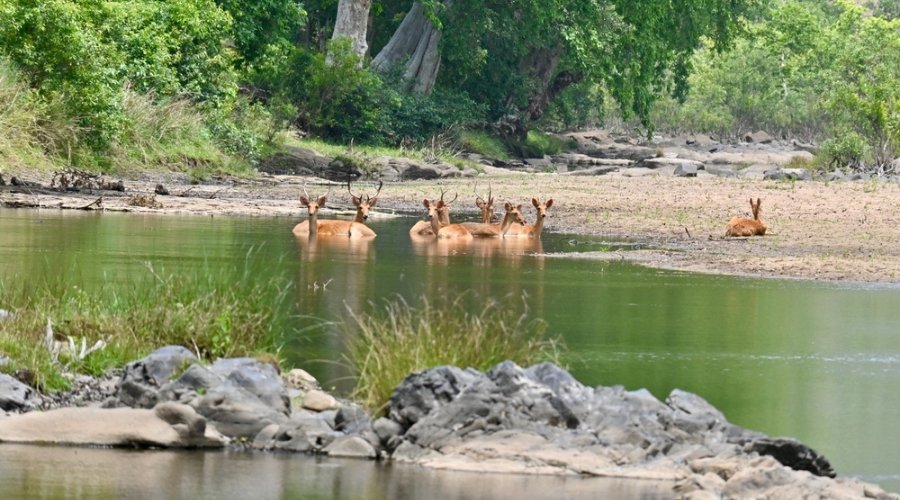
Khitauli rewards the traveller who doesn’t follow the crowd. Denser, wilder in character, and fast becoming a genuine tiger hot spot, it also hosts a herd of wild elephants that migrated down from Chhattisgarh in 2018 and never left. Watching Bengal tigers and Asian elephants share a landscape — both wild, both dominant, each quietly aware of the other — is the kind of encounter most safari itineraries never even attempt to promise.
For Rakesh Arora, a safari drive is not a route. It is a conversation.
A langur alarm call carries directional information about what moved below it sixty seconds ago. The quality of a fresh pugmark pressed into soft mud beside a waterhole tells an experienced eye which direction a tiger was heading and roughly how long ago. A herd of chital frozen at the edge of a clearing, eyes locked on something in the grass — that is a sentence in a language most safari vehicles drive straight past.
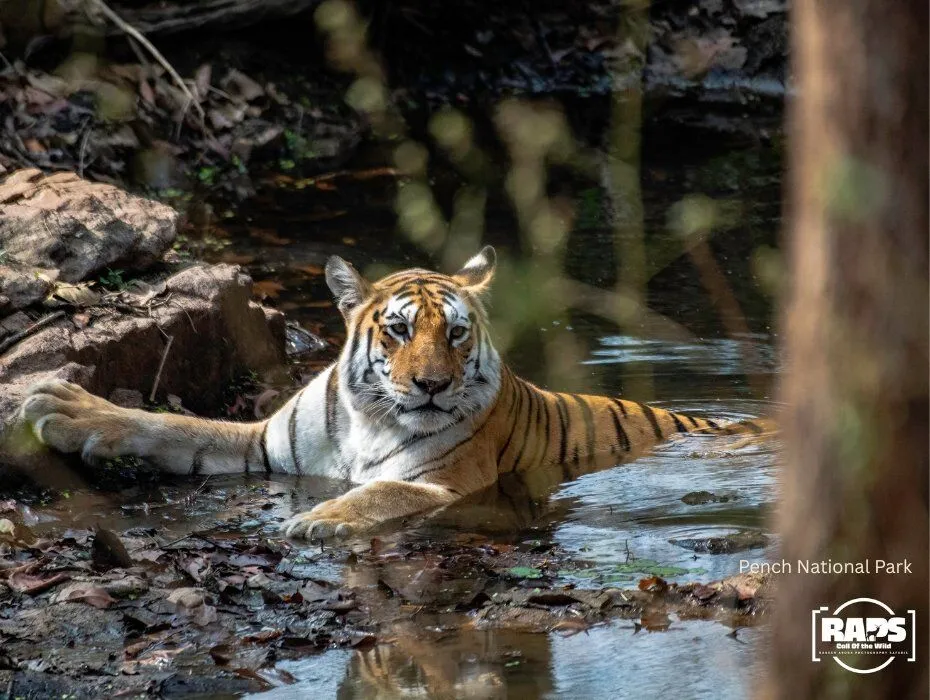
Travelling with someone who reads these signals in real time changes the texture of an entire morning. It is the difference between a tiger crossing the track at a distance and forty-five minutes with a tigress cooling in a waterhole, completely at ease, close enough to photograph her breath condensing in the morning air.
For Australian photographers specifically, this matters in ways that go beyond the sighting itself. Where to position for the light. When to hold still. How to anticipate a second movement before the camera is even raised. These micro-decisions live in decades of experience — and in Bandhavgarh, they produce images that no amount of camera equipment alone can guarantee.
The park is open from mid-October through June and every window delivers something worth travelling for.
Winter — October through February — brings cold, luminous mornings. Mist settles over the meadows. The sal forest turns extraordinary. Over 250 bird species fill the reserve during these months and tiger sightings happen regularly. For Australians who prefer cooler temperatures, this window is deeply rewarding and atmospherically beautiful.
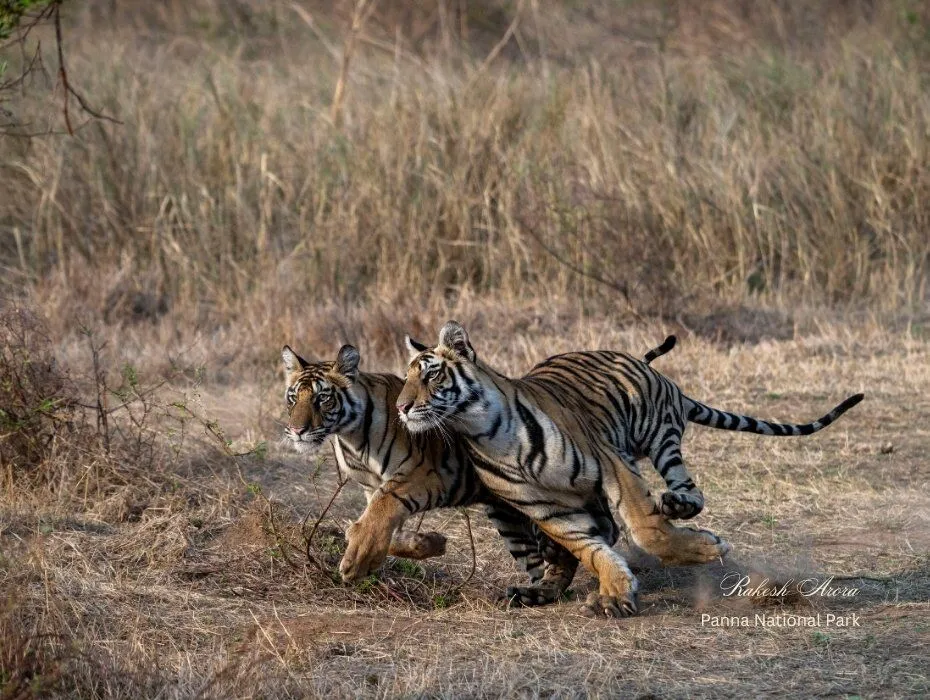
But among experienced tiger-seekers, the months of April and May are the ones that change the odds significantly. As temperatures rise and seasonal waterholes dry out, the vegetation thins to reveal a forest that is suddenly readable in ways winter never allows. Tigers and their prey concentrate around the few remaining water sources — many of which sit close to safari routes. Sightings are longer, more frequent, and more behavioural. Cubs play in open ground. Tigers cool themselves in waterholes for extended periods. Prey density near water is high enough that a hunt is genuinely possible.
For Australians comfortable with warm weather, this window is far more manageable than it sounds. Drives begin before sunrise. The productive window ends before midday heat peaks. By mid-morning you are back at the lodge, processing images over breakfast, already anticipating the afternoon drive.
Bandhavgarh permits for the core zones are strictly limited and in high demand. Peak season slots in Tala sell out well over 120 days in advance. Most independently arranged safaris arrive to find the best options already gone — settling for buffer zones, unfavourable timing, or whatever is left.
A RAPS journey is built around this reality from the very first day of planning. Zone permits are secured strategically, months ahead. Safari timing is calibrated against seasonal intelligence and recent sighting patterns from the ground. Groups never exceed eleven guests — small enough that every decision on the drive serves the wildlife encounter rather than the convenience of a crowd.
More than logistics, though, RAPS brings something that no booking platform can offer: the judgement of a wildlife photographer and safari curator who has given years to understanding the forest you are about to enter. Rakesh approaches every safari as an act of reverence — patient, humble, completely attuned to what the jungle is offering on any given morning.
Some Australians are happy to take their chances. Others — the ones for whom this journey represents something they have been building toward for years — choose to travel with someone who already knows where the tiger will be at dawn.
Tonight in Bandhavgarh, a tiger is moving through darkness that belongs entirely to her — past carved stone gods half-buried in roots, along riverbeds that have held her ancestors for generations, through meadows that glow gold at first light in a way that stops the breath.
She has no awareness of the Australian wildlife lover who has been quietly dreaming about this moment for years. She is simply living — sovereign, magnificent, unhurried.
But someone already knows which meadow she will be crossing at dawn. And they will have your jeep positioned, engine off, camera ready, light falling perfectly — long before she arrives.