India Travel Tours From Australia - Adventure | Oceania

India Travel Tours From Australia - Adventure | Oceania
March 25, 2026
The guide’s hand rises slowly. The boat motor dies mid-channel. In the sudden silence, every photographer aboard freezes—cameras raised, breath held. Amit whispers: “Dark movement. Fifty metres. Left bank.” Your eyes scan mangrove density where pneumatophore roots create vertical chaos, where light filters through canopy in scattered shafts illuminating nothing clearly. Then you see it—not tiger, exactly, but suggestion of tiger: shadow moving through shadows, stripes blending with sunlight-striped mud, that peculiar orange-brown coat dissolving into mangrove browns until distinguishing predator from forest becomes exercise in faith rather than vision. The shutter fires anyway—half hoping, fully doubting—because photographing tigers in Sundarbans’ mangroves means accepting that clear sightings represent exception while these ghost-glimpses define the norm. After fifteen years leading RAPS photography safaris across India, I maintain absolute conviction: Sundarbans delivers photography’s ultimate masterclass in patience, in reading subtlety, and in understanding that sometimes the most powerful images emerge not from subjects revealed but from shadows that suggest presence while maintaining mystery.
Welcome to the mangrove labyrinth—where Royal Bengal Tigers earned their “ghost” designation honestly, where Australian photographers from Australia to India discover that not all great wildlife photography happens in optimal light with cooperative subjects, and where learning to photograph shadows becomes more valuable than mastering techniques for capturing certainty.
Understanding why Sundarbans represents photography’s greatest challenge begins with recognizing ecological factors creating perpetual concealment. The mangrove architecture—Sundari trees (Heritiera fomes), Goran (Ceriops decandra), Gewa (Excoecaria agallocha)—creates multi-layered canopy filtering 60-70 percent of available light even midday. Unlike Central India’s deciduous forests where dry season opens sight lines dramatically, or African savannahs where grass provides primary cover, mangroves maintain year-round density: twisted trunks, pneumatophore root mazes rising from mud, understory vegetation creating barriers every three-to-five metres.
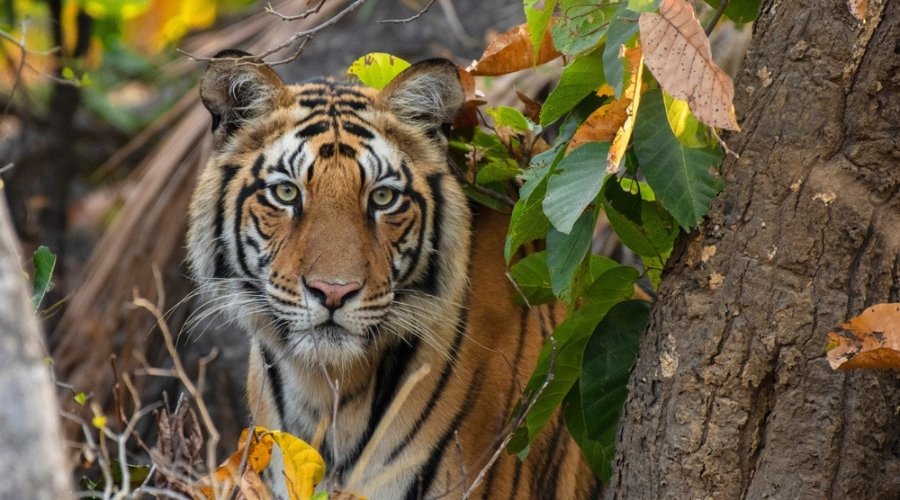
The tigers themselves evolved perfectly for this environment. Smaller than mainland Bengal tigers—males averaging 180-200 kilograms versus 220-260 kilograms typical Bandhavgarh specimens—they navigate dense vegetation with serpentine fluidity. Their stripes, which might seem conspicuous against green grass, dissolve completely against mangrove bark striations. The brownish-red coat (darker than mainland tigers) matches perfectly with sun-dried mud, weathered wood, and that peculiar amber-brown quality dominating Sundarbans’ colour palette.
But what truly makes these tigers “ghosts”: behavioural adaptation favouring stealth over visibility. Where habituated tigers in reserves like Ranthambore tolerate vehicles approaching within fifteen metres, Sundarbans cats maintain wariness born from genuine wilderness. They watch from concealment. They move through densest cover. They utilize tidal patterns and pneumatophore forests where boats cannot follow. Encounter rates reflect this: where Bandhavgarh delivers 80-90 percent sighting probability across four safaris, Sundarbans averages perhaps 20-30 percent—and many “sightings” last seconds as tigers cross channels or appear momentarily before melting into mangrove shadows.
For RAPS photographers travelling from Australia expecting experiences matching African safaris or Indian grassland reserves, Sundarbans delivers humbling revelation: sometimes wildlife refuses performing for cameras, sometimes forests resist offering clean compositions, and sometimes the greatest photographic skill involves accepting uncertainty while remaining perpetually ready for fleeting opportunities.
Shadows in mangroves create exposure scenarios defeating automated camera systems. The typical scene: tiger partially visible through vegetation, body half-shadowed, face catching filtered sunlight, background alternating between black shadow zones and blown-out sky gaps. Camera meters, programmed for average scenes, render either silhouetted tigers or completely overexposed highlights—neither delivering usable images.
The RAPS methodology, developed across fifteen years Sundarbans expeditions, emphasizes manual control over automation. We teach photographers spot-metering tiger’s illuminated portions—typically face or shoulder catching light—then underexposing 1/3 to 2/3 stop preventing highlight blow-out while accepting shadow areas falling into darkness. This creates high-contrast images emphasizing shadows rather than fighting them, producing photographs matching Sundarbans’ mysterious aesthetic rather than forcing unnatural brightness destroying atmospheric quality.
The focal length considerations differ from expectations. While 500-600mm lenses dominate most tiger photography, mangrove density means sightings happen closer than anticipated but through vegetation creating partial obscuration. The 400mm lens becomes workhorse: long enough filling frame when tigers appear at channel edges but not so extreme that tracking fleeting glimpses through foliage becomes impossible. Many photographers discover 300mm zooms prove surprisingly useful capturing environmental context—those compositions showing tigers as shadows within mangrove architecture rather than isolated subjects.
The shutter speed requirements exceed typical wildlife work. Boats rock on tidal currents. Tigers appear briefly before vanishing. The combination demands 1/1250th second minimum—fast enough freezing both platform and subject movement. This speed requirement, combined with low light under dense canopy, pushes ISO values toward 3200-6400 regularly. Modern sensors handle this noise well, but photographers must overcome psychological resistance shooting at ISO levels once considered unusable.
The composition philosophy adapts necessarily. Clean backgrounds proving impossible, successful Sundarbans photography embraces busy compositions—tigers partially obscured by roots, branches, vegetation creating layered depth. These images feel different than typical wildlife portraits but carry authenticity impossible achieving in more open reserves. The shadows, the partial concealment, the sense of mystery—these aren’t flaws but essential character defining mangrove tiger photography.
Successful RAPS Sundarbans safaris depend less on luck than developed skill reading subtle indicators preceding tiger encounters. After fifteen years navigating these channels, our naturalists recognize patterns casual tourists miss: fresh pugmarks on mudbanks indicating overnight crossings, disturbed vegetation suggesting recent passage, alarm calls from spotted deer creating concentric circles indicating predator positions, even subtle changes in bird behaviour telegraphing tiger proximity.
The tidal knowledge proves particularly crucial. Tigers time movements around tides—crossing channels during low tide when distances shorten, hunting deer concentrated on exposed mudflats, resting during high tide when flooding restricts movement. Our boat captains, many navigating Sundarbans across three decades, read tide charts instinctively, positioning boats at locations where tigers appear predictably during specific tidal phases.
The patience this requires challenges Australian photographers accustomed to guaranteed sightings. Sundarbans boat safaris operate dawn-to-dusk—typically 7:00 AM to 5:00 PM—far longer than three-hour jeep sessions typical elsewhere. Hours pass scanning mangrove banks, watching for movement, interpreting naturalists’ whispered signals. Then suddenly: “Bagh!” The engine cuts. Forty seconds of frantic photography as tiger crosses channel or pauses at forest edge. Then silence returns. This rhythm—extended anticipation punctuated by brief intensity—defines Sundarbans photography utterly unlike reserves delivering multiple extended encounters daily.
What distinguishes RAPS Sundarbans expeditions from typical wildlife tours: we prepare photographers emotionally as thoroughly as technically. The briefings emphasize uncertainty’s inevitability. We discuss previous trips where zero tiger sightings occurred despite perfect execution. We celebrate trips where fleeting glimpses delivered portfolio images through preparedness meeting opportunity.
This psychological preparation matters crucially. Photographers arriving expecting guaranteed encounters—conditioned by reserves where tigers appear reliably—experience Sundarbans as failure when sightings don’t materialize. Photographers understanding rarity makes encounters precious rather than expected experience identical safaris as profound success regardless of outcomes. The difference lies entirely in expectations managed beforehand.
The multi-day structure RAPS employs—typically five-to-six days—acknowledges probability mathematics: each additional safari day increases cumulative sighting probability while providing psychological buffer against single-day disappointments. The rhythm develops: early optimism, midweek doubt if sightings haven’t occurred, renewed hope as expedition concludes, and regardless of tiger encounters, profound appreciation for Sundarbans ecosystem transcending single-species fixation.
Between dawn and dusk boat safaris, Sundarbans’ position within West Bengal introduces cultural restoration matching physical nourishment. The cuisine particularly—Bengali food culture where fish dominates utterly—reflects delta geography through preparations celebrating aquatic abundance.
Chingri malai curry represents celebratory preparation: large prawns caught from delta waterways simmered in coconut milk gravy allowing prawn sweetness dominating subtle spicing. Served with luchi—deep-fried flatbread puffed golden—this becomes ritual marking successful sighting days. Macher jhol, everyday fish curry, provides comfort: freshwater fish in light turmeric-chilli gravy with rice creating meal consumed daily across Bengal regardless of economic status.
The sweets—mishti doi (sweetened yogurt set in earthen pots), rasgulla (cheese balls in sugar syrup), sandesh (fresh cheese sweetmeats)—provide afternoon sustenance between safaris. These preparations, consumed at Sajnekhali forest bungalows or Canning lodges, become cultural education as important as wildlife documentation.
For Australian photographers reaching Sundarbans from Australia, logistics flow through Kolkata—100 kilometres north, three-to-four hours’ drive. The typical RAPS expedition runs five-to-six days allowing adequate boat time maximizing encounter probability despite inherent unpredictability.
November through February delivers optimal conditions: comfortable temperatures (12-25°C), minimal rainfall, and highest tiger activity. March through May sees climbing temperatures but offers advantage: wildlife concentrating at water sources, vegetation thinning slightly improving visibility.
Accommodation remains deliberately modest—Sundarbans doesn’t offer luxury comparable mainland reserves. This simplicity filters tourists: those seeking resort amenities bypass Sundarbans entirely, leaving wilderness to serious enthusiasts prioritizing wildlife over comfort. Many properties now accommodate solo travellers and women-only groups, recognising shadow quests attract dedicated practitioners regardless of demographics.
Ultimately, photographing Royal Bengal Tigers in Sundarbans’ mangrove shadows with RAPS represents commitment to difficulty over convenience, mystery over certainty, and patient observation over guaranteed results. When that tiger emerges from shadows—even briefly, even partially obscured—when your frame captures not merely subject but atmosphere, when you’ve learned reading subtlety over expecting obviousness, you understand why some photographers eventually abandon crowded reserves for forgotten frontiers.
After fifteen years, after hundreds of Sundarbans expeditions, the privilege never diminishes. The shadows wait in mangroves. The tigers maintain their ghost status. And photographers arrive—slowly, deliberately—discovering that sometimes wildlife photography’s greatest gift involves learning to see not what’s revealed clearly but what’s suggested through shadows, to value fleeting glimpses over extended observations, and to recognize that working with mystery rather than fighting it separates competent photographers from those achieving genuine mastery in environments where wilderness still refuses surrendering secrets easily.
March 24, 2026
March 23, 2026