India Travel Tours From Australia - Adventure | Oceania

India Travel Tours From Australia - Adventure | Oceania
April 10, 2026
Here is something that will surprise most Australians sitting over their morning coffee.
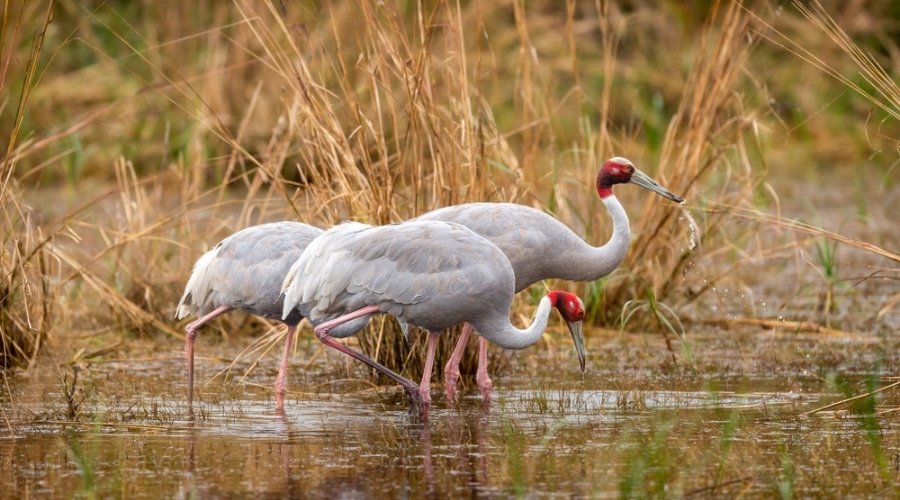
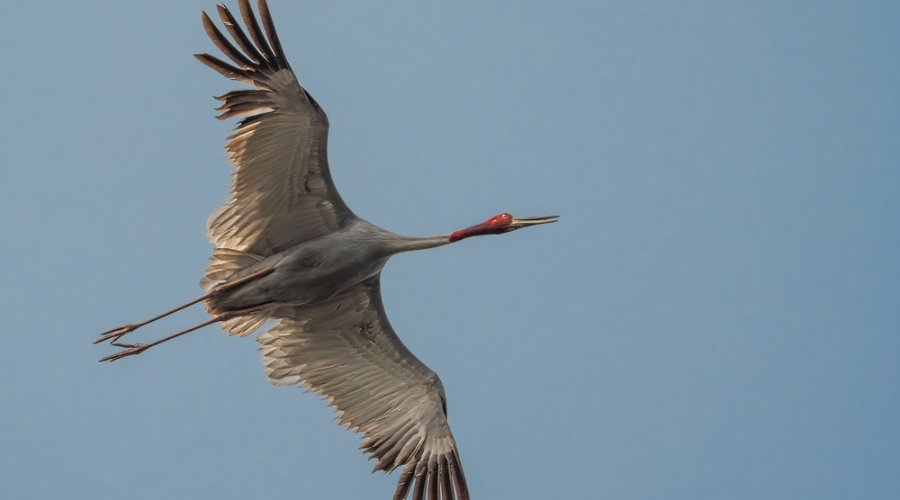
The bird standing at the edge of an Indian wetland right now — the tallest flying bird on Earth, with a blood-red crown and a wingspan that clears two metres — is a distant relative of a creature that still visits northern Queensland each year. The Sarus Crane exists in three populations across the world. One in Southeast Asia. One in India. And one, quietly extraordinary, in the grasslands and wetlands of Australia’s tropical north.
We share this bird. And yet almost no Australian has ever seen one the way it was meant to be seen — standing knee-deep in still water before sunrise, calling to its partner in a duet so resonant it carries across an entire wetland and into the body of every living thing within earshot.
That is the moment RAPS was built to deliver.
India hosts over 1,300 bird species. More than 500 of those are migratory — arriving each October from Siberia, Central Asia, and the high Himalayas as winter tightens across the northern hemisphere, flooding India’s wetlands, lakes, and grasslands with movement and colour that no other season can match.
For Australian wildlife travellers, this creates a remarkable timing alignment. India’s prime migratory bird season runs almost precisely across the Australian summer and early autumn — the very months when the idea of trading a Sydney heatwave for cold, luminous winter mornings beside an Indian wetland sounds like the best decision imaginable. You land in October or November, and the skies are already filling.
Among all the birds that India offers, the Sarus Crane holds a particular kind of authority. It is the tallest flying bird anywhere on Earth — standing close to two metres, grey-plumed, moving through shallow wetlands with a stillness that feels considered rather than instinctive.
But what elevates the Sarus Crane beyond spectacle is its behaviour. These birds bond for life. A paired male and female perform a calling display together — heads raised, wings partially lifted, voices locked in perfect synchrony — a duet that carries across still water like something between music and declaration. In India’s wetland plains, particularly across Uttar Pradesh and Rajasthan, this display happens at dawn in agricultural fields and marshes that have supported Sarus Crane populations for generations.
Here is the detail that most travel articles miss entirely: unlike most crane species globally, India’s Sarus Crane population has actually grown in recent decades. These birds have adapted remarkably to human-modified landscapes — rice paddies, irrigated fields, canal edges — living in close proximity to farmers who, across centuries of cultural tradition, have considered them sacred. It is one of the more quietly remarkable conservation stories in Asia, and witnessing a pair calling at the edge of a rice field at first light — where the farmland meets the wetland and both worlds hold their breath — is an experience that belongs in a different category from ordinary wildlife travel.
Keoladeo National Park in Bharatpur, Rajasthan, is the destination that serious bird photographers return to year after year. A UNESCO World Heritage Site where no motor vehicles are permitted — only foot, bicycle, and quiet electric rickshaw — it creates an intimacy between observer and subject that most wildlife parks simply cannot offer. Birds here are unhurried. They go about their lives at close range, unalarmed, in light that photographers specifically travel to this latitude to find.
From October through February, over 370 species fill the park. Bar-headed geese arrive from their breeding grounds north of the Himalayas — carrying with them one of migration’s most extraordinary stories. These birds cross the Himalayan range at altitudes above 7,000 metres, their specially adapted haemoglobin pulling oxygen from air so thin it would incapacitate most other flying creatures. They arrive at Bharatpur’s wetlands having completed one of the most physically demanding journeys in the natural world, and they rest here in the golden winter light as if they have simply always belonged.
Painted Storks nest in large, noisy colonies in the park’s interior woodland. Eurasian Spoonbills sweep their bills through shallow water. Purple herons stand in the reeds like brushstrokes. And across the open fields surrounding the park boundary, Sarus Crane pairs move through morning mist that softens every edge and turns every frame into something worth keeping.
For Rakesh Arora, bird photography is not about the list of species ticked. It is about the moment before the moment — the stillness required to read a bird’s behaviour and understand what it is about to do before it does it.
Knowing where the bar-headed geese will land as the sun breaks the horizon. Positioning with the Sarus Crane pair so the calling display happens with water behind them rather than sky. Understanding which section of the Keoladeo woodland the Painted Stork colony is most active in on any given morning. These decisions do not come from a guidebook. They come from years of presence — from treating wildlife photography as Rakesh describes it: an act of reverence rather than a race.
Travelling with someone who already knows where the light will fall makes every morning safari feel less like a search and more like an arrival.
November through January is the peak window for both resident and migratory species across northern India’s wetland network. Bharatpur reaches its fullest density of birdlife from mid-November through December, when the migratory arrivals join a resident population already in breeding condition. Mornings are cold enough for mist — a gift for photographers — and the winter light across Rajasthan’s open plains is precisely the quality that separates a good image from an extraordinary one.
For Australians who want to extend their journey, Bharatpur sits two hours from the Taj Mahal and within reach of Rajasthan’s great forts and desert landscapes. Some wildlife travellers weave bird photography with cultural immersion — spending mornings in the wetland at first light, afternoons in 16th-century palaces, and evenings watching the Rajasthan sky turn to amber over the desert horizon.
It is, by any measure, one of the world’s great travel combinations.
Every winter, without announcement, without ceremony, the birds arrive. Across mountain ranges, over open ocean, through the thinning air above the Himalayas — they come to the same wetlands, the same feeding grounds, the same shallow water margins that their ancestors used before the word tourism existed.
And somewhere in a rice field on the Gangetic plain, a pair of Sarus Cranes face each other at dawn and begin their duet — as they have every year for as long as anyone has been listening.
That call belongs to a story much older than any of us. And standing within earshot of it, camera raised, mist on the water, the light just beginning to warm the grey across their wings — it is one of those moments that makes you grateful, quietly and completely, to be alive.