India Travel Tours From Australia - Adventure | Oceania

India Travel Tours From Australia - Adventure | Oceania
April 11, 2026
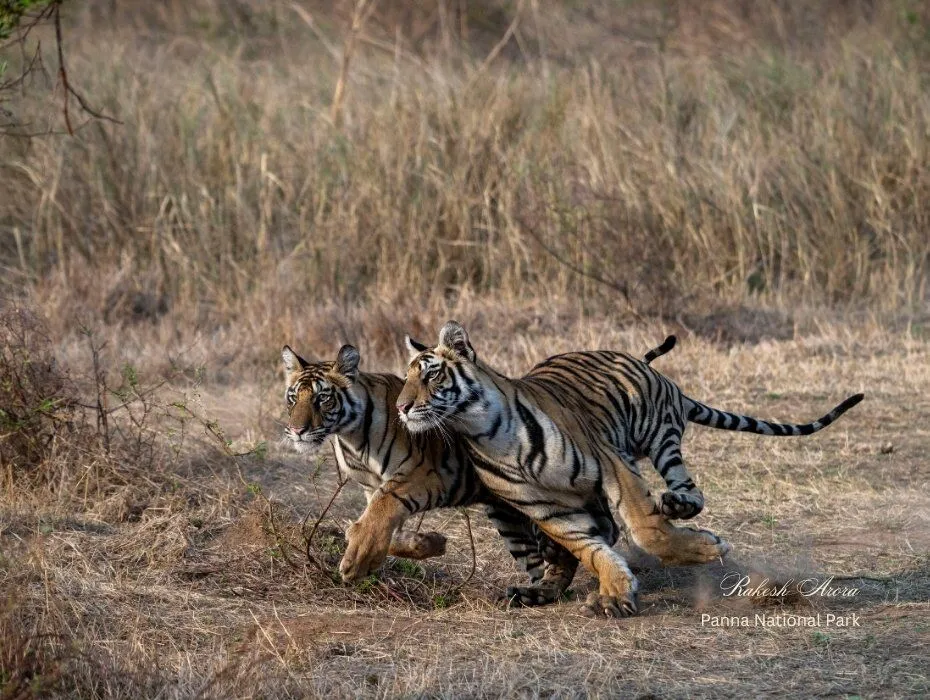
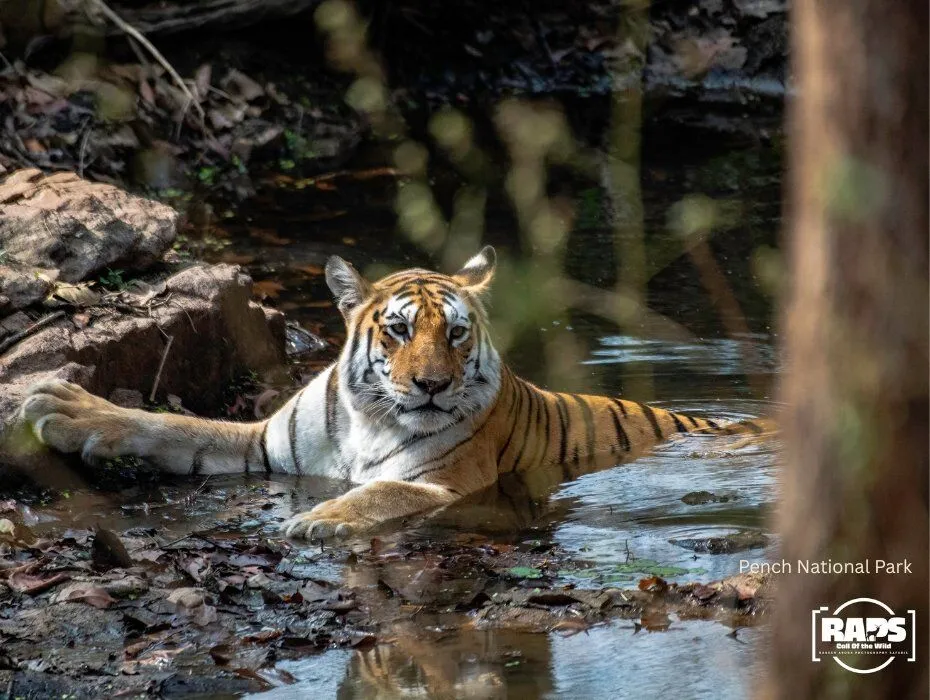
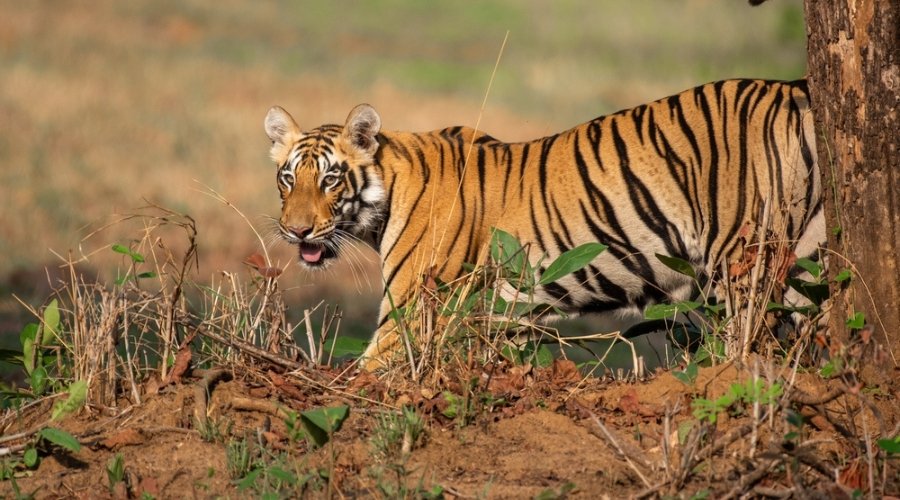
Twelve jeeps cluster at Rajbehra meadow—engines idling, cameras raised, voices hushed. The Royal Bengal Tiger—Chota Bheem, territorial male claiming Khitauli zone’s prime grasslands—drinks methodically fifty metres distant, completely unfazed by vehicular congregation photography’s density creates. This scene—multiple photographers competing for positions, guides negotiating respectfully for shooting angles, that peculiar tension between cooperation and competition—defines the density challenge Australian photographers from Australia to India encounter when shooting Bandhavgarh’s 135+ tigers compressed into 716-square-kilometre core creating world’s highest tiger density: approximately 10.7 tigers per 100 square kilometres where female territories span merely 10-20 square kilometres versus 40-60 elsewhere. Bandhavgarh delivers encounter probabilities approaching certainty—the saying persists: “In other parks, you’re lucky seeing tigers; in Bandhavgarh, you’re unlucky if you don’t”—but that accessibility creates photographic challenges only fifteen years’ RAPS expertise navigating overcrowded sightings transforms from frustration into systematic portfolio building within India’s most tiger-concentrated hills where Vindhya ranges create fortress ecology simultaneously protecting apex predators while constraining photographers competing for angles when twelve jeeps surround single subject.
Welcome to Bandhavgarh National Park—where the density challenge means mastering not merely wildlife photography but crowd navigation, compositional creativity despite vehicular constraints, and that peculiar discipline required maintaining professionalism when positioning battles test patience across hills where every meadow potentially hosts encounters yet success demands expertise beyond technical skill into strategic maneuvering only veteran guides provide.
Bandhavgarh’s claim as world’s highest tiger density flows from geographic and ecological factors creating concentration impossible replicating elsewhere. The hills—32 peaks surrounding central Bandhavgarh Fort rising 2,660 feet (811 metres)—create natural boundaries confining tigers within relatively compact territories. The three primary zones (Tala, Magdhi, Khitauli) compress tourism into limited areas where 135+ tigers utilize overlapping ranges creating encounter mathematics favoring photographers dramatically.
But density creates double-edged reality. Where Kanha’s 250 tigers spread across 940 square kilometres or Tadoba’s 115 tigers utilize 1,727 square kilometres, Bandhavgarh’s concentration means tiger territories overlap significantly with safari routes. Female Bengal tigers here maintain 10-20 square kilometre territories—half typical ranges elsewhere. Males claim 20-50 square kilometres versus 60-100 typical northern parks. This compression means safari jeeps traverse multiple tiger territories single morning, creating encounter probability exceeding 90 percent across 3-4 safaris.
The challenge emerges when sightings occur. Bandhavgarh’s popularity attracts thousands of visitors peak season. When tigers appear near roads—as density ensures happening frequently—vehicles converge rapidly. The forest department permits approximately 30-40 jeeps per zone per safari. When single tiger lounges roadside Tala zone, half these vehicles might cluster within minutes creating vehicular density matching tiger density.
For RAPS photographers, navigating this reality requires expertise casual visitors lack: knowing which positioning angles minimize vehicular intrusion, understanding when arriving first versus waiting patiently after crowds disperse delivers better results, and that peculiar skill reading guide dynamics negotiating respectfully with peers ensuring all photographers capture necessary shots without monopolizing positions.
What distinguishes Bandhavgarh compositionally: the ancient fort and surrounding hills create landscape architecture impossible replicating flat reserves. The Bandhavgarh Fort—dating potentially 2,000 years, perched atop central hill visible across zones—provides background element establishing sense of place while creating historical gravitas distinguishing Bandhavgarh imagery from generic tiger portraits.
Shooting tigers with fort backgrounds requires specific positioning. The Tala zone meadows—particularly Rajbehra, Chakradhara, and areas near Tala gate—offer sightlines where fort appears dramatically behind subjects. Morning light angles northeast, backlighting fort while side-lighting tigers creating dimensionality. The hills themselves create undulating terrain unusual for Central Indian reserves: tigers appearing on ridgelines silhouetted against sky, subjects crossing slopes with fort beyond, and compositional depth achieved through layering foreground tiger, mid-ground hills, background fort creating three-dimensional images.
The RAPS expertise: our guide Mahendra knows precisely which meadow locations allow fort inclusion, understands seasonal vegetation affecting visibility, and positions cameras capturing both tiger and heritage within single frame rather than accepting compositions vehicular crowding forces accepting.
The density challenge’s photographic dimension centers on maintaining creativity despite vehicular clustering. When twelve jeeps surround single tiger, compositional options collapse dramatically. Standard positioning—perpendicular to subject allowing broadside shots—becomes impossible when vehicles occupy all angles. The technical approaches RAPS teaches transform constraints into opportunities:
Patience Over Pursuit: While novice photographers panic when crowds gather, RAPS strategy emphasizes waiting. Tigers in Bandhavgarh, habituated to vehicle presence, often remain visible hours. Initial frenzy typically subsides within 20-30 minutes as some jeeps depart seeking additional sightings. Remaining patient allows repositioning once congestion eases capturing clean compositions impossible during initial crush.
Vertical Compositions: When horizontal frames include multiple jeeps, switching vertical orientation isolates tigers against sky or vegetation minimizing vehicular intrusion. This requires anticipating tiger movements—when subject raises head, stands alert, or repositions—creating moments where vertical crops eliminate ground-level vehicles from frame edges.
Tight Crops Embracing: Rather than fighting vehicular presence, extremely tight crops—500mm or 600mm lenses with teleconverters filling frames entirely with tiger portraits—eliminate environmental context including vehicles. While environmental portraits prove aesthetically superior typically, vehicle-dense situations favor frame-filling approaches emphasizing eyes, stripes, and expressions over landscape integration.
Strategic Zone Selection: RAPS coordinates permits targeting zones balancing tiger density against tourist pressure. While Tala zone delivers highest encounter rates, it also attracts maximum vehicles. Magdhi and Khitauli zones, though slightly lower tiger concentrations, provide encounters with half Tala’s vehicular density allowing superior photography conditions despite fractionally reduced sighting probability.
Shooting tigers amidst vehicular congestion demands technical approaches differing from uncrowded reserves. The engine noise—twelve vehicles idling simultaneously—creates vibration photographers must overcome. Image stabilization becomes essential rather than optional. Shutter speeds require increasing beyond typical wildlife minimums: where 1/500th might suffice solitary jeep, crowded conditions demand 1/800th-1/1000th compensating for cumulative vibration.
The positioning constraints limit mobility. Unlike uncrowded sightings where jeeps reposition freely, dense congregations fix positions—moving risks blocking peers or disturbing subject. This immobility demands focal length versatility: 100-400mm zooms allowing composition adjustment without vehicle movement prove more useful than prime telephotos requiring repositioning achieving varied framing.
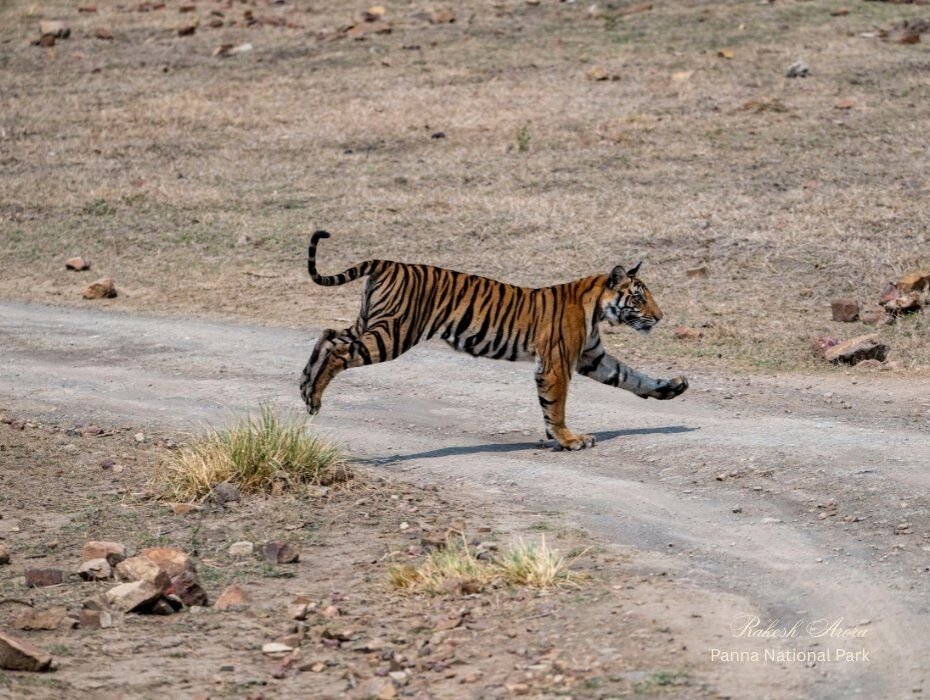
The behavioral sequences tigers display—drinking at meadow pools, scent-marking territories, crossing between hills—create action opportunities. RAPS training emphasizes anticipating movements: when tiger finishes drinking, predict exit direction positioning cameras accordingly; when subject scent-marks tree, prepare for departure toward next territorial marker. This predictive positioning—learned through years observing Bandhavgarh tiger behavior—allows capturing decisive moments peers miss through reactive rather than anticipatory shooting.
For Australian photographers reaching Bandhavgarh from Australia, logistics flow through Jabalpur (170 kilometres) or Umaria (32 kilometres via rail). International arrivals typically connect through Delhi or Mumbai before domestic flights or trains. Bandhavgarh operates October through June.
RAPS coordinates strategic approaches maximizing photography within density constraints: securing Tala permits for at least one safari experiencing prime habitat, balancing with Magdhi/Khitauli permits offering less crowded alternatives, booking accommodations near multiple gates allowing zone flexibility, and providing guides whose peer relationships facilitate respectful positioning negotiations when crowds gather.
Ultimately, the RAPS density challenge shooting Royal Bengal Tigers in Bandhavgarh hills represents mastering not wildlife photography alone but crowd navigation, compositional creativity despite constraints, and understanding that sometimes the best images emerge not from pristine wilderness conditions but from navigating complex realities where conservation success creates popularity requiring skill sets transcending technical proficiency into strategic maneuvering, patient discipline, and collaborative professionalism ensuring all photographers capturing portfolio images while respecting peers sharing passion within India’s most tiger-concentrated hills where density challenges and rewards equally.