India Travel Tours From Australia - Adventure | Oceania

India Travel Tours From Australia - Adventure | Oceania
March 10, 2026
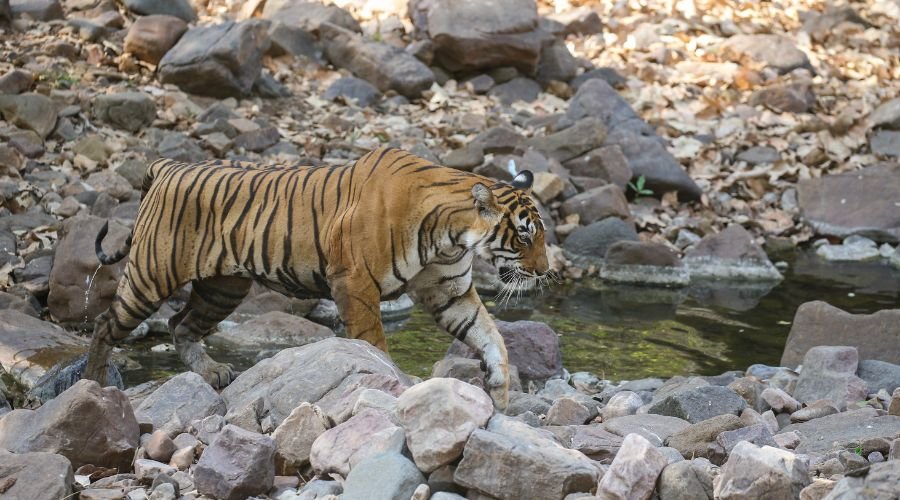
The tigress known as Krishna pads across Raj Bagh ruins with that particular confidence only Ranthambhore tigers possess. She pauses beneath a crumbling jharoka—an ornate overhanging balcony where Rajput queens once sat—and surveys Padam Talao lake spreading before her like liquid silver. Your lens captures the moment: apex predator framed by 15th-century architecture, peacocks scattering from stone chattris, the morning light transforming everything into that impossible golden glow photographers chase across continents. This single frame carries more narrative weight than a hundred generic tiger portraits ever could.
This is why Ranthambhore photography transcends wildlife documentation. This is why Australian photographers return year after year, why images from this park command attention that other reserves struggle to match, and why Ranthambhore National Park remains the undisputed crown jewel of wildlife photography in India.
Most tiger reserves protect wilderness. Ranthambhore protects living history. The 10th-century fort rising 700 feet above the forest achieved UNESCO World Heritage status in 2013, making this perhaps the only place where you photograph Bengal tigers with World Heritage monuments providing visual context. The fort’s massive walls—stretching 7 kilometres—remain visible from multiple safari zones, their sandstone battlements catching light in ways that transform ordinary landscape shots into cinematic compositions.
But the architectural richness extends far beyond the fort. Scattered through Ranthambhore’s 1,334 square kilometres sit remnants of an era when Rajput maharajas hunted these forests: elaborate pavilions with carved pillars sheltering Shivlings, mosques with delicate minarets rising from jungle clearings, palace ruins where tigers now den. The legendary tigress Machli—who died in 2016 after becoming the world’s most photographed tiger—made Raj Bagh Palace her territory for years, regularly lounging on that iconic jharoka where maharanis once watched royal processions.
This fusion of wilderness and heritage creates photography opportunities absent anywhere else from Australia to India. When Krishna’s daughter patrols past those ruins, when Sultan (T-72) drinks from temple tanks, when Noor (T-39) hunts sambar deer with Ranthambhore Fort’s ramparts filling the background—these aren’t just wildlife images. They’re visual essays on transformation: hunting grounds become conservation strongholds, royal privilege evolves into public wilderness, exploitation shifts toward protection.
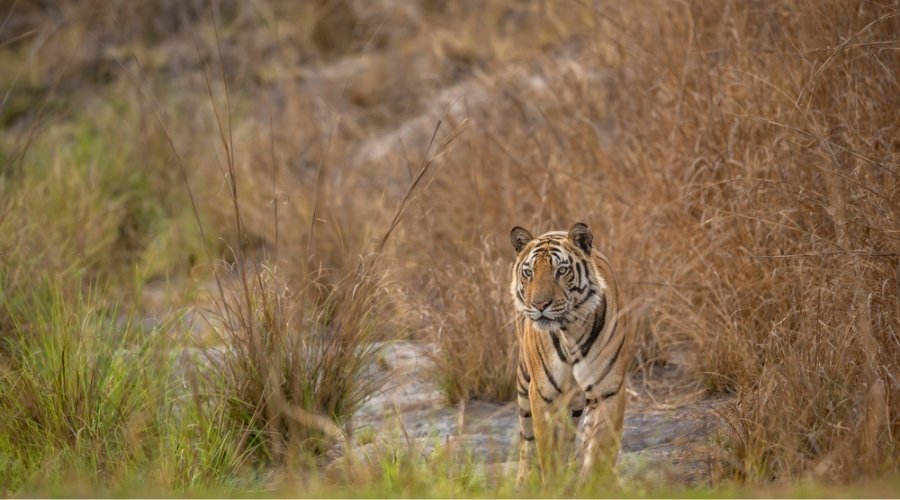
What elevates Ranthambhore above other reserves isn’t merely tiger density—though the current population of 80-plus individuals delivers sighting rates approaching 80 percent during peak season. It’s that these tigers possess personality, history, and the kind of daytime visibility that makes meaningful photography possible.
Machli remains the standard by which all tiger fame gets measured. Born in 1997, she ruled territories around the fort with an authority that brought tourists global. That famous 2003 battle where she killed a 14-foot crocodile—losing two canine teeth in the process—became documentary legend. Her genetic legacy continues through daughters Krishna and Sitara (T-28), granddaughters, and great-granddaughters who now patrol the same territories, exhibiting that same photogenic boldness.
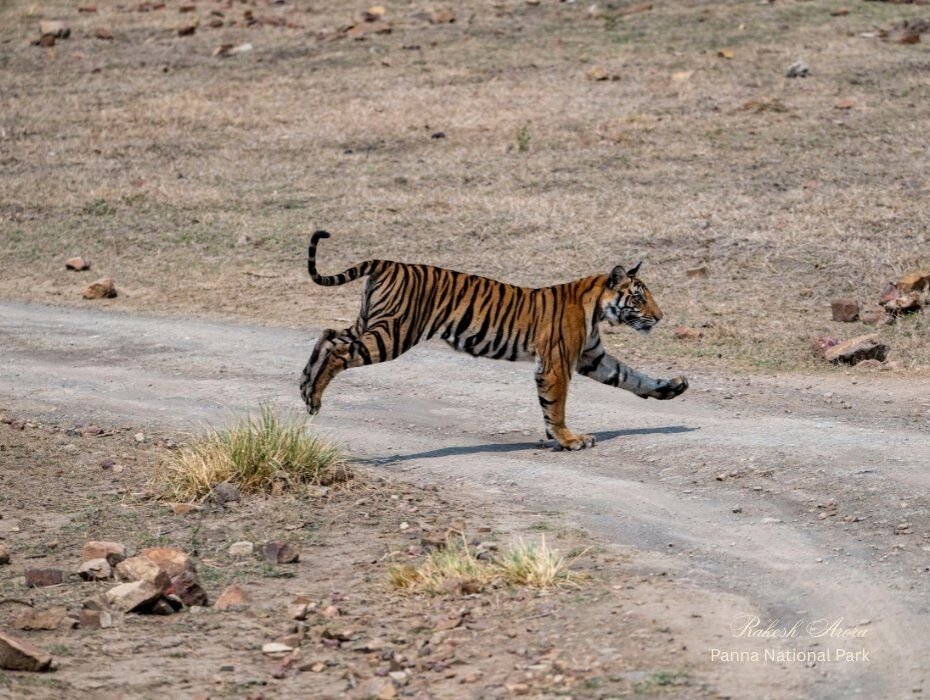
The dry deciduous habitat surrounding Padam Talao, Raj Bagh Talao, and Malik Talao creates visibility African savannahs can’t match. Unlike Central India’s dense sal forests where tigers vanish into bamboo thickets, Ranthambhore’s open terrain allows extended observation. Tigers here have adapted to safari vehicles with remarkable tolerance, often crossing tracks metres away or resting beside forest paths while photographers work from properly positioned jeeps.
Ask any photographer what makes Ranthambhore technically superior, and they’ll mention light before tigers. Rajasthan’s semi-arid climate creates atmospheric conditions that feel purpose-built for imagery. Dust particles suspended in morning air generate that soft golden-hour glow that extends beyond sunrise. Late afternoon brings backlit opportunities as tigers emerge from shade, rim-lighting their striped coats against darker backgrounds. The landscape itself—rocky outcrops, ancient trees, architectural elements—provides compositional anchors that transform snapshots into gallery-worthy frames.
The water bodies matter crucially. During April through June when temperatures exceed 42°C, tigers spend daylight hours cooling in lakes and tanks. Padam Talao particularly delivers those iconic images: tigers swimming, drinking, or simply lounging partially submerged while reflection doubles visual impact. These aren’t brief glimpses. Tigers remain visible for extended periods, allowing photographers to work angles, adjust settings, and capture behavioural sequences rather than single opportunistic shots.
Zone allocation operates through computerised randomisation, though statistical probability ensures multiple safaris grant at least one core zone (1-5) access. Zones 3 and 4—Machli’s former territories—remain photographer favourites for combining architectural elements with consistent sightings. Safari timings allow morning sessions (6:30-10:00am) catching that prime light, and afternoon slots (3:00-6:00pm) delivering sunset drama.
To photograph Ranthambhore properly requires understanding Rajasthan’s layered cultural heritage. Founded in 1763 by Maharaja Sawai Madho Singh I, nearby Sawai Madhopur town carries Rajput and Mughal influences through architecture, cuisine, and traditions. Between safaris, this cultural depth enriches experiences in ways pure wilderness destinations cannot match.
Rajasthani cuisine offers its own storytelling. Dal baati churma—crispy wheat balls served with lentil curry and sweet churma—represents survival adapted to arid climate through dishes requiring minimal water and lasting days without refrigeration. Gatte ki sabzi uses gram flour dumplings in tangy yogurt gravy, while ker sangri combines desert beans and berries into preparations showcasing indigenous knowledge. Heritage properties serve Rajasthani thalis spanning twenty dishes, creating culinary education alongside wildlife immersion.
Sawai Madhopur’s markets trade block-printed textiles, brass vessels handcrafted using centuries-old techniques, and lacquered woodwork reflecting desert craftsmanship. The town remains famous for its guavas—locally called “Madhopur guavas”—which thrive in the region’s unique topography receiving higher rainfall than surrounding desert.
Evening cultural performances at premium lodges feature Rajasthani folk music and Kalbelia dance, the snake charmer community’s hypnotic tradition. These aren’t tourist fabrications but living art forms maintaining relevance through adaptive evolution.
For Australian photographers, reaching Ranthambhore from Australia flows through major gateways. International flights arrive Delhi or Mumbai. Domestic connections serve Jaipur (160 kilometres away), or direct trains from Delhi to Sawai Madhopur Junction take approximately four hours, delivering travellers precisely to park access. The journey becomes part of the experience—watching Rajasthan’s landscape transform from urban density to semi-arid wilderness while anticipation builds.
The park operates October through mid-June. November through February provides comfortable temperatures and lush post-monsoon vegetation. February through May delivers peak tiger photography conditions as vegetation thins and water sources concentrate animals, though temperatures climb toward extreme. Safari permits require advance booking through Rajasthan’s official portal, with gypsy (6-seat jeeps) significantly superior to canters for photographic mobility and access.
Accommodation ranges from heritage properties to contemporary luxury lodges. The Oberoi Vanyavilas sets standards few worldwide properties match, while mid-range options provide comfort without extreme pricing. Many properties cater specifically to solo travellers and women-only groups, recognising that wildlife passion transcends demographics and that India’s safety record for independent travel continues improving.
Ultimately, Ranthambhore’s position as India’s premier photography destination comes down to convergence. Nowhere else do tigers exhibit such visibility. Nowhere else does architecture provide such narrative depth. Nowhere else does accessibility combine with authenticity so seamlessly. When Krishna eventually passes her territory to daughters continuing Machli’s bloodline, when new cubs learn to hunt beside those same ruins their great-grandmother once ruled, photographers will continue arriving—capturing not just tigers but the extraordinary story of wilderness reclaimed from royal hunting grounds.
For Australian wildlife photographers seeking images that transcend documentation and approach art, Ranthambhore represents the frontier where history meets the wild, where every frame carries centuries of story, and where tigers themselves seem to understand they’re performing against backdrops few predators anywhere enjoy.
The crown jewel gleams bright. The only question is when you’ll witness it yourself.