India Travel Tours From Australia - Adventure | Oceania

India Travel Tours From Australia - Adventure | Oceania
March 7, 2026
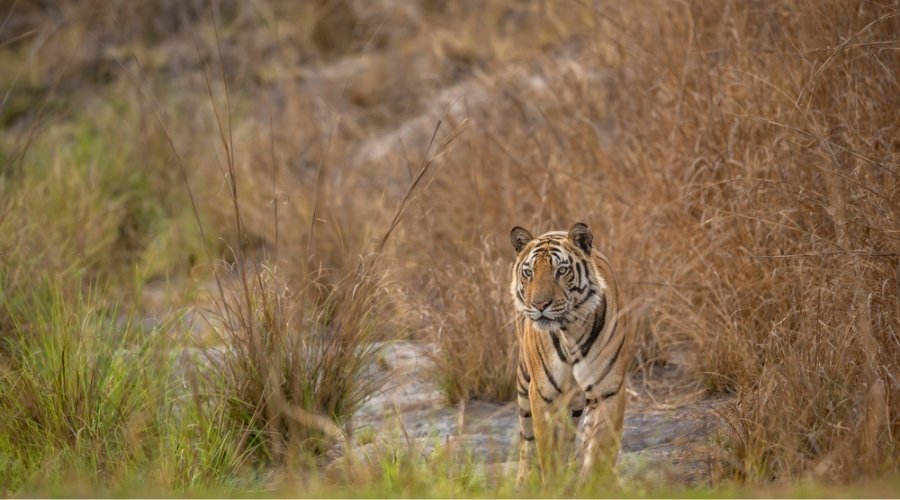
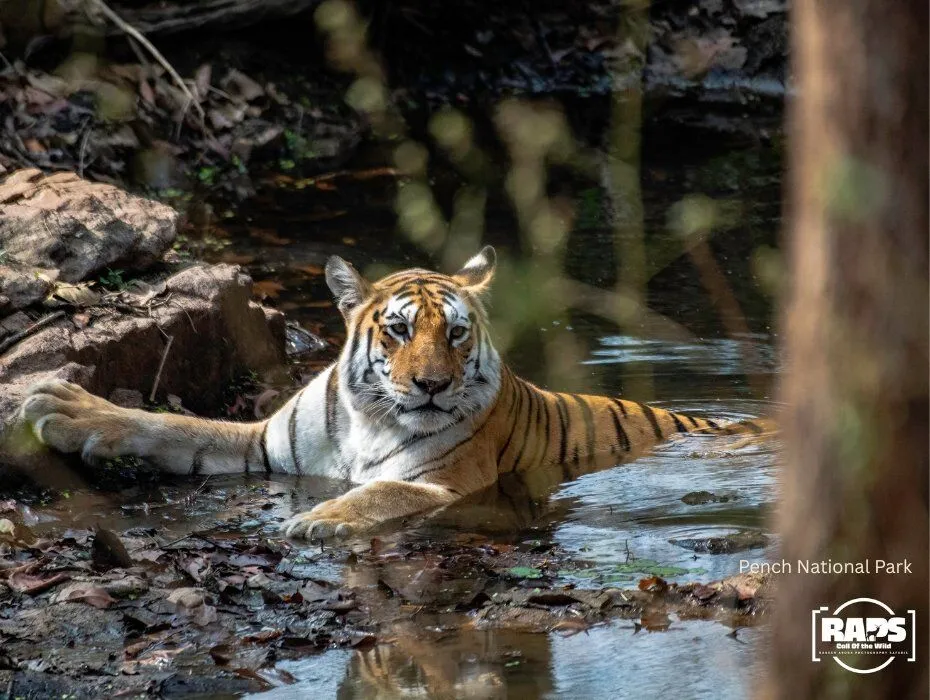
The tigress emerges from bamboo thickets exactly where Shere Khan might have prowled. Your guide whispers the name locals gave her—”Langdi,” after the slight limp in her left hind leg—and suddenly you’re not just photographing a Bengal tiger. You’re documenting a character with history, personality, and a narrative arc as compelling as anything Kipling ever wrote. This is Pench National Park at dawn, where the line between wildlife photography and storytelling dissolves into something altogether more powerful.
Rudyard Kipling never set foot in these forests. Yet somehow, through borrowed accounts and vivid imagination, he captured their essence so perfectly that 130 years later, photographers arrive seeking not just tiger images but something deeper: the ability to translate wilderness into narrative, to frame not just animals but entire stories through their lenses.
This is the Mowgli Effect in India—the mysterious alchemy where photography transcends documentation and becomes storytelling, where every frame carries echoes of the man-cub who learned the jungle’s language, and where Australian photographers discover that great wildlife images aren’t captured, they’re narrated.
Stand beside the Waingunga River as it cuts through Pench’s teak forests, and you’re occupying the precise landscape where Mowgli supposedly killed Shere Khan in that famous gorge. The Seoni Hills rise in the middle distance—Kipling’s “Council Rock” where wolf packs gathered to make decisions. Kanhiwara village, mentioned explicitly in The Jungle Book, lies just beyond the park’s southern boundary. These aren’t approximations or tourism marketing fantasies. They’re documented locations that British naturalist Robert Armitage Strendale described in his 1877 book Seonee, which Kipling mined extensively for topographical authenticity.
The origin story itself reads like Kipling’s fiction: in 1831, Lieutenant Moor discovered a child raised by wolves near Sant Baori village in Seoni district. Sir William Henry Sleeman documented this “wolf-boy” in his pamphlet An Account of Wolves Nurturing Children in Their Dens. Kipling, working from England, transformed this extraordinary truth into The Jungle Book—published in 1894, while Pench remained an unmapped wilderness rather than a protected tiger reserve.
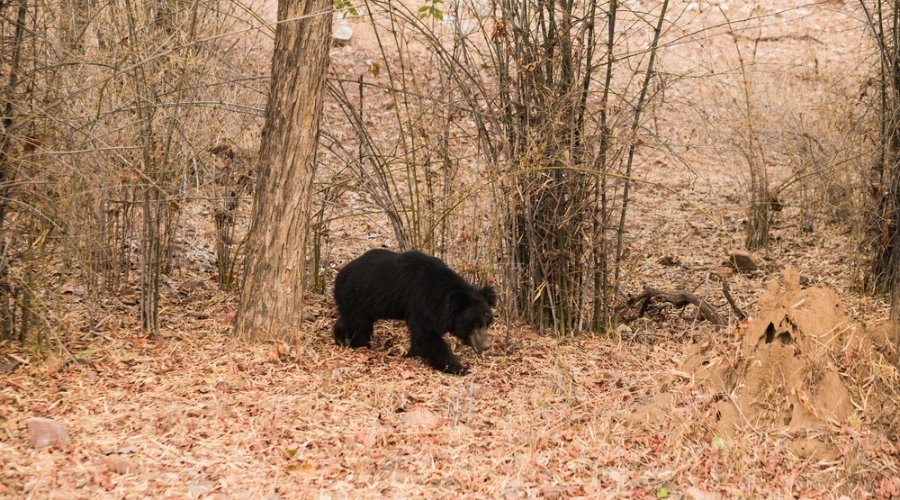
What makes this geography matter for photographers isn’t historical trivia. It’s understanding that you’re working in landscapes pre-loaded with narrative weight. When that sambar deer alarm call echoes through the sal forest, when langur monkeys sound warnings from canopy heights, when a sloth bear—Baloo’s real-world counterpart—emerges from a termite mound, you’re not just witnessing wildlife behaviour. You’re capturing moments from a story that’s been told for over a century, refreshed daily by actual wilderness.
The best wildlife photographers working in Pench don’t approach it like Ranthambore or Bandhavgarh. They arrive understanding that this forest demands different skills—the ability to see narrative arcs unfolding, to recognise when a moment transcends documentation and becomes story.
Consider the wolf packs that still hunt Pench’s grasslands. Kipling made wolves Mowgli’s adoptive family, coding them with honour, discipline, and complex social structures. Modern photographers capturing wolf behaviour in these forests aren’t just recording Canis lupus pallipes—they’re continuing Kipling’s project of revealing the intelligence, familial bonds, and survival strategies that make these predators far more complex than teeth and fur.
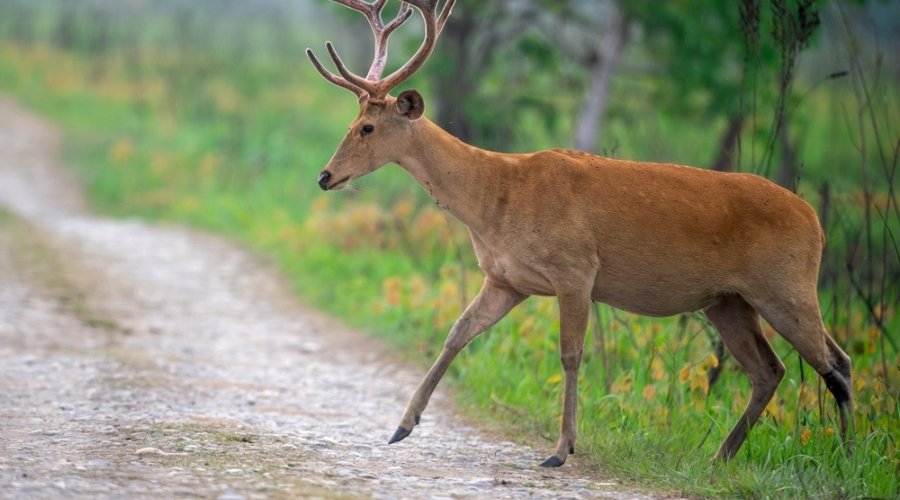
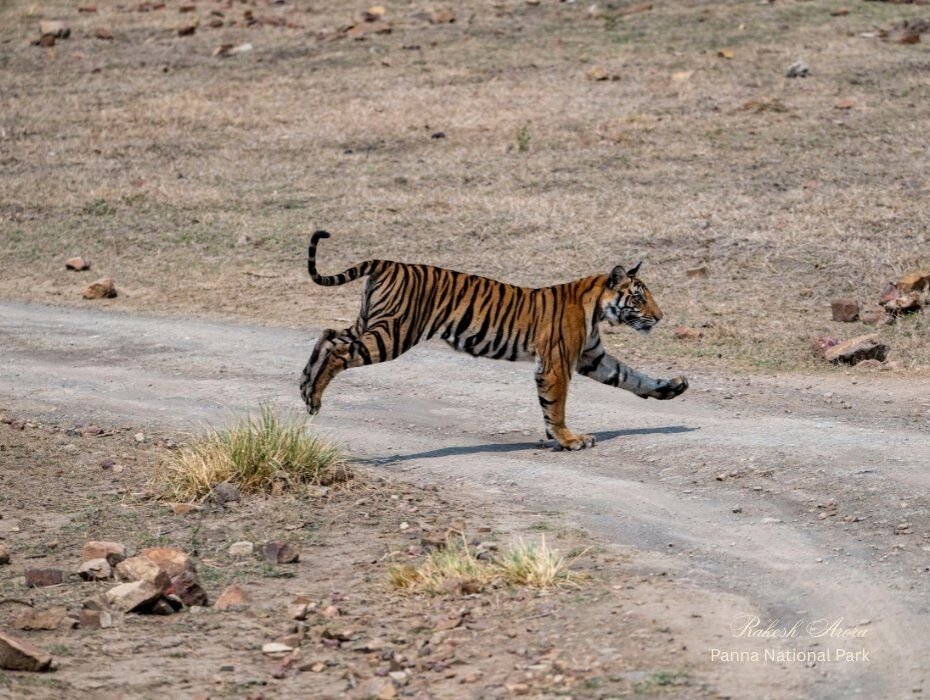
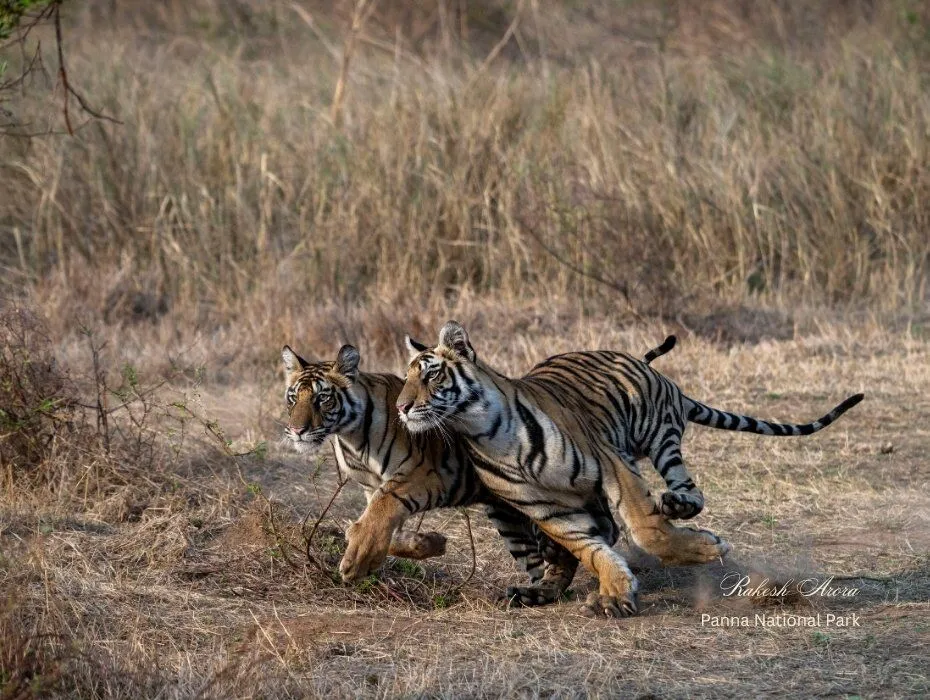
The park’s 80-plus tigers present similar narrative opportunities. Unlike the tourist-habituated cats of Ranthambore who perform for crowds, Pench’s tigers move with wariness that creates tension in every frame. That tigress hunting spotted deer at the forest edge, the territorial male scent-marking boundaries, the mother teaching cubs to hunt—these are stories with protagonists, conflicts, and resolutions. The camera merely becomes the recording tool for narratives already unfolding.
Australian photographers often discover this shift happens unconsciously. You arrive trained to capture sharp images, correct exposure, and compelling composition. But Pench teaches something additional: how to recognise when you’re witnessing a story worth telling, how to sequence images that build narrative rather than simply showing subjects, how to use light and shadow and behaviour to create emotional resonance beyond technical perfection.
To photograph Pench properly requires understanding whose land you’re documenting. The Gond tribal communities—comprising nearly 40 percent of Seoni district’s population—have coexisted with these forests for centuries. Their relationship with wildlife predates conservation frameworks, national parks, or international tourism. The naturalist guiding your safari probably learned animal behaviour not from textbooks but from grandparents who harvested mahua flowers when tigers ruled territories through traditional understanding rather than GPS collars.
Gond culture permeates Pench’s experience in ways most photographers initially miss. The traditional Gond paintings—bold dots and lines depicting animals and nature in vibrant patterns—represent a visual storytelling tradition parallel to photography itself. Both seek to capture essence rather than mere appearance. The Karma and Reena dances performed during harvest festivals celebrate the forest’s rhythms. The bamboo craftsmanship visible in village homes demonstrates intimate knowledge of forest resources.
When evening comes, and you’re sharing meals at forest-edge lodges, the food itself tells stories. Tikkad roti—flatbread made from camel’s foot tree leaves—connects directly to forest ecology. Kunde ke pede, Seoni’s famous sweet, appears during festivals when communities celebrate relationships with the land. These aren’t tourist performances but living traditions where wilderness and human culture interweave inseparably.
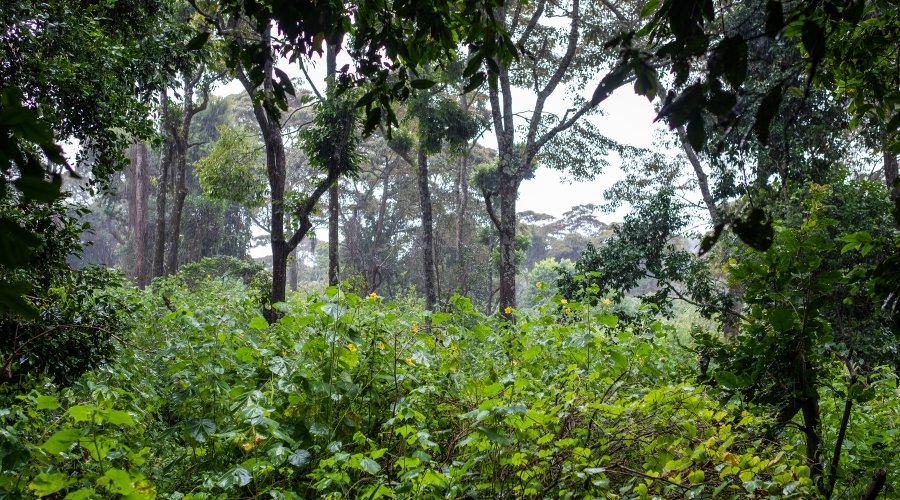
The practical challenge of photographing in Pench differs markedly from India’s more accessible reserves. Dense deciduous forest means light filters unpredictably through teak and sal canopies. Animals appear and vanish in seconds, not minutes. Background clutter—bamboo thickets, tangled undergrowth—fights against clean compositions.
Yet these difficulties force photographers toward storytelling rather than postcard imagery. When you can’t capture that perfect isolated tiger portrait, you learn to embrace context—the forest Mowgli knew, the ecosystem Kipling described, the wildness that resists convenient framing. Your images begin including environmental narrative: tigers moving through the landscape rather than posing against blue sky, behaviour unfolding over sequences rather than single decisive moments, the interplay between predator and prey, and habitat that constitutes actual ecology rather than curated wildlife theater.
From Australia to India, photographers discover that Pench rewards patience over pursuit, observation over aggression, narrative thinking over trophy hunting. The morning safari that produces zero tiger sightings but captures dawn mist over the Waingunga River, dholes whistling through tall grass, a peacock exploding from undergrowth with alarm calls echoing—these become stories worth telling precisely because they resist easy categorisation.
Pench straddles Madhya Pradesh and Maharashtra, with the Madhya Pradesh sector offering better infrastructure and higher tiger density. The park operates from October through June, closing during monsoon season. Winter months (November through February) provide comfortable temperatures and lush post-monsoon vegetation. Summer (March through June) delivers the highest tiger encounter probability as water sources shrink and vegetation thins, though temperatures regularly exceed 42°C.
Reaching Pench from Australia involves flying into Nagpur (90 kilometres away) via major Indian hubs like Delhi or Mumbai. The park welcomes solo travellers and offers women-only tour options through operators prioritising safety and personalised experiences. Accommodation ranges from government forest rest houses to premium eco-lodges designed around photography requirements—flexible meal times, early access for morning light, and naturalists familiar with individual tiger territories.
The investment extends beyond logistics. Budget three to four nights minimum, allowing six to eight safaris across different zones. Work with guides who understand photography’s rhythms rather than just wildlife viewing. Consider shoulder seasons (October-November, March-April) when tourist pressure remains lower, but wildlife activity stays strong.
Ultimately, the Mowgli Effect describes something beyond technique or location. It’s the recognition that great wildlife photography shares DNA with great literature—both seek to reveal truth through story, both depend on observation and patience, both succeed when they make audiences see familiar subjects with fresh understanding.
Kipling gave the world a jungle where animals spoke with dignity and wisdom, where conflict and cooperation shaped survival, where wilderness operated according to laws more ancient and honourable than human constructs. Modern photographers working these same forests face a parallel challenge: capturing images that honour complexity, that resist simplification, that tell stories worthy of the landscapes producing them.
When you return from Pench with images of tigers and leopards and wolves, with frames showing forest light and river curves and tribal villages bordering wilderness, you carry home more than wildlife documentation. You carry stories—narratives captured through lenses rather than written with words, but stories nonetheless. Mowgli would recognise the impulse. Kipling, despite never visiting, somehow understood it perfectly.
The forests remember. The camera simply learns their language.