India Travel Tours From Australia - Adventure | Oceania

India Travel Tours From Australia - Adventure | Oceania
March 13, 2026
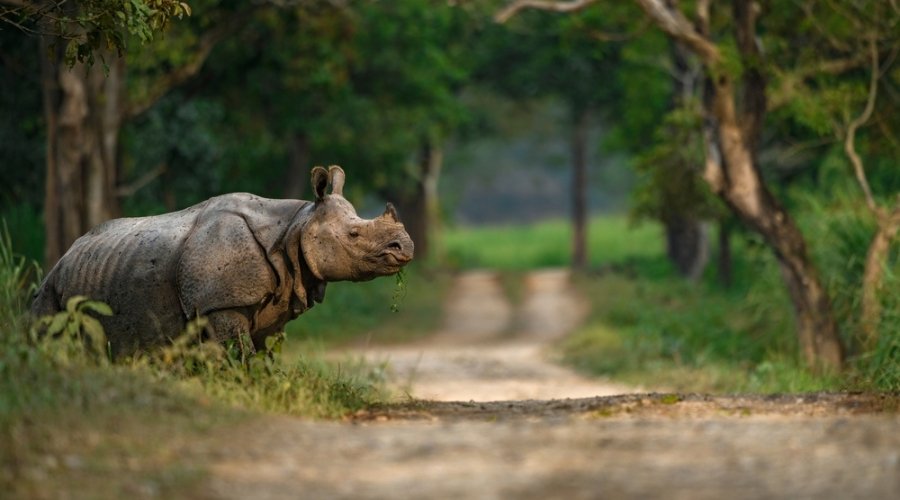
I’ll admit something that might sound strange: before that February morning in Kaziranga, I’d photographed tigers in Bandhavgarh, leopards in Ranthambore, even tracked snow leopards through Ladakh’s frozen valleys. But I’d never truly understood what “prehistoric” meant until our jeep rounded the bend near Mihimukh Point and there, grazing in elephant grass barely thirty metres away, stood a one-horned rhinoceros so perfectly formed, so impossibly ancient-looking, that my first instinct wasn’t to raise my camera but simply to stare.
Our guide, Dilip—who’d been navigating Kaziranga’s wetlands for twenty-three years—whispered: “Female. Maybe twelve years old. Watch her left ear—torn during territorial dispute three seasons past.” And just like that, this Indian rhinoceros shifted from abstract species to individual with history, personality, and a scar telling stories my small-group photography safari from Australia to India had brought me here specifically to witness.
Planning the trip from Melbourne, I’d focused obsessively on camera gear—which lenses, what shutter speeds, whether my 500mm would suffice for rhino photography in Assam’s grasslands. What I hadn’t anticipated: the emotional preparation required for experiencing wilderness operating on evolutionary timescales rather than Instagram schedules.
The journey itself set this tone. Guwahati airport dissolved into tea plantations as our van climbed toward Kaziranga. Five hours of driving where the Brahmaputra appeared and disappeared like a liquid companion, where roadside stalls sold fresh pineapples, and where our driver casually mentioned spotting rhinos from the highway during monsoon floods. That detail—rhinos visible from public roads—should have previewed what Kaziranga delivers: wildlife in densities defying typical safari mathematics.
Our lodge sat literally on the park boundary. That first evening, standing on my cottage verandah overlooking grasslands gilded by sunset, I watched wild elephants grazing maybe 200 metres distant. This wasn’t scheduled safari viewing. This was wilderness extending beyond designated zones, bleeding into human spaces in ways that made protection feel like partnership rather than fortress conservation.
I’d deliberately chosen a small-group safari over private tours, partly for cost but mostly intuition that six photographers would create collective energy solo travel couldn’t match. That intuition proved spectacularly correct.
Our group represented genuine diversity
Maya, a retired schoolteacher from Brisbane obsessed with bird photography. James and Sophie, a couple from Sydney documenting their year-long sabbatical across Asia. Priya, an Indian-American returning to ancestral landscapes. Tom, a wildlife cinematographer from Perth testing new equipment. And me—Melbourne-based photographer whose portfolio desperately needed something beyond typical tiger portraits.
What bonded us immediately
None of us were professionals chasing magazine assignments. We were passionate enthusiasts investing personal savings into experiences we’d remember when careers became memories. This shared amateur status—in the best sense—created camaraderie jeep-based tiger safaris never fostered. We celebrated each other’s successful shots, commiserated over missed opportunities, and genuinely learned from collective observations rather than competing for single shooting positions.
Dawn safaris in Kaziranga begin before sunrise—5:30 AM departures when mist still clings to beels and the only sounds are forest waking. Our second morning, Dilip positioned us near the Central Range grasslands where recent rhino activity had concentrated.
The first rhino appeared almost immediately. Then a second. Within twenty minutes, we’d photographed seven individuals—mothers with calves, territorial males, solitary females—creating portfolio diversity I’d assumed would require entire week.
But the moment that justified the journey happened around 7:15 AM. The mist had lifted enough for backlit opportunities, and a massive male one-horned rhino—Dilip estimated 2,200 kilograms—emerged from tall grass directly in front of our stationary jeep. He paused, assessing us. That single horn, curved and formidable, caught morning light. His armoured skin, falling in deep folds at joints, looked carved from prehistoric clay.
For perhaps ninety seconds—an eternity in wildlife photography—he simply stood there. I fired maybe forty frames: full-body compositions, tight headshots emphasizing that magnificent horn, environmental portraits showing him against Kaziranga’s signature grasslands. Sophie captured video. Maya focused on his eye catching light. James switched to wide-angle capturing our jeep for scale.
Then, decision made, the rhino simply walked past us—close enough I could hear his breathing, close enough to appreciate the sheer mass evolution designed for surviving when mastodons roamed Earth. He crossed our path and vanished into reed beds, leaving six photographers processing what we’d just witnessed.
That evening’s image review session revealed something small-group safaris uniquely facilitate: collaborative learning accelerating individual growth exponentially. Dilip connected his laptop to the lodge’s projector, and we shared day’s highlights.
Maya’s bird shots—kingfishers diving, adjutant storks fishing—taught composition lessons about negative space. Tom’s videos captured rhino vocalizations I’d never noticed while focused on stills. My rhino portraits sparked technical discussions about exposure compensating for backlit subjects. We weren’t competing. We were collectively elevating craft through shared observation.
This structure—six people allowing genuine interaction without overwhelming group dynamics—proved ideal. Meals became workshops where Dilip explained Assamese culture, where we planned next day’s shooting priorities, and where friendships formed around shared wildlife passion rather than forced tourist socialising.
Between dawn and afternoon safaris, cultural immersion enriched wildlife experiences in ways I hadn’t anticipated. Lunch featured Assamese thalis: masor tenga’s tangy fish curry, khar’s alkaline preparation using banana peel ash water, duck meat curries reflecting riverine food traditions. These weren’t fusion inventions but authentic regional cuisine our lodge chef prepared daily.
Dilip arranged a tea plantation visit—unsurprising given Assam produces some of India’s finest varieties. Walking through manicured rows where women plucked leaves into woven baskets, I understood landscape context: Kaziranga exists within agricultural matrix, not isolation. Conservation here means coexistence, not separation.
By safari’s end, my memory cards held maybe 3,000 images. But what I carried home transcended files: understanding that one-horned rhinoceros aren’t merely photographic subjects but survivors representing conservation’s extraordinary potential. From fewer than 200 individuals a century ago to over 2,400 today, primarily in Kaziranga—that recovery validates every permit fee funding rangers, every lodge employing local communities, every photographer choosing responsible operators over exploitative alternatives.
The small-group experience amplified this understanding. Six perspectives examining the same ecosystem revealed complexity solo travel misses. We didn’t just photograph rhinos. We documented grassland ecology, predator-prey relationships, conservation in action, and our own transformation from tourists into witnesses.
When our jeep finally departed Kaziranga toward Guwahati airport, when Assam’s tea plantations blurred past windows, I knew these weren’t merely vacation memories. They were testimonies to wilderness persisting when protection meets commitment, to species recovering when conservation becomes priority, and to that peculiar magic happening when small groups of passionate people gather around shared wonder.
The one-horned rhinoceros waited in Kaziranga long before I arrived. They’ll be there long after I’ve gone. But for those few days, in that particular small group, we witnessed them properly—with patience, respect, and cameras translating ancient beauty into frames we’ll treasure lifelong.