India Travel Tours From Australia - Adventure | Oceania

India Travel Tours From Australia - Adventure | Oceania
March 19, 2026
The male rises on hind legs—a motion so sudden, so perfectly vertical, that for half a second he seems suspended against pale evening sky. His spiral horns trace dark calligraphy. His rival mirrors the movement. They lock together briefly, then separate, then repeat. This territorial dance plays out against Velavadar’s custard-coloured grasslands where nothing interrupts sight lines for kilometres, where the horizon sits flat as brushstroke, and where silhouette photography transforms from technical challenge into meditative practice.
Welcome to Velavadar Blackbuck National Park—where grassland minimalism becomes photographic philosophy, where every element reduces to essential form, and where Australian photographers travelling from Australia to India discover that sometimes the most powerful wildlife images emerge not from forest complexity but from radical simplicity: subject, sky, nothing else.
Understanding why Velavadar delivers exceptional silhouette opportunities begins with geography. This 34-square-kilometre sanctuary in Gujarat’s Bhal region comprises predominantly flat grassland stretching between seasonal rivers with almost zero topographic relief. No hills. Minimal trees. Just endless pale gold grass creating canvas where blackbuck, blue bulls, wolves, and over 140 bird species perform against uncluttered backgrounds.
This minimalist ecosystem—shaped by semi-arid climate, sandy-loam soil, and harsh weather that limits vegetation diversity—creates conditions photographers typically struggle to find: subjects isolated against clean backgrounds allowing compositional reduction to pure form. Where jungle photography battles visual chaos, grassland work embraces negative space, celebrates silhouettes, and finds beauty in what’s absent rather than present.
The light amplifies this minimalism. Morning and evening transform the grasslands into studies of amber and gold. Low-angle sun creates long shadows stretching across plains. Backlit grass glows translucent. Dust kicked by running blackbuck becomes visible atmosphere. And subjects positioned between camera and horizon reduce automatically to silhouette—that magical simplification where horns, posture, and movement convey everything while detail disappears into shadow.
For Australian photographers accustomed to India’s dense forests where capturing clean backgrounds requires luck and patience, Velavadar’s openness feels almost disorienting initially. There’s nowhere to hide visual clutter. Every compositional decision becomes obvious. This radical transparency forces photographic discipline: either your composition works fundamentally or it fails completely. The grassland forgives nothing but rewards mastery with images of startling graphic power.
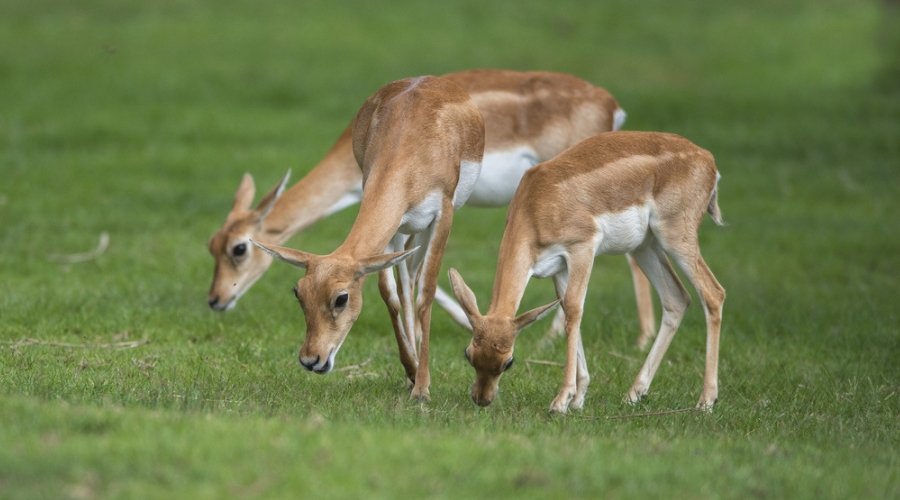
The species itself seems designed for silhouette work. Blackbuck males carry spiraling horns reaching 45-65 centimetres—distinctive enough to identify species instantly even when reduced to outline. Their bicolour pattern—dark brown upper body, white underparts—creates natural contrast silhouette photography exploits. And their behaviour, particularly territorial displays and courtship rituals, generates dynamic postures translating beautifully into graphic form.
Watch males performing rutting displays and you witness movement choreographed for cameras: vertical leaps where both animals rise simultaneously, bodies forming inverted V-shapes against sky. Head-to-head clashes creating symmetrical compositions. Pronking—that distinctive stiff-legged bouncing gait—where blackbuck appear to dance across grasslands in rhythmic progression perfect for panning sequences.
Females, lacking horns but possessing elegant proportions, move in herds creating patterns across grasslands. Twenty, thirty, sometimes fifty individuals grazing in loose formations where compositional opportunities shift constantly. One moment they cluster creating visual weight on one frame side. Next moment they scatter creating multiple focal points demanding choices about which individuals receive foreground emphasis versus background context.
The morning ballet begins with territorial males establishing boundaries—pronking displays, scent-marking, and those remarkable vertical battles where horn-locked combatants seem to float momentarily. For photographers positioned carefully with sunrise behind subjects, these encounters deliver silhouettes requiring minimal post-processing: pure black forms against gradient skies transitioning from deep blue through orange into pale yellow.
Silhouette photography in Velavadar demands specific technical approaches differing from typical wildlife work. Exposure becomes critical: overexpose slightly and subjects gain unwanted detail destroying silhouette effect; underexpose too much and you lose subtle tonal gradations in sky creating flatness rather than depth.
The method photographers develop here: spot-meter on sky just above horizon, then underexpose by approximately one stop. This renders subjects completely black while preserving colour and tonal range in background. Modern cameras’ auto-exposure systems struggle with this scenario, metering for subject and blowing sky entirely. Manual exposure mode becomes essential, with settings locked once established rather than allowing camera to recalculate per frame.
Composition follows minimalist principles: eliminate everything unnecessary. A single blackbuck against clean sky often proves more powerful than herd containing twelve individuals where visual energy disperses rather than concentrates. Horizon placement matters crucially—too centred creates static balance, too low leaves excessive empty sky, too high cramps subject into bottom third. The sweet spot typically falls around lower third, allowing both subject emphasis and environmental context.
Timing windows remain narrow. The golden hour delivers optimal conditions but “golden hour” in Gujarat’s grasslands means approximately thirty minutes post-sunrise and pre-sunset when sun angle creates drama without harshness. Mid-morning through late afternoon light becomes too overhead, too flat, too bright for silhouette work. This temporal discipline forces photographers into rhythm matching wildlife activity: dawn vigils when blackbuck feed actively, midday rest, evening return as temperatures cool and animals resume movement.
Between dawn and dusk photography sessions, Velavadar’s position within Gujarat’s Saurashtra region introduces cultural dimensions enriching visits beyond wildlife encounters. Bhavnagar—the gateway city 42 kilometres south—offers authentic Kathiawadi cuisine reflecting semi-arid geography through ingredients and preparation methods adapted to harsh conditions.
Bajra na rotla, thick millet flatbread cooked on earthen griddles then finished over open flame until blistered and smoky, represents staple grain suited to low-rainfall agriculture. Ringna no oro—roasted eggplant mashed with garlic, green chillies, and spices—delivers intensely flavoured vegetable preparation requiring minimal ingredients. Sev tameta nu shaak combines tangy tomato curry with crunchy chickpea flour sev adding textural contrast.
Unlike mainstream Gujarati cuisine’s sweet-savoury balance, Kathiawadi food embraces bold spicing and garlic intensity. Lasania bataka—potatoes cooked with aggressive amounts of garlic, tomatoes, and red chilli—creates robust flavours matching landscape’s harsh character. Vaghareli khichdi, comfort food combining rice, lentils, and aromatic tempering, provides restorative warmth after cold morning safaris when January temperatures drop toward 10°C.
These meals, consumed at Bhavnagar restaurants or forest rest houses near the sanctuary, become ritual as important as photography itself. They’re moments processing morning’s images, planning afternoon strategies, and absorbing regional culture where vegetarianism reflects deep Jain and Hindu influences yet produces cuisine as satisfying as any meat-based tradition.
For Australian photographers reaching Velavadar from Australia, logistics flow through Ahmedabad, Gujarat’s commercial capital. International flights arrive Ahmedabad airport. The drive from Ahmedabad to Velavadar takes approximately four hours through agricultural landscapes and small towns. Alternatively, Bhavnagar airport receives limited domestic connections from Mumbai, sitting just 65 kilometres from sanctuary gates.
The sanctuary operates year-round, though November through February delivers optimal conditions combining comfortable temperatures with the harrier roost spectacle—thousands of migratory raptors gathering at dusk creating opportunities for flight silhouettes against setting sun. January and February particularly suit photography: minimal rainfall, consistent light quality, and active wildlife behaviour driven by breeding cycles.
Accommodation concentrates in Bhavnagar or at limited forest rest houses within sanctuary boundaries. The forest lodge offers basic facilities but unbeatable proximity—photographers literally walk from cottages into grasslands at dawn without vehicle transfers. Bhavnagar hotels provide more comfort but require 60-90 minute drives timing critical for catching optimal light.
Safari structure differs markedly from jungle reserves: no jeeps racing between zones, no packed vehicles clustering at sightings. Velavadar allows private vehicles with forest department permits, enabling photographers to position carefully, wait patiently, and work scenes methodically rather than rushing between locations. Many visiting photographers now travel as solo practitioners or in women-only groups, finding the sanctuary’s open visibility and daylight-only operations create safe, comfortable environments for independent exploration.
Ultimately, grassland minimalism practiced in Velavadar teaches lessons extending beyond silhouette technique. It’s training in compositional discipline—learning to find power in simplicity, beauty in reduction, drama in absence rather than abundance. When jungle photography overwhelms with visual information demanding exclusion decisions, grassland work provides clarity through inherent simplification.
When that territorial male finally settles from his vertical leap, when your frame holds nothing but his black outline against gradient sky transitioning through amber into violet, when every unnecessary element has vanished leaving only essential form—you understand why blackbuck and grasslands create photographic meditation. The ballet continues regardless of cameras. The minimalism exists independent of human observation. Your role merely witnesses and translates movement into stillness, complexity into simplicity, colour into form.
The grasslands wait. The blackbuck perform their eternal routines. The horizon stretches uninterrupted toward distances where earth meets sky in that clean division minimalist composition celebrates. And silhouettes emerge—patient testimony that sometimes the most powerful images arrive not through accumulation but through radical subtraction revealing essence hiding beneath detail.