India Travel Tours From Australia - Adventure | Oceania

India Travel Tours From Australia - Adventure | Oceania
March 16, 2026
The ancient stone steps climbing Bandhavgarh Fort feel worn smooth by centuries—perhaps millennia—of footfalls. You pause halfway up the 2,660-foot ascent, lungs working in thin air, and turn to face the vista spreading below. Sal forests carpet thirty-two rolling hills in every direction. Grassland meadows called chaurs glow emerald between ridges. And somewhere in that 105-square-kilometre core zone moving through terrain you’re witnessing from above, approximately 135 Bengal tigers patrol territories more compressed than anywhere else on Earth.
This is Bandhavgarh National Park—where India’s densest tiger population creates sighting probabilities approaching certainty, where ancient fortifications provide literal high-altitude perspectives on modern conservation, and where Australian photographers discover that the best wildlife viewing sometimes requires climbing above the forest canopy itself rather than simply driving through it.
The fortress of felines isn’t metaphor. It’s geographical reality, historical legacy, and current conservation triumph converging in Madhya Pradesh’s Vindhya hills.
Understanding Bandhavgarh’s extraordinary tiger density requires recognising how geography shaped both human history and wildlife concentration. The fort crowning these hills supposedly dates 2,000 years to Ramayana times—legend claims Lord Rama built it for his brother Lakshmana, hence “Bandhav” (brother) combined with “Garh” (fort). Whether mythological origins hold archaeological truth matters less than what’s indisputable: these fortifications dominated Central India for millennia.
The Baghel dynasty of Rewa controlled Bandhavgarh until shifting their capital in 1617 AD. The abandoned fort gradually returned to wilderness. Maharajas transformed surrounding forests into private shikargah—hunting preserves where royal parties pursued tigers considered lucky at precisely 109 kills per maharaja. That Maharaja Venkat Raman Singh exceeded this by 1914 with 111 tigers speaks to abundance now difficult imagining.
But the maharajas also inadvertently preserved habitat. Designated hunting grounds meant forest protection from agricultural conversion. When Maharaja Martand Singh of Rewa recognised devastation threatening the wildlife he’d hunted, he became instrumental in Bandhavgarh’s 1968 national park declaration. That same maharaja captured Mohan—the first white tiger—in 1951, establishing lineage from which all captive white tigers worldwide descend.
Today’s Bandhavgarh carries this complex heritage: fortress ruins where langur monkeys now outnumber soldiers, temple caves sheltering Shivlings beneath 10th-century carvings, and forests transitioning from royal exploitation to conservation protection. The high-altitude fort perspective provides both literal overview of protected landscape and metaphorical understanding of conservation’s long arc from destruction toward restoration.
What makes Bandhavgarh’s tiger population genuinely exceptional isn’t absolute numbers—Jim Corbett shelters 260 tigers across vastly larger territory—but concentration approaching biological maximum. With 135 tigers across 716 square kilometres of core and buffer zones, Bandhavgarh achieves approximately one tiger per 2.5 to 4 square kilometres. Female territories range 10 to 20 square kilometres. Males claim 20 to 50 square kilometres. These numbers represent compression unmatched anywhere globally.
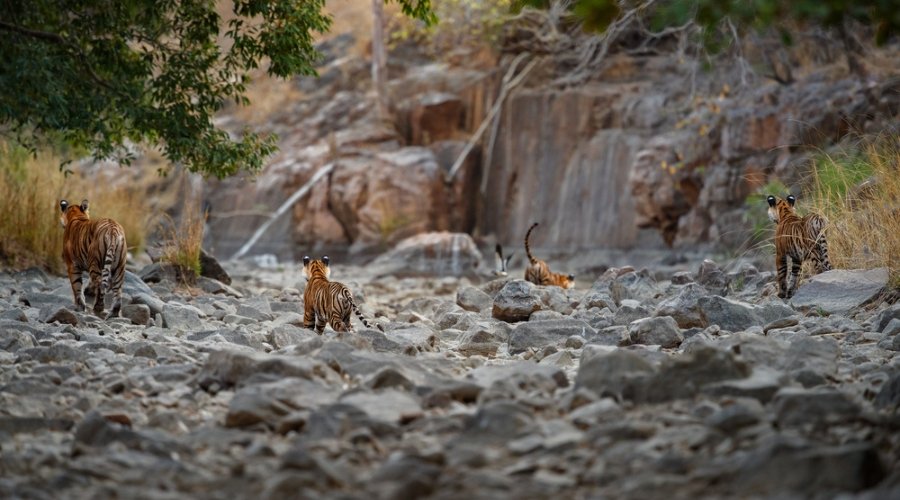
For Australian photographers travelling from Australia to India, this density translates practically: 80 to 90 percent sighting probability across four to five safaris. Unlike reserves where tiger encounters depend significantly on luck, Bandhavgarh delivers with statistical reliability approaching certainty. The question shifts from “will we see tigers?” to “how many will we photograph?”
The Tala zone particularly—Bandhavgarh’s premier safari area—hosts such concentrated populations that multiple tiger encounters during single safaris occur regularly. Magadhi zone rivals Tala increasingly as dispersing tigers establish new territories. Khitauli, the third core zone, develops rapidly as younger animals claim previously unoccupied ranges.
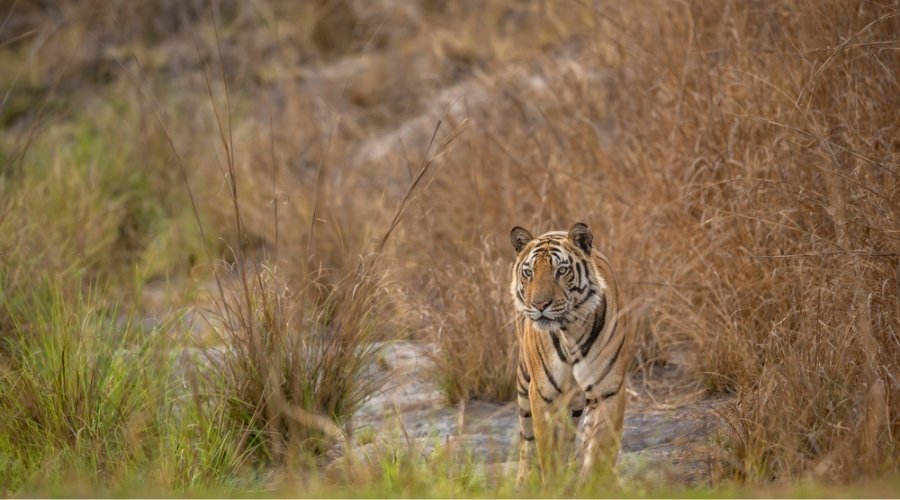
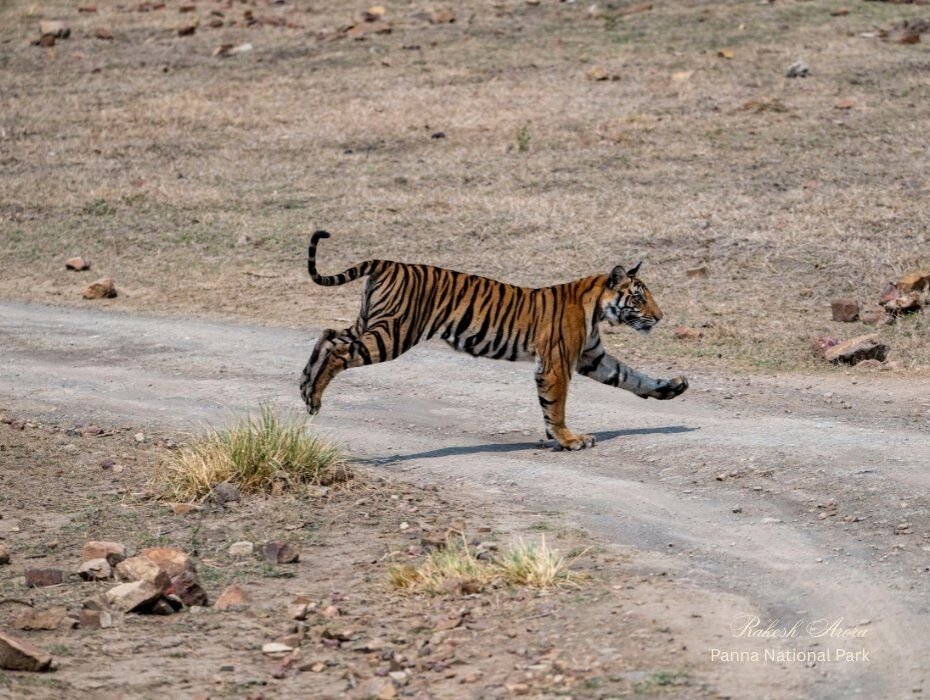
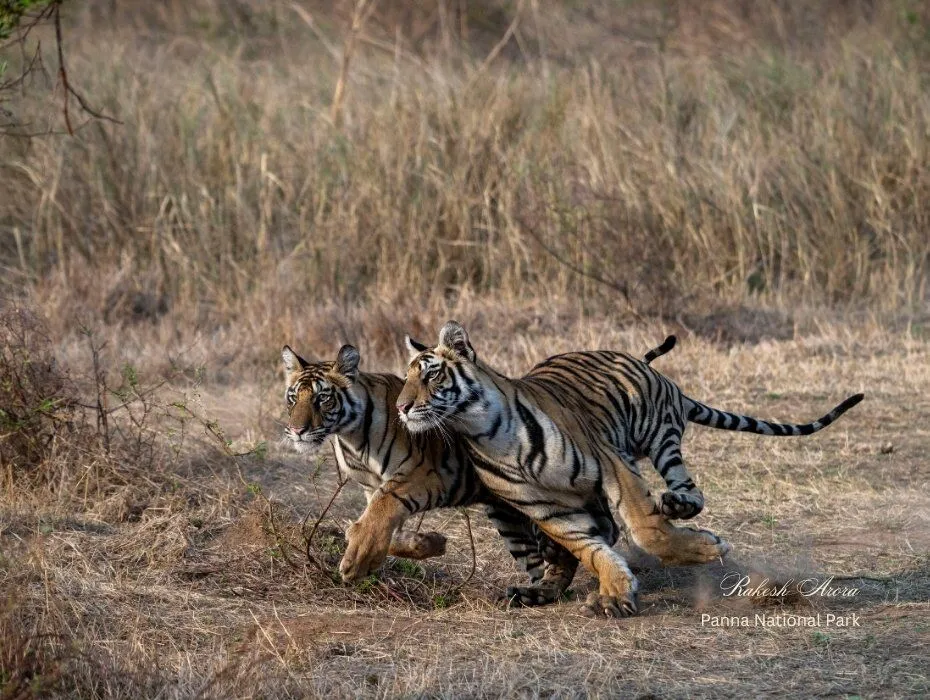
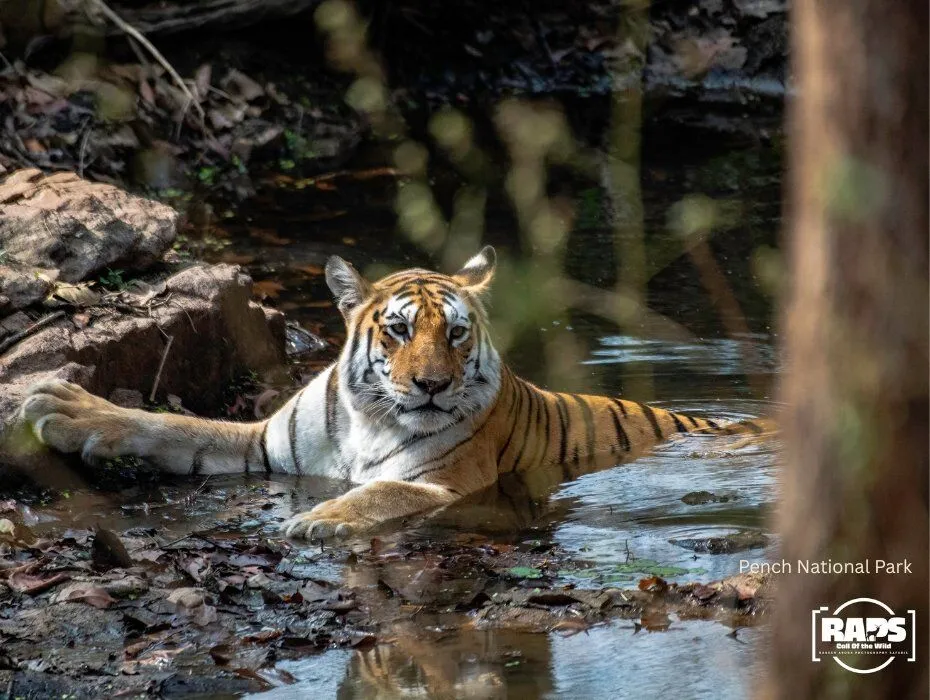
This density creates behavioural observations impossible elsewhere. Territorial disputes unfold across safari tracks. Cubs learn hunting through extended prey stalking photographers can follow sequentially. Tigers tolerate vehicle proximity with remarkable patience, often resting beside forest roads or crossing tracks metres away. The habituation—carefully managed through strict safari protocols—allows genuine behavioural documentation rather than merely recording fleeting glimpses.
The high-altitude perspective from Bandhavgarh Fort transforms understanding of ecosystems below. From 2,660 feet elevation, the park’s architecture reveals itself: valleys funneling wildlife movement, waterholes concentrating animals, grassland clearings where prey species graze visible to tigers utilising forest edges for approach cover. You recognise why certain zones produce consistent sightings while others remain quieter—it’s terrain dictating predator-prey dynamics across centuries.
The climb itself—approximately one hour ascending ancient steps—passes cave systems containing rock paintings and Sanskrit inscriptions documenting human presence spanning two millennia. The massive Shesh Shaiya sculpture depicts Lord Vishnu reclining on the seven-headed serpent Shesh Naag, carved from single stone with artistry suggesting sophisticated civilisation flourishing when these forests teemed with wildlife pressure-free from modern threats.
Langur troops claiming fort ruins as territory provide constant entertainment. Their alarm calls—the piercing “kank-kank” announcing predators—echo across valleys, telegraphing tiger or leopard presence to safari vehicles far below. From this elevation, you witness alarm call chains rippling through forest as sambar deer, spotted deer, and peacocks sequentially broadcast warnings, creating acoustic maps of predator movement invisible from ground level.
To photograph Bandhavgarh properly requires understanding Baiga culture—the tribal community whose largest concentrations inhabit Mandla, Balaghat, and Umaria districts surrounding the reserve. The Baiga name derives from “vaidya” (healer), reflecting deep medicinal plant knowledge accumulated across generations living intimately with these forests.
Baiga beliefs hold particular poignancy for conservation: traditional prohibition against plowing stems from viewing earth as mother’s breast—scratching her surface repeatedly causes harm. This reverence for land aligns perfectly with conservation philosophy Bandhavgarh embodies, where protection supersedes exploitation.
Between safaris, Baiga cuisine offers cultural immersion. Kodo and kutki millets—coarse grains unsuited for bread but nutritious as porridge or the cooling pej drink—represent agricultural adaptation to forested environments. Mahua flowers, dried and used in countless preparations from beverages to medicines, demonstrate intimate botanical understanding. Forest mushrooms like putpuda gathered during monsoon seasons provide flavourful protein supplementing primarily vegetarian tribal diet.
Premium lodges near Bandhavgarh now employ Baiga cooks maintaining traditional preparation methods while meeting contemporary hospitality standards. These aren’t fusion inventions but authentic tribal foods reflecting centuries of forest living translated for visitors seeking depth beyond generic tourism.
The Karma and Saila dances performed during festivals aren’t staged entertainment but living traditions where Baiga cultural continuity persists despite modernisation pressures. Their intricate tattoo traditions—parallel lines on foreheads, dots marking life passages—represent visible commitment to ancestry and identity.
For Australian travellers reaching Bandhavgarh from Australia, logistics flow through accessible routes. International flights arrive Delhi or Mumbai. Domestic connections serve Jabalpur (170 kilometres from Bandhavgarh). Alternatively, Umaria railway station sits just 32 kilometres away, connected to major Indian rail networks. Road transfers take three to four hours through Central India’s countryside.
The reserve operates October through June with Wednesday closures. November through March delivers comfortable temperatures and lush post-monsoon vegetation. February through June provides highest sighting probability as vegetation thins dramatically, though temperatures exceed 42 degrees Celsius regularly.
Safari permits require advance booking through Madhya Pradesh’s online portal. Tala zone—premium for combining fort access with highest tiger density—books earliest. Magadhi and Khitauli zones offer equally spectacular encounters with lighter tourist pressure. Morning safaris (6:00-10:00 AM) and afternoon slots (3:00-6:00 PM) allow two daily opportunities maximising encounter probability.
Accommodation near Bandhavgarh ranges from government forest rest houses to luxury eco-lodges designed around photography requirements. Many properties now cater specifically to solo travellers and women-only groups, recognising that wildlife passion transcends demographics and that India’s tourism infrastructure increasingly supports independent exploration.
Ultimately, Bandhavgarh’s high-altitude perspectives offer more than panoramic vistas or tiger encounter statistics. They provide understanding of conservation’s complexity—how ancient fortresses become wildlife sanctuaries, how royal hunting grounds transform into protection strongholds, and how India’s densest tiger population thrives partly because geography and history conspired creating ideal conditions.
When you descend from that fort, when afternoon safari delivers three separate tiger sightings in zones you witnessed from above, when Baiga guides explain medicinal plants their grandparents harvested from these same forests—you’ve experienced Bandhavgarh as integrated ecosystem where wildlife, heritage, and human culture interweave inseparably.
The fortress endures. The felines multiply. And the high-altitude perspective reveals truth telescoping across millennia: that wilderness survives when protection becomes priority, when communities benefit from conservation, and when travellers arrive seeking understanding rather than merely collecting photographs.
The tigers wait below. The fort watches above. The story continues.