April 7, 2026
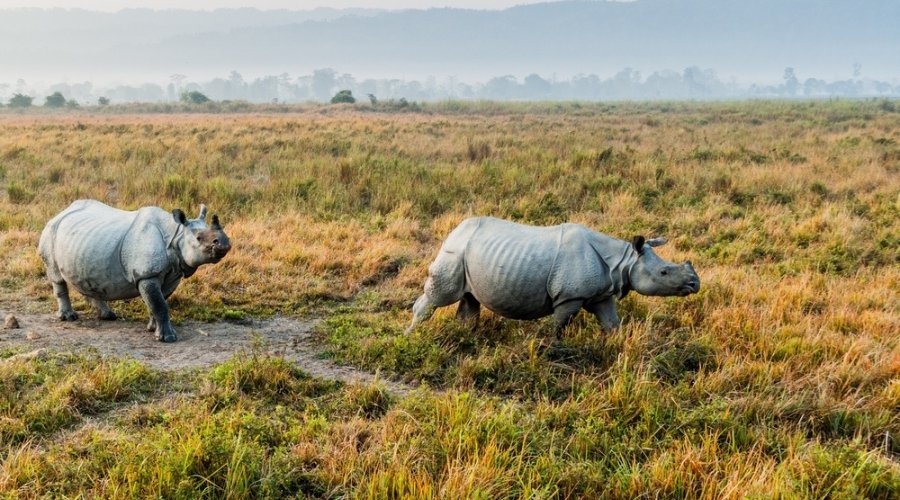
There is a creature moving through the tall elephant grass of Assam that looks like it walked straight out of the Pleistocene epoch and simply forgot to stop.
Its skin folds in deep, riveted plates across its body — not like hide, but like forged metal. A single horn rises from the bridge of its nose. It weighs more than a small car and moves through the floodplains of the Brahmaputra with an unhurried, geological authority that makes everything around it feel temporary by comparison. You hear it before you see it — a low vibration in the grass, a stillness that spreads outward from its path the way a stone disturbs water.
Then the mist parts. And there it is.
Meeting a greater one-horned rhinoceros in Kaziranga National Park is one of wildlife photography’s most extraordinary privileges — and most Australians have no idea it is even possible.
Kaziranga sits in the flood plains of northeastern India’s Assam state, straddling the southern bank of the mighty Brahmaputra river. It is a UNESCO World Heritage Site, a 430-square-kilometre mosaic of tall grasslands, tropical forests, swamps, and seasonal wetlands that shifts its face entirely with every monsoon flood. The Brahmaputra fills the park each year, pushing wildlife to higher ground, then retreats — leaving behind a renewed, intensely fertile landscape that makes Kaziranga one of the most productive wildlife habitats on the planet.
A century ago, this same species was on the knife’s edge of extinction. Fewer than 200 remained in the wild. Poaching and habitat loss had compressed a once-vast population into near-nothing. The conservation intervention that followed — beginning with a proposed forest reserve in 1905 and gathering momentum through the 20th century — is now considered one of Asia’s greatest wildlife recovery stories. Today, Kaziranga holds more than 2,600 one-horned rhinos — over two-thirds of the entire global population — roaming freely across grasslands that function, in part, because of the very floods that shape and renew them each year.
Travelling here with a photographer’s eye is not just witnessing an animal. It is witnessing a miracle of human commitment to conservation. And for an Australian wildlife lover who has spent years watching documentaries about endangered species on a weekend morning in Sydney, that story carries a weight that no photograph alone can fully capture — until you are standing in Kaziranga with a camera in your hand.
The greater one-horned rhino is visually unlike anything else on Earth. Its skin is not smooth — it is textured in raised knobs and deep skin folds that catch light in ways that make every image feel ancient and sculptural. Up close, it looks armoured. From a distance, it looks mythological. The single horn rising from its snout has inspired everything from unicorn legends to Mughal court paintings, and in the golden light of a Kaziranga morning, it photographs with a drama that no amount of post-processing could manufacture.
What surprises first-time visitors is how open the encounters are. Unlike tiger sightings in dense jungle, Kaziranga’s rhinos move through open floodplain grasslands in plain sight — grazing, wallowing in swamps to cool and protect their sensitive skin, moving between water bodies with a calm authority that gives patient photographers extraordinary, sustained time with their subjects. It is not unusual to watch a single rhino in natural behaviour for forty uninterrupted minutes, light shifting across its flanks, a cattle egret riding its back like a small white flag.
That kind of encounter doesn’t require luck. It requires positioning. And positioning, in Kaziranga, is everything.
Kaziranga is divided into four safari ranges — Central, Western, Eastern, and Burapahar — each with its own character, wildlife density, and photographic potential. Central range holds the park’s highest rhino concentration and offers the open grassland encounters that make Kaziranga famous. Western range is wilder, denser, and rewards travellers looking for the unexpected. Eastern range floods deepest each monsoon, recovering into a lush, other-worldly landscape that few safari operators even attempt to schedule intelligently.
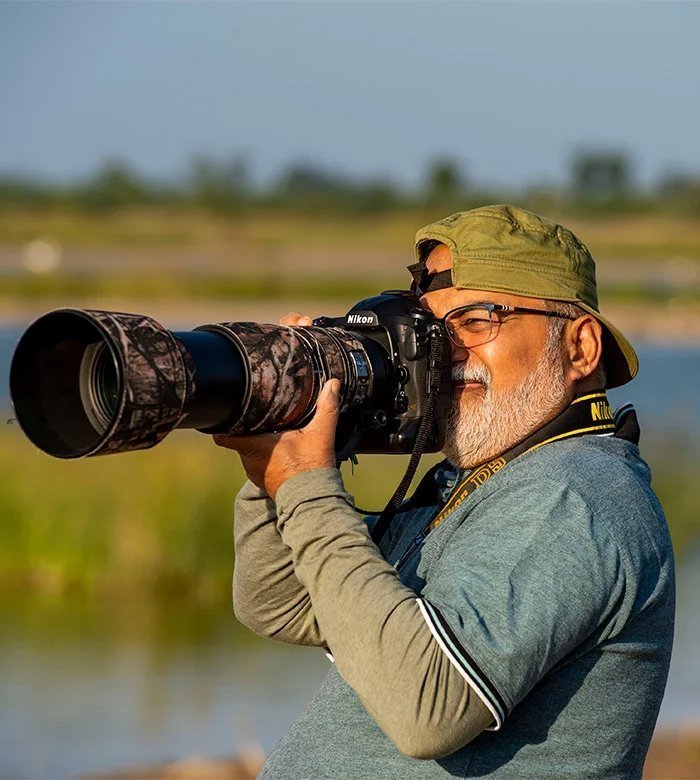
For Rakesh Arora, every safari is an act of reverence — not a route, not a schedule, but a conversation between the photographer and the landscape. Knowing which range is performing on any given morning, understanding where rhino movement patterns are clustering, reading the quality of light before the jeep even leaves the lodge — these are the micro-decisions that transform a wildlife visit into a portfolio-defining expedition.
The RAP Safaris approach means travelling with someone who sees the frame before the shutter is pressed. The angle that puts the Brahmaputra’s silver light behind a wallowing rhino rather than into the lens. The moment to wait rather than shoot. The stillness required when a mother and calf are close enough to photograph each other’s reflections in still water. These decisions live in experience — in years of presence in wild places — and they cannot be replicated by any camera setting or travel guide.
Some photographers arrive at Kaziranga and take images of rhinos. Others arrive with RAP Safaris and come home with images that tell a story.
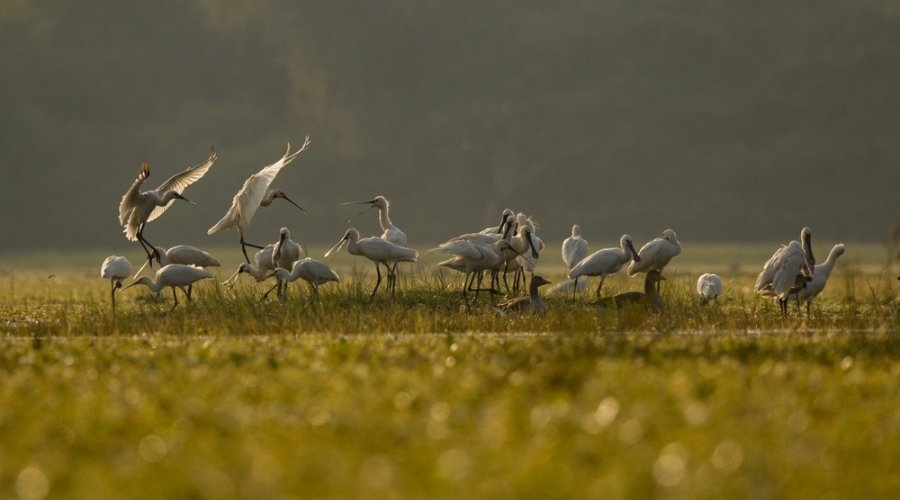
The park is open from October through May, closing during the monsoon floods that renew its landscape each year. November through February offers cool mornings, extraordinary birdlife — over 480 species including the endangered Bengal Florican and the majestic grey-headed fish eagle — and rhinos in peak condition after the flood season’s fresh vegetation. The mist that settles over the grasslands in these months gives Kaziranga a quality that landscape photographers specifically travel for.
March through May shifts the dynamic. As vegetation thins and water bodies reduce, wildlife concentrates. Rhinos are more visible, calves born in the preceding months are active and photogenic, and the warm pre-monsoon light turns the tall grass to copper and gold in ways that make every morning safari feel like shooting on a location specifically designed for photography.
For Australians, the timing works beautifully. India’s prime wildlife season aligns almost perfectly with Australian autumn and early winter — the precise window when Melbourne and Sydney start to cool, and the dream of something wilder and warmer begins calling from the other side of the world.
Kaziranga is not simply a destination. It is evidence that the wild can come back. That with enough commitment, enough protection, and enough respect, a species can pull itself from the edge of nothing and return to presence in the world. Photographing a one-horned rhinoceros here — its armoured flanks lit by the first light of an Assam morning, the Brahmaputra glittering somewhere beyond the grassline — is participating in that evidence.
You don’t just take an image home from Kaziranga. You take responsibility for what it means.
And sometimes, on a quiet morning when the mist is still low and the rhino is grazing thirty metres from the jeep, you take something else entirely — a stillness that follows you back to Australia and lives in the memory long after the images have been edited, printed, and shared.
The armoured giant of Assam is waiting. And the right expedition makes all the difference.