February 24, 2026
I Was 40 Metres From a One-Horned Rhino on a Kaziranga Photo Tour. Nobody Moved. Nobody Breathed. And Then My Camera Changed Everything.
I Was 40 Metres From a One-Horned Rhino. Nobody Moved. Nobody Breathed. And Then My Camera Changed Everything.
Let me tell you about 6:14 in the morning.
Not a poetic, approximate “just after dawn.” I mean 6:14 specifically — because I’ve checked my EXIF data from that day more times than I can count.
The mist was still sitting low over the bheel, that shallow seasonal lake in Kaziranga’s Central Range that looks like something a fantasy novelist made up. The kind of mist that doesn’t just float — it breathes. My group of eight Australians had been completely silent for nearly half an hour, which, if you’ve ever sat in a jeep with eight Australians who’ve just spotted their first wild Asian elephant at 5:45am, you’ll know is extraordinary self-control.
And then she stepped out of the tall grass.
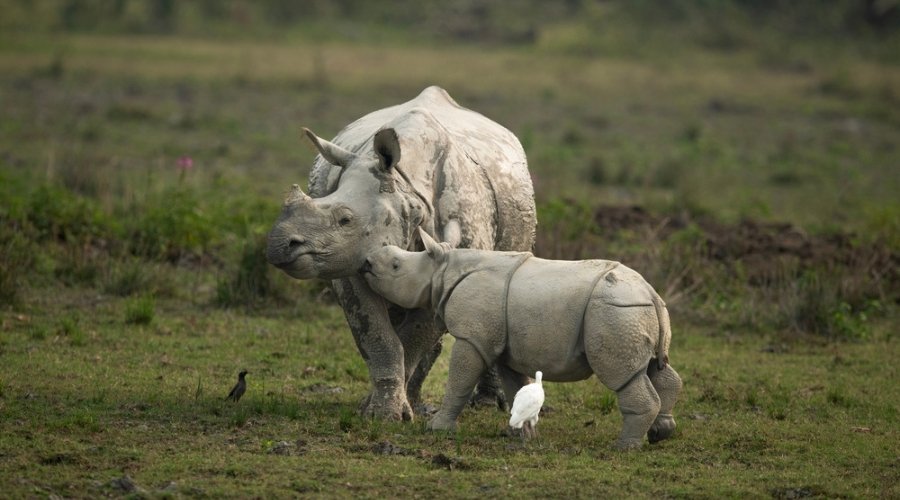
A female Greater One-Horned Rhinoceros. Enormous. Ancient. Completely unbothered by the seven lenses pointing at her. Her calf — three months old, maybe a little less — stumbled out behind her, still figuring out how legs work, and pressed itself against her flank like the world’s most heavily armoured teddy bear.
My hand went up. Stop. Don’t shoot yet.
I could feel the collective tension in the jeep — eight photographers with loaded cameras, staring at one of the most photogenic animals on Earth, waiting. But wait, they did. Because here’s the thing nobody tells you before your first Kaziranga photo tour: the shot you get when you wait is nothing like the shot you get when you panic.
She walked to the water. She drank. She raised that prehistoric head and looked at the horizon with an expression that said, unmistakably: I was here long before you. I’ll be here long after.
Then I said quietly: “Now.”
The shutters were almost apologetic. Soft. Measured. And the images that came back from that morning — I’ve seen thousands of wildlife photographs in my career, and some of those frames stopped me cold.
That is what a Kaziranga photo tour actually feels like. Not a tick on a bucket list. A full-body rearrangement of your priorities.
“Wait — Two-Thirds of ALL the World’s Rhinos Are in One Place?”
Yes. That’s not a typo or a tourism exaggeration. I know how it sounds.
Kaziranga National Park, tucked into the floodplains of Assam in India’s extraordinary northeast, is home to over 2,400 Greater One-Horned Rhinoceros — roughly two-thirds of the entire global population of this species. In a single national park. One that you can actually visit, drive through, and photograph from an open jeep at close range.
When I tell this to Australians — people who understand what it means to share a continent with animals that exist nowhere else on Earth — the penny drops fast. This is not just impressive wildlife tourism. This is a conservation miracle happening in real time, and you can be there for it.
Here’s the backstory that makes every sighting hit harder: in 1905, Kaziranga had fewer than a dozen rhinos left. Poaching had nearly finished them off. The British administration designated the area a protected forest, and then — slowly, painfully, over more than a century of armed guards, community effort, and heartbreaking setbacks — the population clawed its way back. From a dozen animals to over two thousand four hundred. When you see a one-horned rhino wading through a Brahmaputra lagoon with the morning light turning the water to hammered gold, you are looking at a living comeback story. The greatest wildlife recovery in Asian conservation history.
That’s not nothing. That’s everything.
What Kaziranga Does to an Australian
Here’s how I know Kaziranga will get to you specifically.
You’re used to extraordinary. You’ve grown up with kangaroos in the backyard and kookaburras at breakfast. You’ve probably watched a great white breach off the Neptunes, or stood very still while a goanna decided whether or not to climb your leg. Australians have a baseline relationship with wild things that most people on Earth simply don’t have. You’re not easily impressed.
Kaziranga will impress you.
Because what Kaziranga offers is a different scale of wildness. The elephant grass grows taller than a double-decker bus. The Brahmaputra — one of the mightiest rivers on the planet — slides through the northern edge of the park like a force of nature that has never once considered a dam. The Karbi Anglong hills rise blue and hazy to the south. And out of all of it, at any moment, something extraordinary can simply appear.
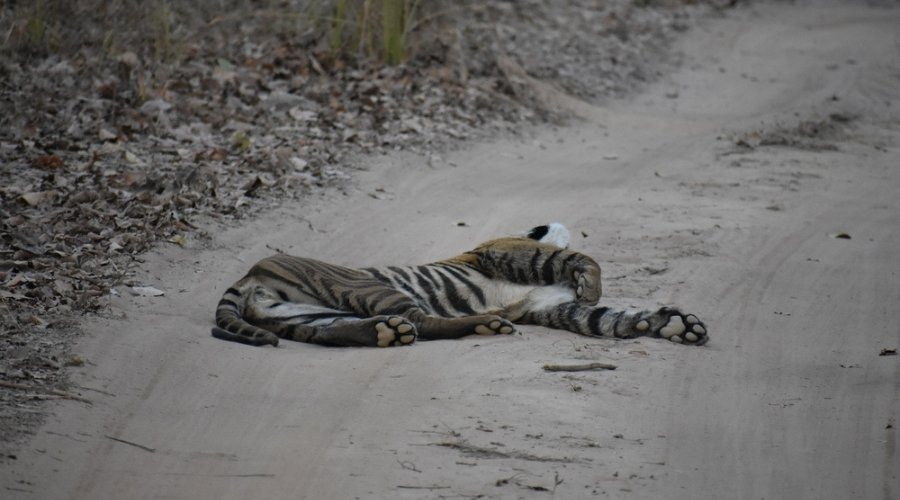
A tiger — Kaziranga has the highest density of Royal Bengal Tigers of any protected area on Earth, a fact that shocks even experienced wildlife travellers — might materialise on the track in front of your jeep. A herd of Asian elephants might cross the grassland fifty metres to your left, moving in that particular elephant way that makes the earth feel like it’s rearranging itself beneath them. A Wild Water Buffalo — not the domestic kind, the real one, with horns that stretch wider than a man is tall — might give your jeep a look that very strongly suggests you should reconsider your life choices.
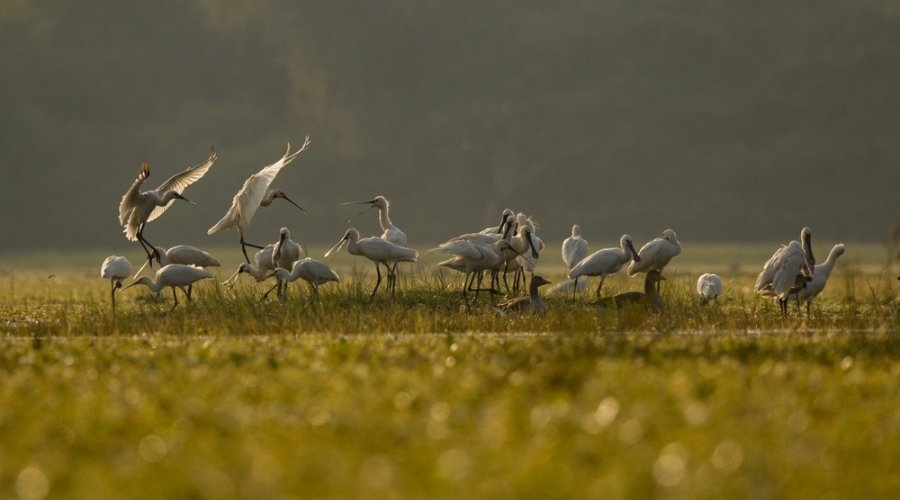
And then there’s the birdlife. Over 480 species. The Great Indian Hornbill — I’m sorry, look at this bird, it’s wearing a Renaissance hat — the Bengal Florican, the Grey-headed Fish Eagle dropping out of the sky like a guided missile. Birdwatchers who come to Kaziranga for the rhinos end up spending half their time with their lenses pointed skyward.
India’s wild northeast doesn’t ask for your attention. It just takes it.